Digital Printing

desktop-vs-production-label-printer-upgrade

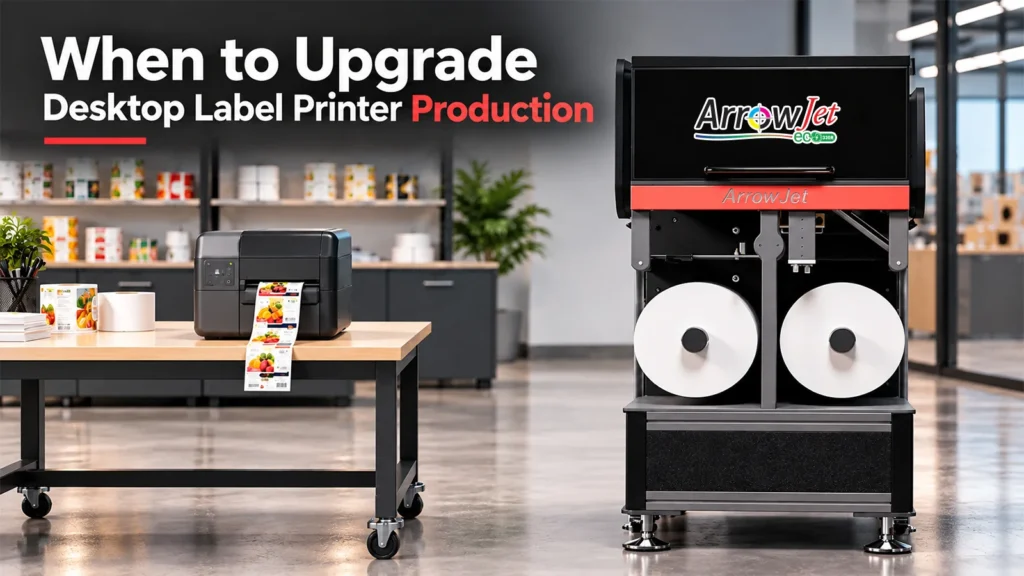
When to Upgrade From a Desktop Label Printer to Production

Table of Contents When to Upgrade From a Desktop Label Printer to Production Upgrade from a desktop label printer to a roll-fed production press when volume, SKU complexity, and labor costs outgrow desktop capacity. Most food, beverage, nutraceutical, and cosmetics operations outgrow a desktop label printer somewhere in the range of roughly 20,000-50,000+ labels per […]

When to Upgrade From a Desktop Label Printer to Production Read More »
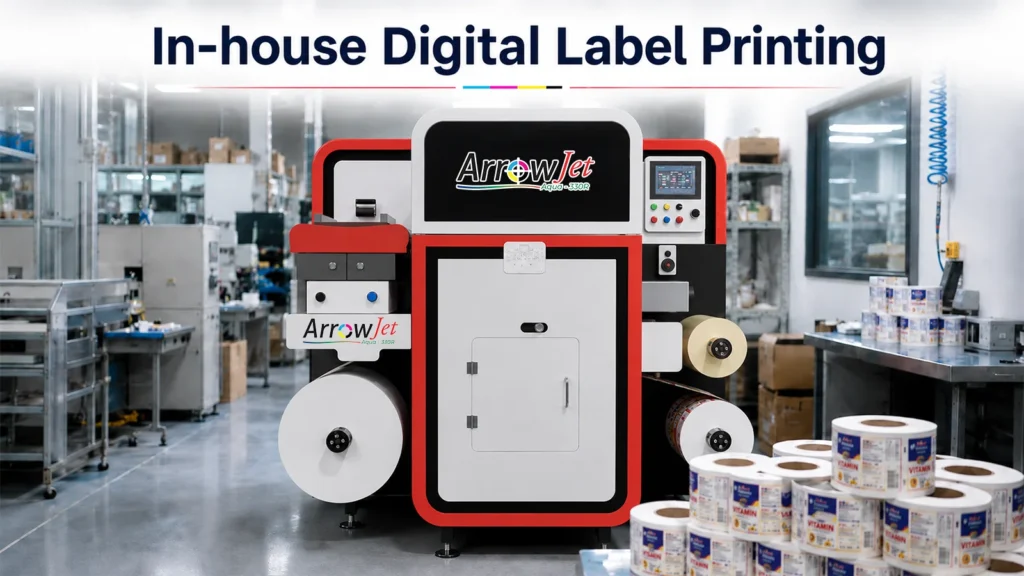
in-house-digital-label-printing

Why Print Your Own Product Labels: Speed, Control, and On-Demand Flexibility

Table of Contents Why Print Your Own Product Labels: Speed, Control, and On-Demand Flexibility In-house digital label printing removes outsourcing delays, eliminates minimum order quantities, and lets businesses update designs on demand — without scrapping pre-printed inventory. Businesses print their own product labels to reduce turnaround time, maintain design control across multiple SKUs, print variable

Why Print Your Own Product Labels: Speed, Control, and On-Demand Flexibility Read More »

Color Sticker Printer

Color Sticker Printer for Business: 4 Reasons to Print In-House

Table of Contents Color Sticker Printer for Business: 4 Reasons to Print In-House Businesses invest in a color label printer to reduce dependence on outside suppliers, cut label lead times, print short runs on demand, and maintain full control over artwork — without waiting on print vendors or minimum order commitments. Key Takeaways In-house label

Color Sticker Printer for Business: 4 Reasons to Print In-House Read More »

Digital Label Printing

Digital Label Printing: What It Is and Why It Matters

Table of Contents Digital Label Printing: What It Is and Why It Matters Digital label printing gives product teams direct control over how quickly, economically, and creatively they bring labeled products to market — without the plate costs and minimum orders that define conventional label production. Digital label printing uses inkjet technology to print labels

Digital Label Printing: What It Is and Why It Matters Read More »

Digital vs Analog Label Printing

Digital vs. Analog Label Printing: Key Differences Explained

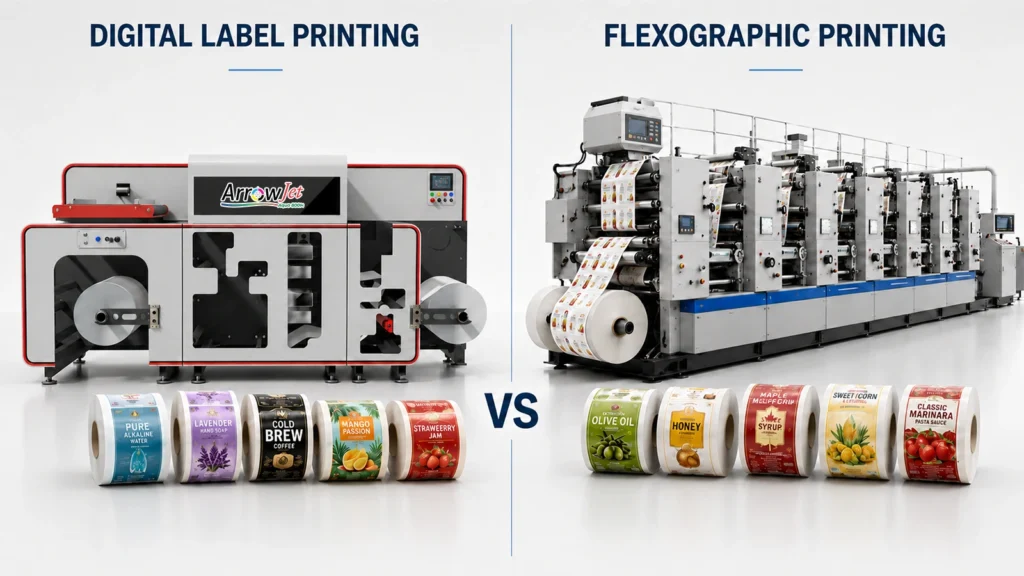
Table of Contents Digital vs. Analog Label Printing: Key Differences Explained The choice between digital and analog label printing comes down to how your production is structured — how often artwork changes, how many SKUs you manage, and whether your runs are short and variable or long and repeatable. Both processes produce finished labels, but

Digital vs. Analog Label Printing: Key Differences Explained Read More »

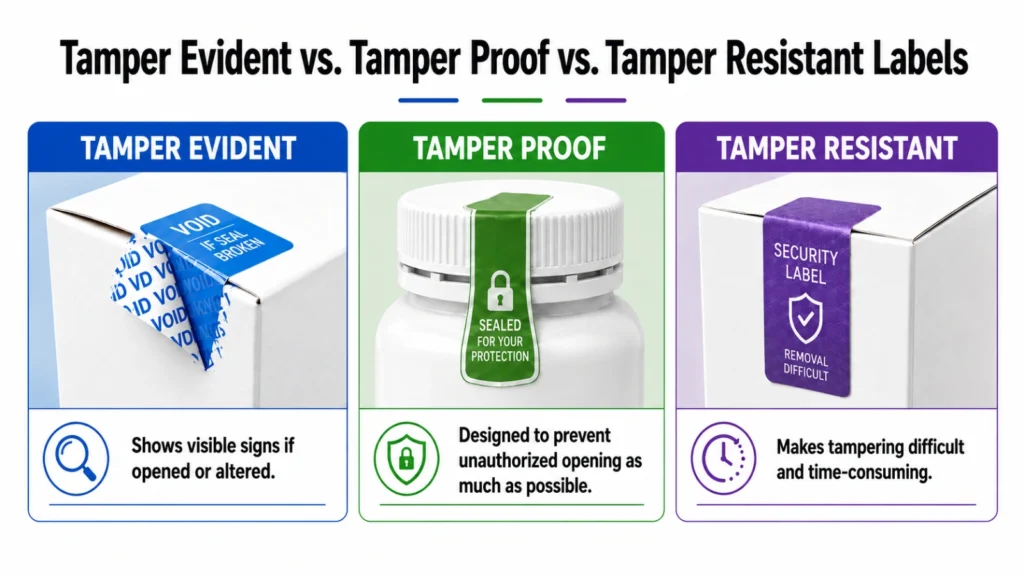
Examples of tamper evident label types -- void polyester, destructible vinyl, and holographic construction.

Tamper Evident vs. Tamper Proof vs. Tamper Resistant Labels: Key Differences

Table of Contents Tamper Evident vs. Tamper Proof vs. Tamper Resistant Labels: Key Differences Tamper evident shows proof of access. Tamper resistant deters removal. Tamper proof combines both — the right choice depends on what the application actually requires. Tamper evident labels change visibly when removal is attempted — they break, void, or delaminate in

Tamper Evident vs. Tamper Proof vs. Tamper Resistant Labels: Key Differences Read More »

Two label designs side by side — a crowded label with no visual hierarchy versus a clean label with intentional white space and clear focal point.

White Space in Label Design: How to Use Negative Space Effectively

Table of Contents White Space in Label Design: How to Use Negative Space Effectively White space — the open area around and between design elements — is the primary tool for guiding a buyer’s eye across a label, establishing hierarchy, and signaling product quality. White space (also called negative space) in label design is any

White Space in Label Design: How to Use Negative Space Effectively Read More »

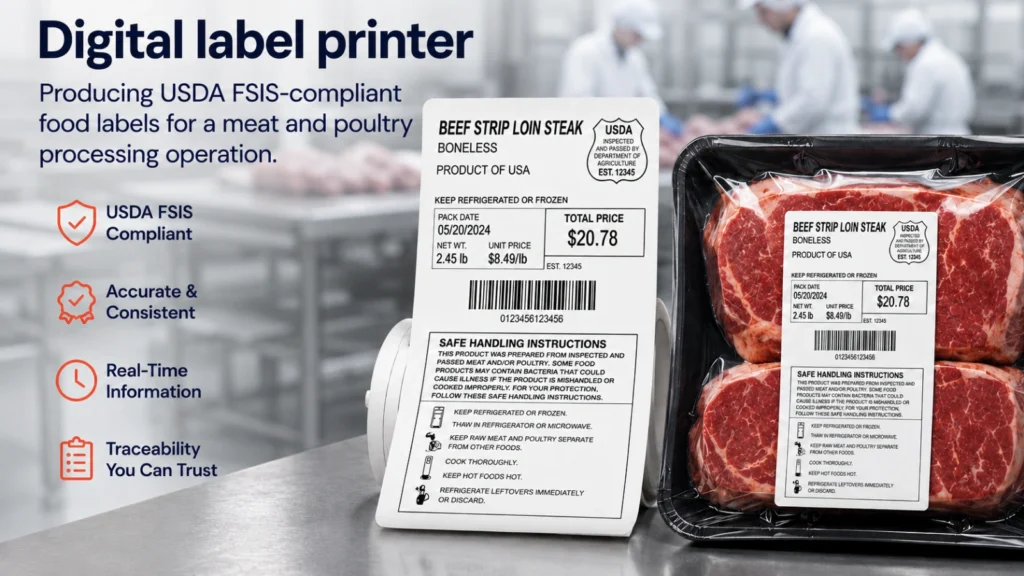
Digital label printer producing USDA FSIS-compliant food labels for a meat and poultry processing operation.

USDA Food Label Guidelines: Six Common FSIS Labeling Mistakes to Avoid

Table of Contents USDA Food Label Guidelines: Six Common FSIS Labeling Mistakes to Avoid USDA FSIS food label approval is blocked most often by six recurring mistakes — all avoidable before artwork goes to print. USDA’s Food Safety and Inspection Service (FSIS) governs labeling for meat, poultry, catfish, and processed egg products and requires pre-market

USDA Food Label Guidelines: Six Common FSIS Labeling Mistakes to Avoid Read More »