Eco-friendly packaging is no longer a niche topic. Customers, retailers, and brands are paying closer attention to packaging waste, material sourcing, recyclability, and the environmental story behind the product. This guide positioned sustainable packaging as both a business opportunity and a responsibility; the key is to make careful, accurate material choices.
What eco-friendly packaging can mean
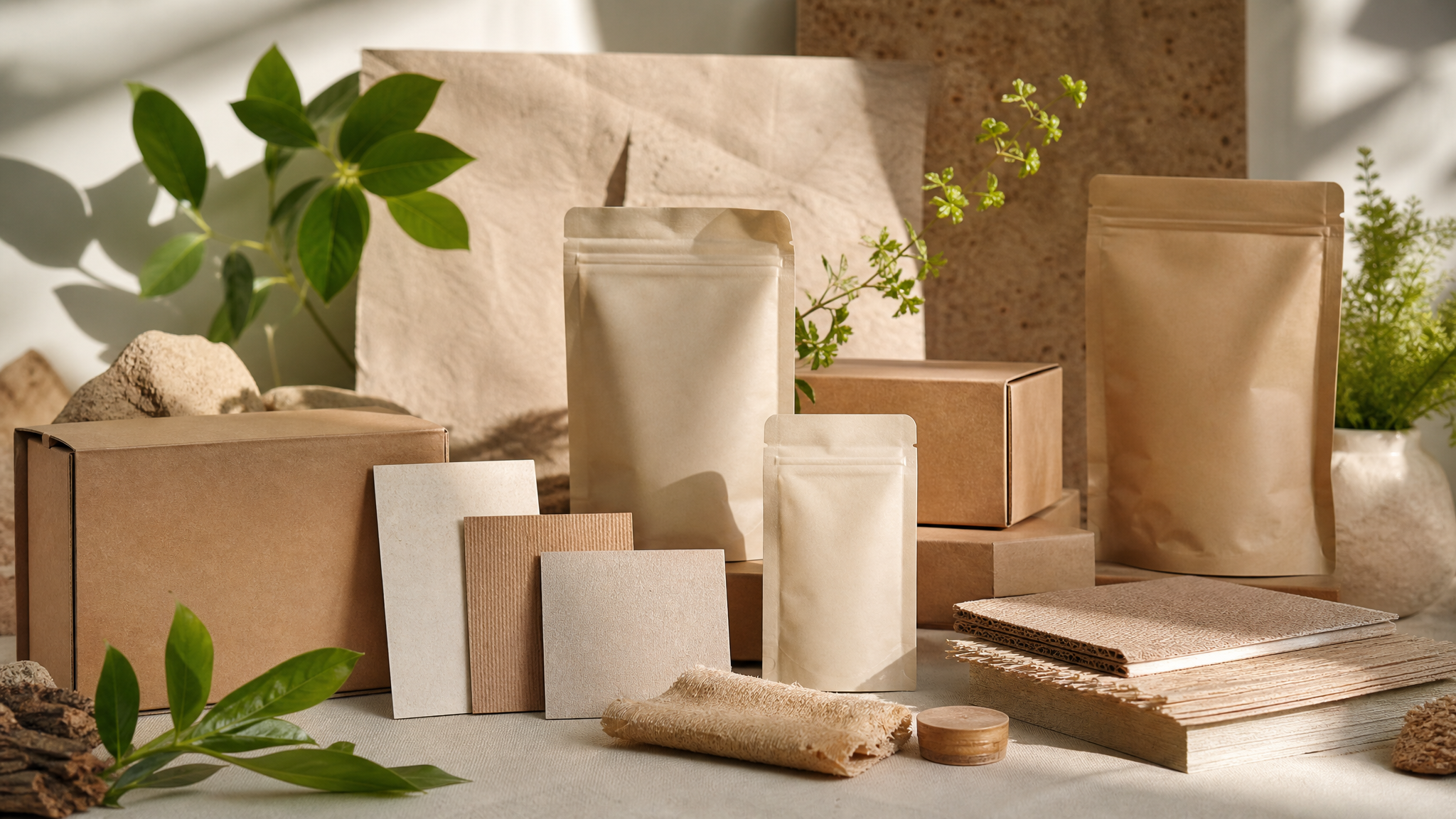
Eco-friendly packaging may refer to many different approaches: reducing excess packaging, using recyclable material, choosing recycled content, exploring compostable or biodegradable materials, lowering shipping weight, or designing packaging that uses fewer components.
Because the term is broad, businesses should be specific. A package can be recyclable but not compostable, bio-based but not biodegradable, or lower weight but harder to recycle. Clear definitions help avoid confusing customers or overstating sustainability claims.
Consumer interest is real, but claims need care
The workflow cites a Trivium Packaging and Boston Consulting Group study from 2021 that surveyed more than 15,000 participants across Europe, North America, and South America. It reported strong interest in sustainable packaging, particularly among younger consumers.
That interest can support brand perception, but it also raises expectations. Customers are increasingly alert to vague green claims. Businesses should be ready to explain what makes the packaging more sustainable and how customers should dispose of it.
Common sustainable packaging paths
- Reduce material: using less packaging can cut waste and may reduce shipping or inventory burden.
- Cardboard and corrugated options: paper-based packaging can be sturdy and familiar to customers, and the workflow describes cardboard as a strong sustainability option.
- Bioplastics: some are bio-based, some are biodegradable or compostable, and some are both.
- Water-soluble materials: the workflow discusses PVOH as water-soluble and biodegradable, while also noting that not every water-soluble product is biodegradable.
- Recyclable structures: packaging designed for an existing recycling stream may be more practical than a material customers cannot dispose of properly.
Watch the recycling stream
One of the most important points in the production context is that compostable plastics are not intended for conventional recycling. If they are mixed with petroleum-based plastics, they can disrupt the recycling stream. This is why disposal instructions and material compatibility matter as much as the material choice itself.
How to choose responsibly
Start with the product’s protection needs. Sustainable packaging still has to protect the product, survive shipping, meet shelf-life needs, and provide a good customer experience. Then compare options based on material source, weight, recyclability, compostability, disposal access, print compatibility, and customer instructions.
Businesses should also test print quality and durability on the chosen material. Eco-friendly packaging still needs clear branding, legible information, and reliable performance.
Start with a written production brief
Before selecting a material, process, or machine, define what the finished item must do. Include dimensions, run length, artwork versions, target appearance, handling, storage, application, regulatory copy where relevant, and the point at which the job is considered acceptable.
Document the exact substrate or package construction, printable side, coating or treatment, thickness, ink or toner system, drying or curing limits, downstream finishing, and final use. Materials that look similar can behave differently, so a family name is not enough for approval.
A useful brief separates requirements from preferences. A mandatory barcode grade, seal performance, or finished-roll direction is a requirement. A preferred finish or color treatment remains a preference until testing proves it is necessary. This distinction keeps testing focused on decisions that can stop production.
Validate the complete material and process combination
Test the actual production material, not a generic substitute. Ink or toner, surface treatment, coating, adhesive, liner, laminate, drying or curing, cutting, and downstream handling can interact. Change one variable at a time and record settings, material lot, artwork file, operator, and result.
Approve more than appearance. Check fine text, barcodes or variable data when used, solid coverage, registration, rub resistance, relevant moisture or chemical exposure, blocking, winding, cutting, matrix removal, and application. Accelerated tests can compare options, but realistic use and storage trials remain essential.
Keep an approved sample and the digital job record. When a material or consumable changes, treat it as a controlled change and repeat the affected tests. This prevents a visually similar replacement from entering production without evidence.
Plan the operating workflow, not only the print step
Map the job from approved artwork through finished inventory. Assign responsibility for preflight, color approval, material release, printing, finishing, inspection, labeling, and storage. Define how operators identify the correct version and how obsolete files or rolls are quarantined.
Estimate capacity with real operating time. Include loading, calibration, changeovers, cleaning, drying or curing, finishing, inspection, maintenance, and rework. Rated speed is useful for comparison, but scheduled output should be based on repeatable acceptable work.
Arrow’s current pages provide starting points for comparing flexible packaging material options and digital packaging printers. These pages do not replace an application test; use them to narrow the equipment conversation before testing the exact material and finished format.
A practical decision checklist
| Decision | Evidence to collect | Approval question |
|---|
| Job fit | Run lengths, versions, due dates, repeat frequency | Does this process match the actual work mix? |
| Material fit | Supplier data, lots, treatment, coating, thickness | Has the exact construction been tested? |
| Output quality | Approved samples and measurable inspection criteria | Can operators judge pass or fail consistently? |
| Workflow fit | Labor, changeover, finishing, maintenance, floor space | Is the complete process practical to operate? |
| Risk control | Version control, traceability, rework and backup plan | What happens when a job or component fails? |
Use a pilot run that includes normal artwork variation and finishing rather than one ideal demonstration file. Review the finished product with design, production, quality, and application stakeholders. A purchase or process change should follow documented acceptance, not a single attractive sample.