Aqueous vs. UV Inkjet Pharmaceutical Labels: What GMP Requires
Table of Contents Aqueous vs. UV Inkjet Pharmaceutical Labels: What GMP Requires No FDA regulation names a compliant ink chemistry — GMP governs label accuracy,
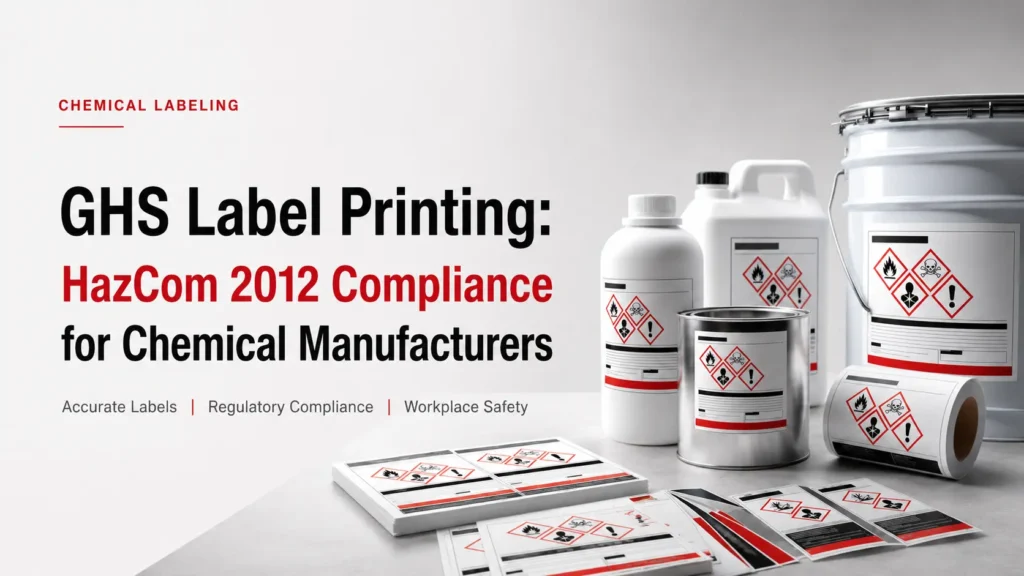
OSHA HazCom 2012 requires six GHS label elements on every shipped chemical container — in-house digital printing keeps labels current, durable, and audit-ready.
OSHA’s HazCom 2012 standard adopted GHS to standardize how chemical hazards are classified and communicated on every shipped container.
OSHA’s Hazard Communication Standard (29 CFR 1910.1200), updated in 2012 to align with the Globally Harmonized System, requires every shipped container of a hazardous chemical to carry a label with six mandatory elements drawn directly from the product’s Safety Data Sheet. For manufacturers, importers, and distributors of hazardous chemicals, this is a continuous operational requirement — not a one-time compliance task.
Every time a formulation changes, a hazard classification is updated, or a concentration shifts, the label must reflect that change. For facilities running dozens or hundreds of SKUs across drums, totes, pails, and IBCs, label management becomes a production workflow rather than a procurement activity. This is especially true for manufacturing and industrial label operations where regulatory accuracy is non-negotiable. A single SDS revision can render an entire pre-printed label run obsolete, and customer-specific or multi-language variants — OSHA HazCom, Health Canada WHMIS, EU CLP — multiply the inventory management burden.
This is where the choice of digital label printing technology directly shapes a chemical manufacturer’s compliance posture and operational flexibility.
HazCom 2012 requires six specific elements on every shipped chemical container — each must align with the corresponding SDS section.
| Element | What It Is | Source on SDS |
|---|---|---|
| Product Identifier | Chemical name, code, or batch number — must match the SDS exactly | Section 1 |
| Signal Word | Either “Danger” (more severe) or “Warning” (less severe); only one per label | Section 2 |
| Hazard Statements | Standardized H-phrases describing each classified hazard (e.g., “Causes serious eye damage”) | Section 2 |
| Precautionary Statements | Standardized P-phrases for prevention, response, storage, and disposal | Section 2 |
| Pictograms | Standardized hazard symbols in a red square frame set on point (diamond orientation) | Section 2 |
| Supplier Identification | Name, address, and telephone number of the responsible party | Section 1 |
Workplace labels for in-plant containers have more flexibility under HazCom, but every container leaving your facility must carry all six elements in a format that matches the current SDS.
GHS pictograms are the most visible compliance point on a chemical label — and one of the easiest to fail in print production.
Under HazCom 2012, each pictogram must appear within a red square frame set on point (diamond orientation) with a black hazard symbol on a white background. A red border containing no symbol is not permitted — if a hazard class does not apply, the pictogram is simply omitted. Only the pictograms corresponding to the chemical’s classified hazards should appear on the label.
The nine GHS pictograms cover health hazard, flame, exclamation mark, gas cylinder, corrosion, exploding bomb, flame over circle, skull and crossbones, and environment. Each maps to specific hazard classifications defined in the SDS.
The red border must be a true, saturated red — not orange, pink, or a faded CMYK process build. Inconsistent red reproduction is a common audit finding, particularly on labels printed with systems that do not maintain tight color control under production conditions.
Each pictogram must be legible and proportionate to the label size and container. Color quality and edge definition must hold up under chemical exposure, abrasion, UV radiation, and the temperature swings typical of drum, tote, and IBC storage environments. Substrate selection — including durable options like BOPP and polyester films — plays a direct role in whether pictograms maintain compliance-grade appearance through the container’s service life.
This is where printing technology choices directly affect compliance outcomes. Ink chemistry, cure method, and substrate compatibility determine whether pictograms stay sharp, color-accurate, and legible through the container’s full service life — or fade, smear, and trigger audit findings.
Pre-printed label inventories age out every time an SDS or formulation changes — in-house printing closes that compliance gap.
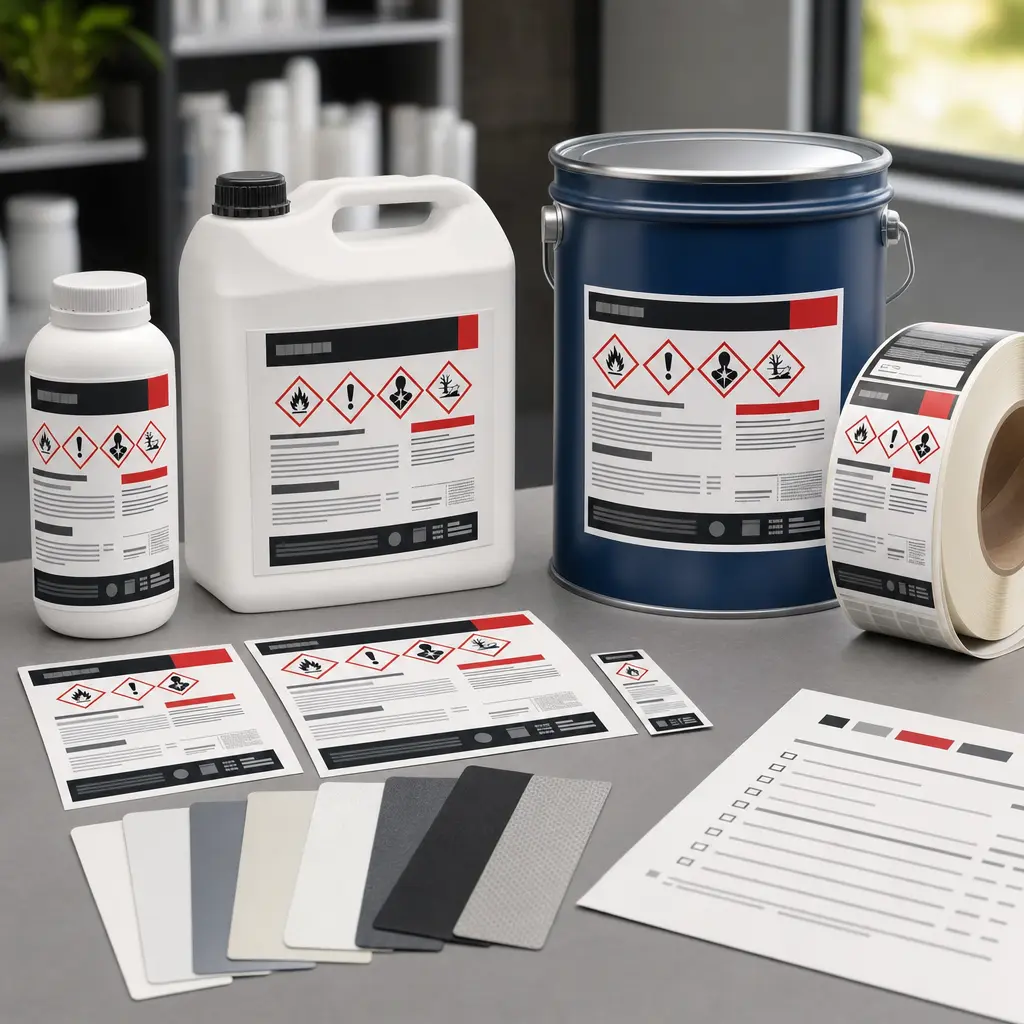
For years, chemical manufacturers relied on outside label converters for GHS labels. That model has real limits: long lead times, high minimum order quantities, and inventory risk every time an SDS or formulation changes. When a single hazard reclassification can obsolete an entire pre-printed run, the economics of bulk label procurement break down. For a deeper look at why in-house printing outperforms outsourcing for regulated industries, the operational case is well documented.
In-house chemical label printing closes the gap between an SDS update and a compliant label on a drum. Teams that bring printing inside gain specific operational advantages:
The result is a tighter, auditable workflow where every label in the field can be traced back to its source SDS version and production event.
The ArrowJet UV 330H produces UV-cured GHS labels engineered to survive solvent contact, abrasion, and outdoor storage on chemical containers.
The ArrowJet Aqua 330R offers aqueous pigment inkjet printing for chemical operations where labels are protected by lamination or serve less aggressive exposure environments.
For smaller chemical operations or facilities entering in-house label production for the first time, the ArrowJet Eco 330R provides an entry-level path — a compact industrial single-pass digital press running on single-phase power with no air compressor requirement, printing at up to 1600 x 1600 dpi on a maximum print width of 324 mm. Combined with a downstream finishing step for lamination, the Eco 330R can serve GHS label needs for lower-volume, controlled-environment chemical operations.
The right press for GHS chemical labels depends on chemical exposure severity, container type, run length, and finishing strategy.
| Selection Factor | ArrowJet UV 330H | ArrowJet Aqua 330R |
|---|---|---|
| Ink technology | UV-cured inkjet (UV LED polymerization) | Aqueous pigment inkjet (heat-assisted drying) |
| Chemical resistance | Strong out of press — resists solvents, oils, surfactants | Requires lamination or topcoat for chemical exposure |
| Best fit | Aggressive chemical environments, outdoor storage, solvent-exposed containers | Indoor storage, water-based chemicals, controlled environments |
| Pictogram color accuracy | Sealed UV film holds saturated red through exposure | Color accurate at print; requires protective finish for longevity |
| Container types | Drums, pails, totes, IBCs, rigid substrates (flatbed mode) | Drums, pails, totes — pressure-sensitive roll labels |
| SKU changeover | File-based — fast changeover between SKUs and language variants | File-based — same fast changeover flexibility |
| Variable data | Yes — batch, lot, concentration, SDS-driven content | Yes — same variable data capability |
| Max print width | Up to 330 mm | Up to 324 mm |
| Ink configurations | CMYK + White, CMYK + Varnish, CMYK + White + Varnish | CMYK |
| Finishing compatibility | Compatible with all Arrow EZCut and ArrowCut Nova finishers | Compatible with all Arrow EZCut and ArrowCut Nova finishers |
The decision typically comes down to chemical exposure severity. If containers face solvent contact, outdoor UV exposure, or abrasion during transport and handling, UV-cured inks on the ArrowJet UV 330H deliver inherent resistance without relying on a post-print finishing step. If containers are stored indoors in controlled conditions and labels are protected by lamination, the ArrowJet Aqua 330R offers a lower-cost-per-label path to compliant GHS output. For a more detailed comparison of coating and protection options, see Arrow’s guide to UV vs. water-based varnish selection.
For facilities requiring higher throughput on chemical label runs — large drum and tote volumes across stable product lines — the ArrowJet Aqua Hybrid Pro M extends the aqueous platform with higher production speeds and inline flexo stations for priming and varnishing. Contact Arrow Systems to assess whether the Hybrid Pro M configuration fits your volume, substrate, and durability requirements.
For chemical manufacturers exporting product via marine transport, durable label construction is a frequent requirement. Many global shipments call for substrates and inks evaluated against standards such as BS5609 — discuss substrate selection and BS5609 testing requirements with your label material supplier as part of your GHS labeling qualification process.
Arrow’s finishing equipment handles die-cutting, lamination, and slitting for both UV and aqueous GHS label rolls — without requiring separate downstream lines.
Implemented well, this workflow turns labeling from a recurring compliance risk into a controlled, on-demand capability that scales with the business and withstands regulatory scrutiny.
Common questions from EHS managers, plant operations leaders, and packaging engineers evaluating in-house GHS label printing.
If your team is weighing whether to bring GHS label production in-house — or replace an aging workflow that no longer keeps pace with SDS updates and SKU growth — Arrow Systems can help you scope the right path.
Our team works with EHS and operations leaders at chemical manufacturers to evaluate substrate and ink chemistry against your container types, assess fit between the ArrowJet UV 330H and ArrowJet Aqua 330R based on chemical exposure profile and SKU mix, recommend the right finishing configuration for die-cutting and lamination, and map a workflow that supports HazCom 2012 compliance end-to-end.
Table of Contents Aqueous vs. UV Inkjet Pharmaceutical Labels: What GMP Requires No FDA regulation names a compliant ink chemistry — GMP governs label accuracy,
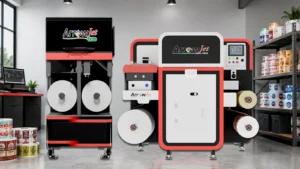
Table of Contents Color Sticker Printer for Business: 4 Reasons to Print In-House Businesses invest in a color label printer to reduce dependence on outside
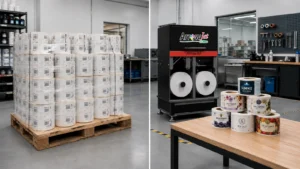
Table of Contents Digital Label Printer for a Small Brand: The Real Break-Even Math Break-even for an in-house digital label press is driven by SKU
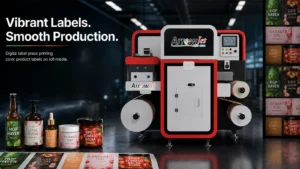
Table of Contents Color Label Printer Benefits: A Practical Guide for Businesses A color label printer gives businesses on-demand control over label production — from

Table of Contents Cosmetic Label Adhesion Problem: Bubbling and Lifting on Glass Cosmetic label bubbling and label lifting on glass trace to four variables: surface
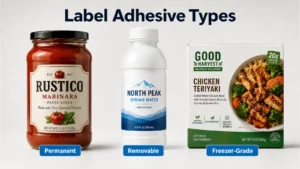
Table of Contents Label Adhesive Types: Permanent, Removable, and Freezer-Grade Label adhesives fall into three working classes — permanent, removable, and freezer-grade — matched to