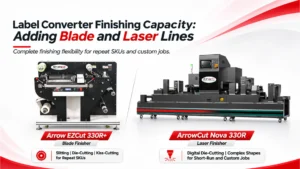
Label Converter Finishing Capacity: Adding Blade and Laser Lines
Table of Contents Label Converter Finishing Capacity: Adding Blade and Laser Lines Label converter finishing capacity falls short from volume, job mix, or both. Diagnose
Inkjet label printing is a popular choice for businesses and individuals looking to print high-quality labels for a variety of purposes. One of the key considerations when choosing inkjet labels is the material that the label is made of.
Contact Arrow Systems to learn about our extensive material catalog and talk with an expert today!
Different materials offer different benefits and drawbacks, so it’s important to choose the right material for your specific needs. In this blog post, we’ll discuss four of the most common types of inkjet label materials: PP (polypropylene), PET (polyethylene terephthalate), paper, and holographic material.
PP (polypropylene) is a synthetic plastic material that is commonly used for inkjet labels. It is a strong and durable material that is resistant to water, oils, and most chemicals. It is also resistant to tearing, making it a great choice for labels that will be exposed to harsh environments or handling.
One of the major benefits of PP labels is that they are able to withstand high temperatures, making them suitable for use in a variety of applications including outdoor use and in the food industry. They are also UV resistant, meaning they won’t fade or discolor when exposed to sunlight.
PET (polyethylene terephthalate) is another synthetic plastic material that is commonly used for inkjet labels. It is a strong and durable material that is resistant to water, oils, and most chemicals.
It is also resistant to tearing and has a high melting point, making it suitable for use in a variety of applications including outdoor use and in the food industry. Like PP labels, PET labels are UV resistant, meaning they won’t fade or discolor when exposed to sunlight.
One of the major benefits of PET labels is that they are able to withstand high temperatures, making them suitable for use in a variety of applications including outdoor use and in the food industry.

Table of Contents Label Converter Finishing Capacity: Adding Blade and Laser Lines Label converter finishing capacity falls short from volume, job mix, or both. Diagnose
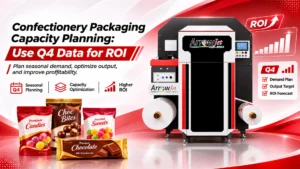
Table of Contents Confectionery Packaging Capacity Planning: Use Q4 Data for ROI Confectionery packaging capacity planning works best on cost data logged during Q4 peak,