UV vs. Aqueous Inkjet for Custom Cosmetic Labels: A Buyer’s Guide
Table of Contents UV vs. Aqueous Inkjet for Custom Cosmetic Labels: A Buyer’s Guide UV and aqueous inkjet serve different cosmetic label scenarios — UV

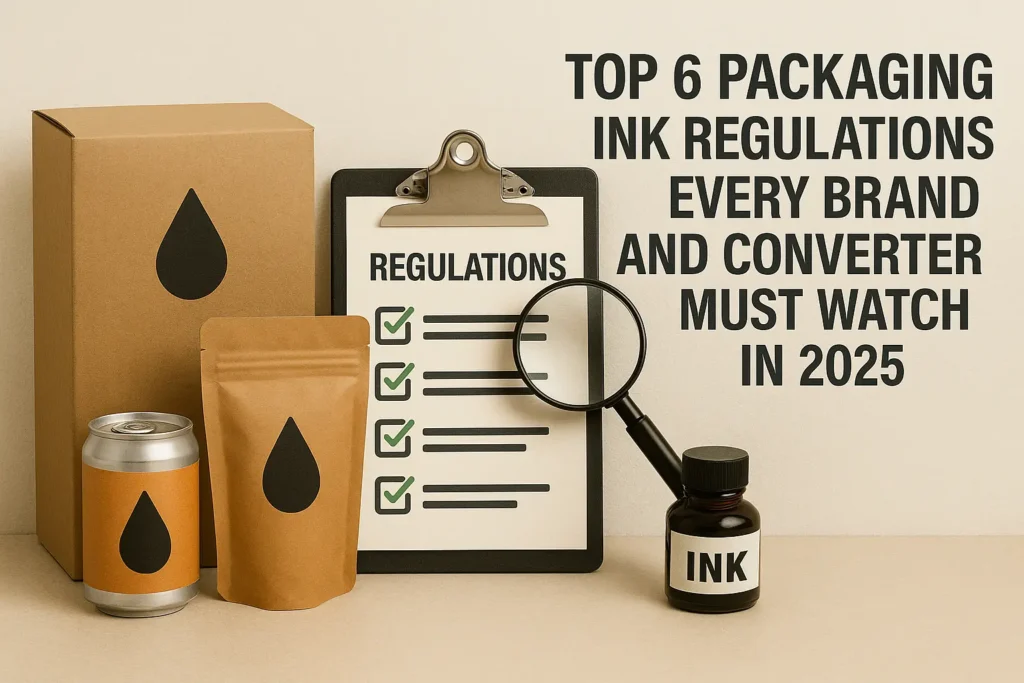
The packaging world is changing faster than ever—and so are the rules that govern it. For brands and converters, packaging inks are no longer just about aesthetics. Today, they sit at the heart of food safety, sustainability, and compliance. With governments worldwide tightening regulations, staying updated on these changes has become a survival strategy, not an option.
In this blog, we’ll break down the Top 6 regulatory changes shaping packaging ink choices in 2025—and how innovative inkjet solutions like ArrowJet water-based pigment inks help brands and converters stay compliant while delivering premium print quality.
Food safety is the driving force behind global ink regulation. Governments across the EU, U.S., China, India, and Germany are imposing stricter guidelines to minimize chemical migration from inks into packaged foods.
For brands, this means a stronger shift toward food-safe,low-migration inks like ArrowJet’s water-based pigment solutions, which ensure compliance without compromising print vibrancy.
Globally, regulators are targeting hazardous chemicals commonly found in inks. Substances such as toluene, phthalates, benzophenones, and heavy metals are either banned or restricted due to their health risks.
By switching to ArrowJet’s Swiss-compliant, water-based pigment inks, converters not only meet these requirements but also open doors to global markets with confidence.
Regulations worldwide demand ultra-low migration limits, often measured in parts per billion (ppb). If non-listed substances are used, converters must incorporate functional barriers—such as coatings or multilayer films—to prevent harmful migration into food.
While functional barriers add cost and complexity, water-based pigment inks offer a natural advantage by being low-migration and compliant, reducing the need for additional barriers.
It’s not just about the ink—it’s about how it’s made. GMP frameworks require strict control over manufacturing processes to ensure consistency, traceability, and safety.
With ArrowJet digital inkjet systems, converters gain the advantage of streamlined, automated production, reducing manual errors and ensuring consistent compliance across short and long runs.
Packaging regulations are no longer limited to food safety—they’re expanding into environmental sustainability. Governments are pushing for low-VOC inks, bio-based formulations, and improved recyclability.
ArrowJet’s water-based pigment inks are low-VOC, sustainable, and recyclable-friendly, making them the smart choice for brands pursuing eco-labels and green certifications.
Compliance doesn’t end at formulation—it extends to testing.
For converters, this means higher costs and risks if working with outdated ink technologies. With ArrowJet’s food-safe inkjet solutions, much of this burden is reduced, as inks are pre-tested and certified for compliance.
The regulatory shifts in packaging inks are more than just legal checkboxes—they’re about protecting consumers, building brand trust, and driving market competitiveness.
Non-compliance can result in:
By adopting ArrowJet’s water-based pigment ink solutions, brands and converters can stay ahead of regulatory changes while enjoying:
The Top 6 packaging ink regulations—from food safety and chemical bans to sustainability mandates—are reshaping the future of packaging. Brands and converters who fail to adapt risk falling behind, while those who embrace compliance-ready, eco-friendly solutions like ArrowJet’s water-based pigment inks will thrive in the global market.
In 2025 and beyond, the winners will be those who print not just faster, but smarter, safer, and greener.

Table of Contents UV vs. Aqueous Inkjet for Custom Cosmetic Labels: A Buyer’s Guide UV and aqueous inkjet serve different cosmetic label scenarios — UV

Table of Contents Vintage Label Design Styles: A Reference Guide for Producers and Brand Owners Vintage label design draws from a specific visual history. The

Table of Contents Label Adhesive Types, Properties & Selection Guide The right label adhesive depends on the surface, temperature, shape, and conditions of the application

Table of Contents Label Trends: Minimalist Label Design Minimalist label design removes clutter — nude palettes, gradients, transparent labels, and smart-labels let the product speak

Table of Contents Tamper-Evident Label Printing: How to Choose the Right System Match tamper-evident label type — void, breakaway, or destructible — to product risk,

Table of Contents Skincare Label Printing: Materials, Inks & FDA Rules Skincare labels must withstand moisture, oils, friction, and aggressive formulation actives while meeting FDA