The Many Faces of the ArrowJet
As we continue to develop the new Memjet Duraflex technology, we want to continue to update our readers on the progress we are making. Our focus over the past 2 years has been to develop the latest technology from Memjet to reach new audiences around the world.
The new pigment-based ink technology from Memjet is the latest buzz in narrow web printing. The pigment is more water resistant and fade resistant than dye-based ink printing technology.
Our goal is to continue to introduce the water-based pigment ink technology from Memjet into a variety of sectors and markets. We have some exciting new offerings in the ArrowJet lineup, and wanted to share them with all of you!
ArrowJet Aqua 330R Lite
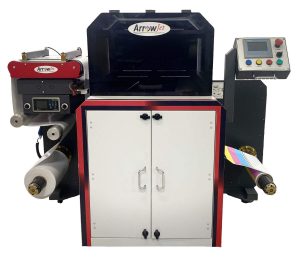
The first model that we will discuss is the ArrowJet Lite. This unit is the perfect build for people who are familiar with Memjet technology and are looking to upgrade their desk-top Memjet based engines for something a little more industrial.
It features the same pigment ink as the larger models, but at a lower hardware cost. The speed of the Lite is capped at 21m/min, but is field upgradable to the ArrowJet Aqua 330R (45m/min). We designed this machine in such a way that customers can start with the Lite and when they need more capacity upgrade it to the larger model rather than having to buy a whole new press.
ArrowJet Aqua 330R
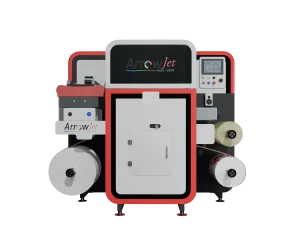
The ArrowJet Aqua 330R is our flagship model for the new Duraflex technology. It features a compact frame while still running at 45m/min! This digital printer is the perfect solution for label printing or creating other food packaging. As we mentioned previously, the Lite is field upgradable to the full model through software and hardware modifications.
This makes it easy to start small and upgrade as you go! The ArrowJet Aqua 330R features crisp web control and servo motors for the perfect roll every time. Whether you are printing customer labels or in-house barcodes, the ArrowJet Aqua 330R is the perfect solution. Upgrade to 10L bulk ink tanks for reduced label costs while still maintaining the long lasting printhead! The ArrowJet Aqua is the perfect addition to any print shop.
ArrowJet Aqua 330R Hybrid
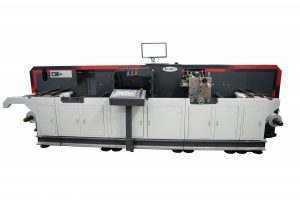
The ArrowJet Aqua 330R Hybrid has all of the features of the full version, but with an optional inline varnish station. We offer a proprietary water-based varnish that is food safe and already being used around the world.
The addition of the inline varnish allows customers to produce nestle compliant and Swiss compliant labels and flexible packaging in short order quantities, or longer runs. This model is the perfect solution for customers who have food safety concerns, or need to adhere to a strict standard. The Hybrid printer is designed to be the perfect addition for any label printer looking to add more capacity, or take on shorter runs. Pair it with any of our digital finishing equipment to create the ideal short run solution!
ArrowJet Aqua 330R Hybrid Pro
The Hybrid Pro features all of the benefits from the Hybrid, but with an additional flexo station for applying a water-based primer for papers. It can also be used with silicone-based primers, but water-based primer with the water-based finish is what is recommended.
The Hybrid Pro is the ideal solution for label printers and flexible packaging manufacturers that want the ability to prime their own materials inline with the unique digital printing technology. The ability to prime material inline helps reduce running costs and allows for more material selection for the end users!
Arrow OverJet
The OverJet is an over printer designed to digitally print on boxes, bags, envelopes, and more. It features all of the same technology in the other ArrowJet models, but with a conveyor in place of a web handling system.
Print beautiful full color boxes, bags, envelopes, and more with a click of a button! Custom printed boxes typically have large MOQ’s, but no more with the OverJet. Print 1 custom box or 1,000; it makes no difference! Custom shopping bags have never been easier to print with this system as well.
Arrow OverJet Pro
The OverJet Pro is just an upgraded version of the OverJet which features an automatic feeding system as well as a wider conveyor width. The Pro model also has the ability to use the 10L bulk inks for lower production costs and increased capacity, all with the benefits of water-based pigment ink!
For more information on any of these models, or to discuss the benefits of the technology, Contact Us Today!