UV vs. Aqueous Inkjet for Custom Cosmetic Labels: A Buyer’s Guide
Table of Contents UV vs. Aqueous Inkjet for Custom Cosmetic Labels: A Buyer’s Guide UV and aqueous inkjet serve different cosmetic label scenarios — UV

The packaging industry is undergoing a sustainability revolution. Single-use plastics are being phased out. Consumers are demanding eco-friendly alternatives. And regulators worldwide are tightening packaging waste laws.
At the center of this transformation is an unexpected hero: water-activated tape (WAT). Once considered old-fashioned, this simple kraft paper tape is now the darling of sustainable packaging. And thanks to digital printing technology like the ArrowJet Aqua 330R Lite, custom-branded water-activated tape is more accessible than ever.

Plastic pressure-sensitive tape (the clear or brown tape most people use) has dominated packaging for decades. But it comes with significant environmental costs.
Non-Recyclable Contamination:
Plastic tape must be removed from cardboard boxes before recycling. If left on, it contaminates the cardboard recycling stream, often causing entire batches to be landfilled.
Microplastic Pollution:
When plastic tape breaks down, it does not biodegrade — it fragments into microplastics that persist in the environment for centuries.
Petroleum Dependence:
Most plastic tape is made from polypropylene, a petroleum-derived plastic that contributes to fossil fuel consumption.
Limited Recyclability:
Even recyclable plastic tape often lacks the infrastructure for actual recycling and ends up in landfills or incinerators.
The Numbers
Over 1.3 billion pounds of packaging tape are used annually in the US alone
Less than 5% of plastic tape is effectively recycled
Each roll of plastic tape has a carbon footprint 3–4x higher than paper alternatives
Water-activated tape, also known as gummed tape or kraft paper tape, offers a fundamentally different environmental profile.
Water-activated tape is made from kraft paper with a starch-based adhesive. Both components are plant-derived materials, fully biodegradable within weeks to months, safe for home and industrial composting, and non-toxic if they enter waterways.
Unlike plastic tape, water-activated tape can be left on cardboard boxes during recycling. The paper fibers and adhesive break down in the pulping process, causing no contamination. This means no need to remove tape before recycling, higher recycling rates for corrugated boxes, and less labor in waste management.
Kraft paper comes from trees — a renewable resource when managed responsibly. Most water-activated tape manufacturers use FSC-certified paper sources, recycled content options (up to 100% recycled), and sustainable forestry practices.
Water-activated tape forms a permanent bond with cardboard fibers, requiring only a single strip for secure sealing. Compare this to plastic tape, which often requires multiple strips for security, additional reinforcement tape for heavy boxes, and H-taping technique using significantly more material.
One strip of WAT = 3–4 strips of plastic tape in holding power.
or years, sustainable packaging came with a branding trade-off. Plastic tape could be easily printed with logos and designs, but water-activated tape traditionally required expensive flexographic printing with high minimum orders.
This meant many businesses had to choose:
Option A: Eco-friendly tape with no branding
Option B: Branded plastic tape that hurts the environment
Neither option served businesses that wanted both sustainability and professional presentation.
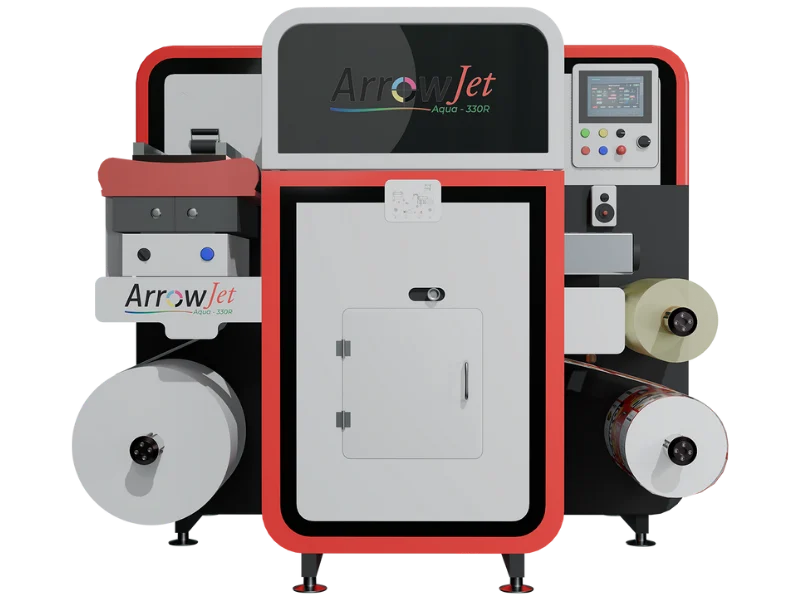
The ArrowJet Aqua 330R Lite changes this equation completely. This digital inkjet printer uses aqueous (water-based) pigment inks to print directly onto water-activated tape in full color.
Traditional solvent-based inks contain volatile organic compounds (VOCs) that emit harmful fumes during printing, require special ventilation and disposal, and contribute to air pollution.
Aqueous inks used in the ArrowJet Aqua 330R Lite use water as the primary carrier, emit minimal VOCs, are safer for workers and the environment, and produce vibrant, durable prints on kraft paper.
When you combine water-activated tape with digital aqueous printing, you get:
Biodegradable substrate (kraft paper)
Plant-based adhesive (starch gum)
Water-based inks (no solvents)
On-demand production (no waste from overruns)
No plate manufacturing (reduced industrial waste)
This is truly sustainable custom packaging.
The market is speaking loudly.
74% of consumers are willing to pay more for sustainable packaging
60% say packaging sustainability affects their purchase decisions
50% have switched brands based on environmental practices
82% of companies have sustainable packaging goals for 2025
Major retailers (Amazon, Walmart, Target) have packaging sustainability mandates
B2B customers increasingly require sustainability credentials from suppliers
Extended Producer Responsibility (EPR) laws expanding globally
Plastic bans and restrictions in dozens of countries
Packaging waste reduction targets in the EU and beyond
The perception persists that eco-friendly means expensive. But the math has changed.
Traditional Cost Comparison
| Factor | Plastic Tape | Water-Activated Tape |
|---|---|---|
| Material cost | Lower | Slightly higher |
| Tape needed per box | 2–4 strips | 1 strip |
| Actual cost per box | sh.08–0.15 | sh.06–0.12 |
When you factor in reduced material usage, costs are comparable — and sometimes water-activated tape is cheaper.
Plate costs: 00–500 per color
Minimum order: 10,000+ feet
Small business barrier: High
Plate costs: sh
Minimum order: 100 feet
Small business barrier: None
Sustainable branded packaging is now accessible to businesses of all sizes.
Challenge: Monthly subscription box service wanted plastic-free packaging but needed branded tape for unboxing experience.
Solution: Switched to digitally printed water-activated tape using the ArrowJet Aqua 330R Lite.
Results: Eliminated 2,400 pounds of plastic tape annually, customer satisfaction increased, and cost per package decreased by 12%.
Challenge: Required to achieve 50% sustainable packaging by 2025.
Solution: Replaced plastic tape with reinforced water-activated tape printed with handling instructions and branding.
Results: Achieved sustainability goal 18 months early, reduced tape-related complaints, and won new contracts.
Challenge: Needed to convey premium quality and environmental values through packaging.
Solution: Short runs of custom water-activated tape with seasonal designs.
Results: Stronger brand alignment, increased social media mentions, and zero inventory waste.
Key trends accelerating adoption:
Advanced Inks – More vibrant colors, better durability, bio-based formulations
Automation Integration – Smarter dispensers, lower labor costs
Circular Economy Design – Optimized for recycling and composting
Regulatory Momentum – Plastic bans and carbon pricing favor sustainable options
Assess Your Volume – Understand current usage and seasonality
Evaluate Branding Needs – Custom vs stock, design flexibility
Choose the Right Tape Type – Non-reinforced, reinforced, or custom printed
Select Application Method – Manual, electric, or integrated systems
Source Responsibly – FSC paper, aqueous inks, credible suppliers
Water-activated tape has evolved from a niche eco-product to a mainstream packaging solution. Digital printing technology has removed the barriers that once limited access to custom-branded sustainable tape.
The ArrowJet Aqua 330R Lite represents a new era — where sustainability, affordability, and professional branding converge. Businesses no longer need to compromise environmental values for marketing impact.
The future of packaging is here. And it is printed with water-based inks on kraft paper.

Table of Contents UV vs. Aqueous Inkjet for Custom Cosmetic Labels: A Buyer’s Guide UV and aqueous inkjet serve different cosmetic label scenarios — UV

Table of Contents Vintage Label Design Styles: A Reference Guide for Producers and Brand Owners Vintage label design draws from a specific visual history. The

Table of Contents Label Adhesive Types, Properties & Selection Guide The right label adhesive depends on the surface, temperature, shape, and conditions of the application

Table of Contents Label Trends: Minimalist Label Design Minimalist label design removes clutter — nude palettes, gradients, transparent labels, and smart-labels let the product speak

Table of Contents Tamper-Evident Label Printing: How to Choose the Right System Match tamper-evident label type — void, breakaway, or destructible — to product risk,

Table of Contents Skincare Label Printing: Materials, Inks & FDA Rules Skincare labels must withstand moisture, oils, friction, and aggressive formulation actives while meeting FDA