Label Converter Finishing Capacity: Adding Blade and Laser Lines
Table of Contents Label Converter Finishing Capacity: Adding Blade and Laser Lines Label converter finishing capacity falls short from volume, job mix, or both. Diagnose
You’re facing a familiar challenge. Deadlines are tight, SKUs keep multiplying, and your label supplier just pushed your delivery another two weeks. You’re stuck—again—waiting on an outdated process that simply can’t keep pace with today’s fast-moving, customization-hungry market.
Sound familiar? If you’re relying on a traditional label press, these kinds of delays aren’t just frustrating—they’re costly. From long setup times and high minimum order quantities to limited flexibility in design changes, traditional printing often slows your business down when it should be helping you grow.
That’s where ArrowJet comes in—bringing speed, flexibility, and digital precision to your label printing process.
So if you’re wondering whether it’s time to shift from traditional methods to digital innovation, here’s what you need to know about ArrowJet vs Traditional Label Press systems—and why more brands are making the switch.
Let’s start with what’s familiar—and what’s frustrating.
Traditional flexographic or offset label presses are built for long runs. They require:
For high-volume, static label jobs, this might work. But in today’s world of short runs, frequent design changes, private labeling, and personalization, these machines can become bottlenecks instead of enablers.
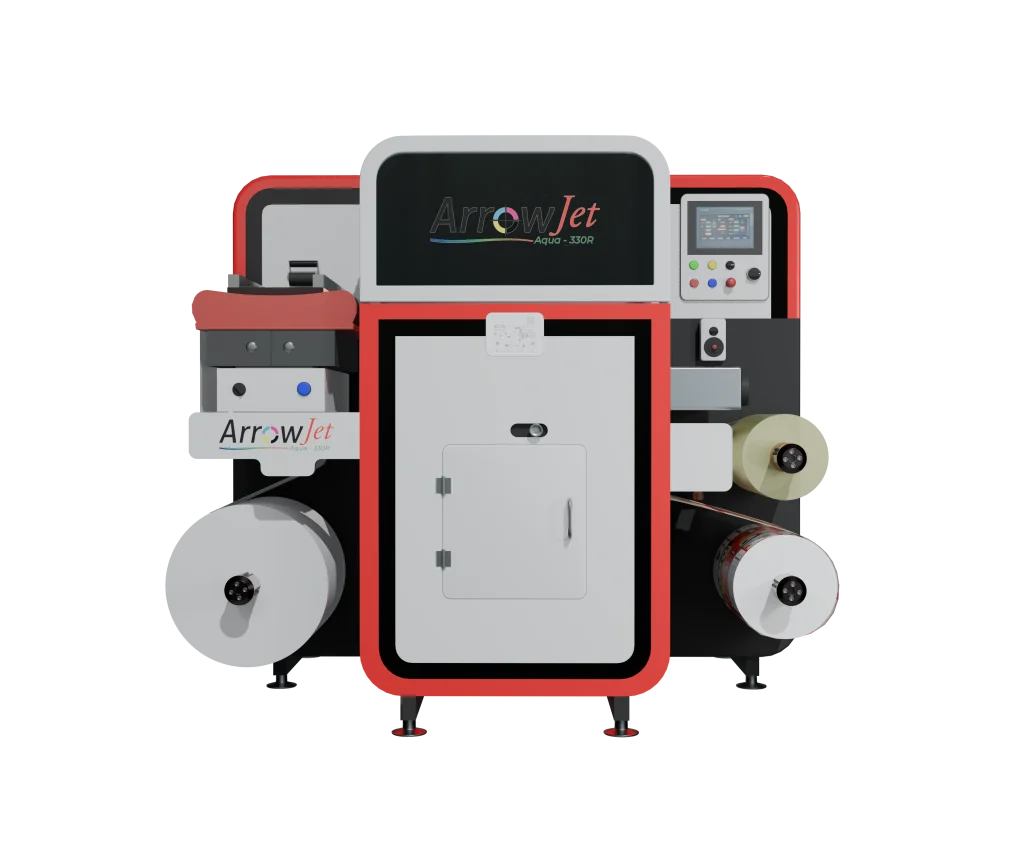
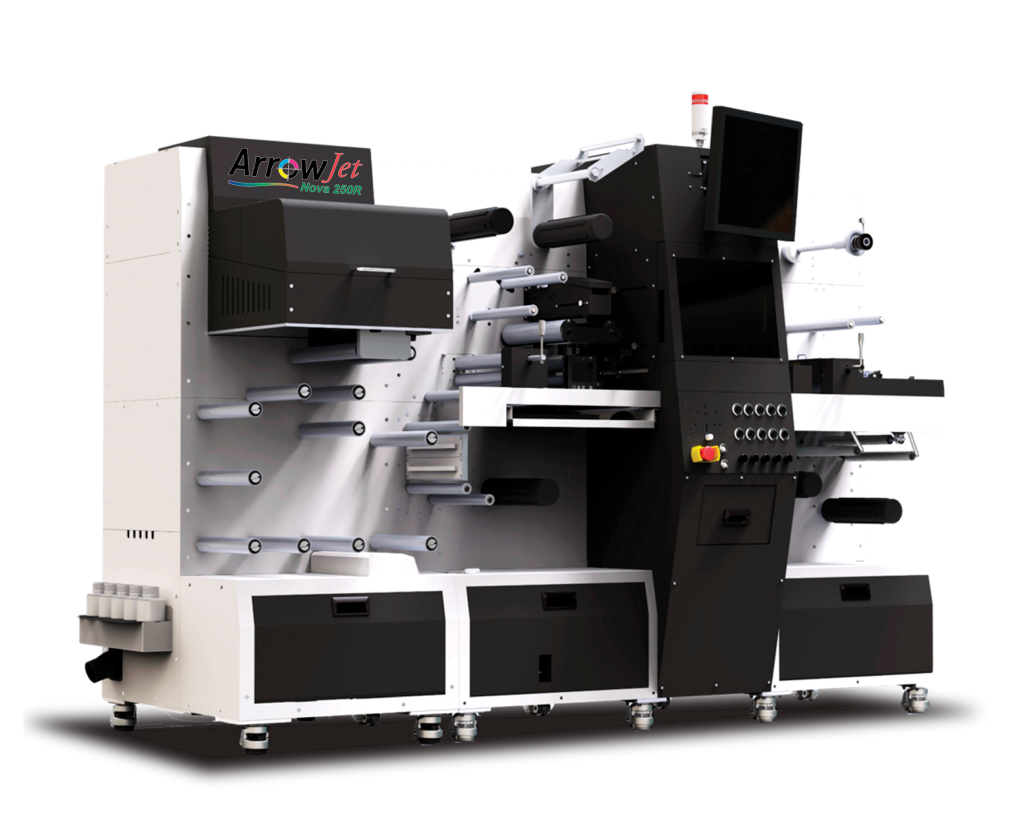
ArrowJet printing systems—including the ArrowJet Aqua 330R, Nova 250R, and high-speed Bolt—are built to solve the very problems traditional presses can’t. Powered by advanced Memjet technology and engineered for precision and scalability, ArrowJet systems give you the freedom to print what you need, when you need it, and how you want it.
Here’s how ArrowJet compares to traditional label presses across key areas:
Traditional Press:
You need plates, make-ready sheets, and manual registration. Changing jobs can take hours—and that’s if nothing goes wrong.
ArrowJet:
Zero plates. Zero setup headaches. Switch from one design to another in minutes, not hours. Ideal for brands managing multiple SKUs or seasonal packaging.
Traditional Press:
Short runs aren’t cost-effective. You often have to overorder or pay a premium to make it work.
ArrowJet:
Print exactly what you need—whether that’s 100 labels or 100,000. With built-in Variable data printing, you can personalize each label in a single pass.
Traditional Press:
Quality can be excellent, but it depends heavily on operator skill, plate condition, and ink consistency.
ArrowJet:
Delivers consistent, 1600 x 1600 dpi high-resolution printing with vibrant colors and crisp details—thanks to advanced water-based pigment inks and Memjet DuraFlex™ technology.
Traditional Press:
Solvent-based inks and plate waste make for a less eco-friendly process, with high VOC emissions and challenging cleanup.
ArrowJet:
Uses water-based inks that are low-VOC, food-safe, and environmentally responsible. Plus, less waste means a smaller carbon footprint.
You can even integrate inline priming and varnishing to enhance substrate compatibility and add gloss or matte finishes—all in one pass, no secondary equipment needed.
Traditional Press:
High upfront and ongoing costs—think plates, maintenance, labor, and waste.
ArrowJet:
Lower total cost of ownership. No plates. Less labor. Reduced waste. Plus, the ability to print on-demand reduces inventory and storage costs.
Pair your ArrowJet system with the ArrowEZcut 350R for a seamless end-to-end workflow. Laminate, die-cut, slit, and rewind—all inline, without slowing down production. It’s a complete finishing solution designed for today’s agile production needs.
ArrowJet is perfect for:
Whether you choose the compact ArrowJet Nova 250R, the high-resolution Aqua 330R, or the industrial-speed Bolt, you’re investing in a system that’s built for speed, flexibility, and future growth.
The world has changed—and so have your label requirements. The demand for customization, faster delivery, and sustainability isn’t going away. Traditional presses may have their place, but if you’re aiming to stay competitive, reduce waste, and move faster, ArrowJet is the future-forward solution you’ve been looking for.
So the real question isn’t “Should I go digital?”—it’s “How much longer can I afford not to?

Table of Contents Label Converter Finishing Capacity: Adding Blade and Laser Lines Label converter finishing capacity falls short from volume, job mix, or both. Diagnose

Table of Contents Confectionery Packaging Capacity Planning: Use Q4 Data for ROI Confectionery packaging capacity planning works best on cost data logged during Q4 peak,
Table of Contents Gold Foil Labels Digital Printing: Foil Effects Without Stamping Digital presses create gold foil label effects by printing on pre-metallized PET film
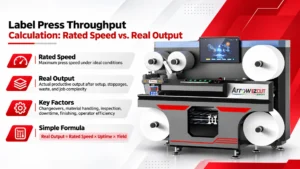
Table of Contents Label Press Throughput Calculation: Rated Speed vs. Real Output A label press throughput calculation turns rated speed into realistic labels per shift,
Table of Contents Seasonal Coffee Label Printing: Holiday Runs on One Press Seasonal coffee label printing works best when every Q4 label runs on one
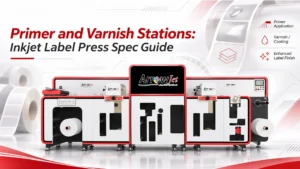
Table of Contents Primer and Varnish Stations: Inkjet Label Press Spec Guide Primer and varnish stations prime film before inkjet printing and protect it after,