FSMA 204 Traceability: Food Label Requirements for 2026
Table of Contents FSMA 204 Traceability: Food Label Requirements for 2026 FSMA 204 is a recordkeeping rule, not a packaging mandate — but printing the

The packaging ink market is not what it used to be.
In 2025, inks are no longer just about color on paper or film. They are about compliance, sustainability, performance, and branding power.
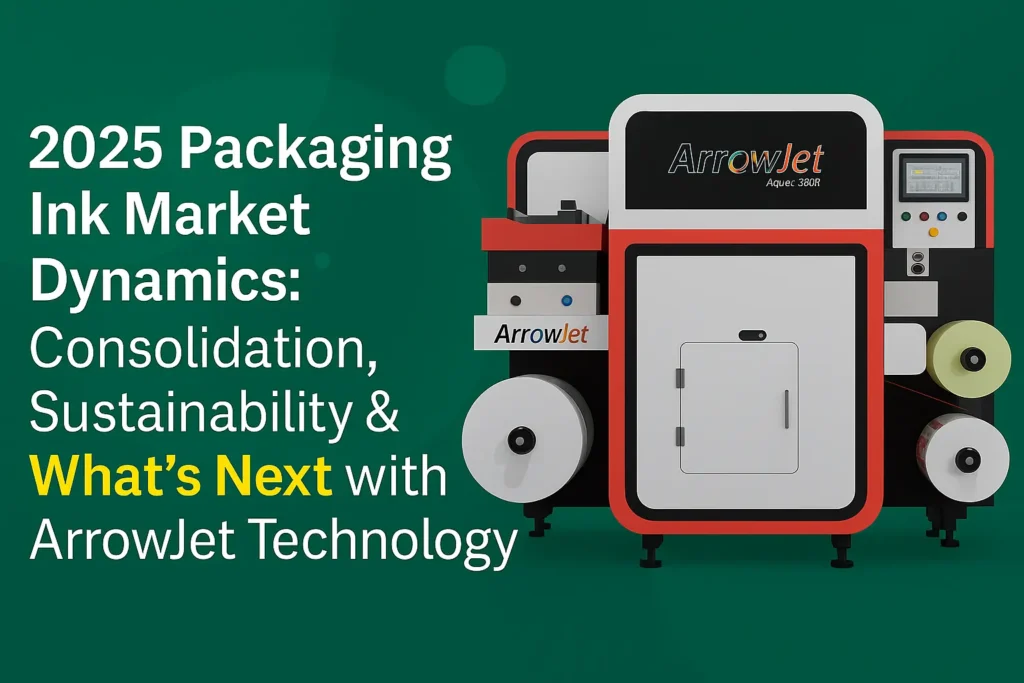
At Arrow Systems, Inc., we see this transformation every day. With our ArrowJet water-based pigment inkjet printers, we’re helping brands and converters stay ahead—printing smarter, greener, and more cost-effectively.
So, what’s driving all this change? Let’s dive into the market dynamics shaping 2025 and explore how ArrowJet technology is right in the middle of it all.
Here’s the big picture.
The global packaging inks Market in 2025 is valued somewhere between USD 5.28 billion and USD 9.44 billion. Projections suggest steady growth, with annual rates of 3.7% to 8.1% over the next decade.
What’s fueling this?
Flexible packaging is at the forefront. By 2025, flexographic inks alone are hitting USD 13.3 billion, driven by demand for wrappers, pouches, and lightweight solutions.
Now, here’s where ArrowJet steps in. With 1600 dpi resolution, high-speed throughput, and water-based pigment inks, we’re providing the perfect bridge between growth opportunities and sustainability demands.
The packaging ink industry is consolidating. Major names like Sun Chemical, DIC, Flint Group, and Siegwerk are expanding their reach, investing in R&D, and acquiring smaller players.
Why?
Because the future belongs to companies that can deliver innovation at scale—especially in eco-friendly inks.
But here’s the challenge: consolidation often leaves smaller converters dependent on a handful of large suppliers.
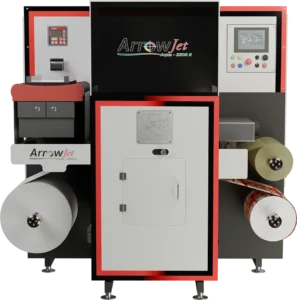
That’s where ArrowJet makes the difference. Instead of relying on giants, converters can adopt ArrowJet printers to take control of production. With options like the ArrowJet Nova 250R for short runs or the ArrowJet Bolt at 150 m/min for flexible packaging, brands can stay competitive, compliant, and agile.
Let’s be honest—sustainability isn’t optional anymore.
Consumers are asking for greener packaging. Regulators are tightening the rules. And brands are making big promises about carbon neutrality.
So what does that mean for inks?
It means a major shift away from solvent-based formulations toward water-based, UV-curable, and bio-based inks.
This is exactly why ArrowJet printers run on water-based pigment inks. They’re Swiss-compliant, safe for food packaging, and compatible with both paper-based and flexible substrates.
It’s not just about meeting regulations. It’s about giving brands the confidence to promise their customers packaging that’s both beautiful and responsible.
Regulations are reshaping the game.
For converters, this creates a headache. Testing, compliance, certifications, sourcing—it all adds up.
ArrowJet offers a way through. With water-based pigment inks, converters don’t have to worry about solvents or restricted chemicals. On-demand digital printing reduces waste and inventory costs. And ArrowJet’s fast setup means jobs can move from design to print in minutes—not days.
In short, we help brands stay compliant while keeping costs under control.
The ink industry is getting smarter.
Digital printing is now mainstream, driven by short runs, customization, and seasonal packaging. Brands want QR codes, anti-counterfeit measures, and personalization, all powered by digital workflows.
At the same time, nanotechnology and advanced pigments are making inks more durable, more vibrant, and more versatile.
This is where ArrowJet shines.

So, what’s pushing the packaging ink market forward this year?
And the trends?
Paper-based pouches, low-VOC inks, hybrid print systems, and smarter packaging.
ArrowJet is designed for all of this. Whether it’s running low MOQs, cutting costs, or helping brands experiment with seasonal designs, our printers make it possible—without compromising compliance or quality.
Let’s make it simple.
Traditional UV inks? Durable, yes. But they raise concerns about food safety, recyclability, and regulations.
ArrowJet water-based pigment inks?
This is why brands in food, beverages, cosmetics, and pharmaceuticals are making the switch. They want compliance, but they also want vibrant packaging that stands out. With ArrowJet, they don’t have to choose—they get both.
Looking ahead, one thing is clear: the packaging ink market is going greener, smarter, and faster.
And Arrow Systems, Inc. is ready. With our ArrowJet portfolio—from the Bolt to the Aqua 330R II—we deliver speed, quality, and sustainability in one package.
For converters, this means lower costs, less waste, and total compliance. For brands, it means packaging that’s not only eye-catching but future-ready.
Market Trend | 2025 Reality | ArrowJet Advantage |
Market Size | USD 5.28–9.44B, steady CAGR | Scalable portfolio for every business size |
Consolidation | Global majors dominate | Independent, agile partner with flexible solutions |
Sustainability | Shift to water-based, bio-inks | VOC-free, food-safe, recyclable-friendly inks |
Regulation | EU Green Deal, FDA compliance, tariffs | Swiss-compliant inks, no solvent reliance, local support |
Technology | Digital printing, smart labels, nanotech | 1600 dpi, variable data, high-speed, flexible media compatibility |
Key Drivers | Packaged goods, e-commerce, sustainability, digitalization | On-demand, low MOQ, reduced costs, faster turnaround |
The packaging ink industry in 2025 is not just evolving—it’s transforming.
Brands and converters are being asked to do more: comply with tougher rules, meet consumer sustainability expectations, and still produce packaging that sells on crowded shelves.
The good news? ArrowJet technology makes it possible.
With water-based pigment inks, high-resolution printing, and cost-saving digital workflows, ArrowJet is helping businesses print smarter, greener, and faster.
And as we look to 2030, one truth stands out: the winners will be those who embrace sustainability without compromising quality. With ArrowJet, you don’t have to choose—you can have it all.

Table of Contents FSMA 204 Traceability: Food Label Requirements for 2026 FSMA 204 is a recordkeeping rule, not a packaging mandate — but printing the

Table of Contents White Space in Label Design: How to Use Negative Space Effectively White space — the open area around and between design elements

Table of Contents Cannabis Label Compliance in 2026: State Rules, Variable Data, and In-House Printing U.S. cannabis label compliance has no federal baseline — each

Table of Contents The American Bumper Sticker: A Brief History The American bumper sticker is a small adhesive label that became one of the most

Table of Contents Durable Equipment Labels: Polycarbonate vs Polyester vs Metal Polycarbonate and polyester each fail in predictable ways when misspecified — this guide maps

Table of Contents CBD Label Requirements: What Your Labels Must Say CBD labels must carry truthful product information, avoid medical or therapeutic claims, and comply