Short Run Label Printers
In todays blog we discuss the benefits of short run label printing and why it’s beneficial to companies to do this inhouse rather than subbing the work out to the local label printer. The main points we want to touch on are:
- What are short run labels?
- What are the benefits of printing your own short runs?
- What type of label printer is right for us?
- Who can use short run label printers?
- How can you start printing short run labels yourself?
We hope that this blog post is both informative and helpful in your quest to find the right solutions for your business. We have over 40 years experience working with Digital printing, and have helped many small businesses find the right label printer for their needs.
What are short run labels?
Short run labels are typically described as any quantity under 10,000 labels in a run. While 10,000 labels may not seem like a lot, each of these labels would be exactly the same. That means that you cannot have multiple designs within the 10,000 labels.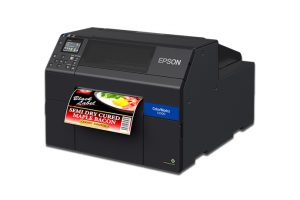
Printing over 10,000 labels is typically done on flexographic label printing equipment. These are more industrial presses that often take 15-20 min to get set up for a job, which is why the companies who use these printers are at a disadvantage when it comes to short run printing.
With a digital label press, the setup can be done in as little as 1 minute. Having a fast set up is extremely valuable for short run printing, because it doesn’t make sense to spend 20 minutes to set up a job that will be finished in 5 minutes.
What are the benefits of short run label printing?
We touched on one of the largest benefits in our previous section, but there are quite a few others to discuss as well. Short set-up times are definitely beneficial, but some of the other benefits should also be discussed.
One of the other main benefits to short run label printing is that you no longer need to have MOQ’s or minimum order quantities.
Many commercial color label printers require you to purchase a minimum order of labels to help cover the costs of setting up their printers, and paying for the plates need to print and cut your specific label designs.
One of the benefits to commercial digital label printers is that you can print 5 or 50,000 labels and the set up time and cost to print are the exact same. This type of technology is especially important for companies that are either purchasing a lot of short runs, or companies who are receiving a lot of inquiries for short run labels or stickers.
Who can use short run label printers?
The short answer to this questions is that almost any company who is producing goods and buying labels can use a label printer in their operations to cut costs, and reduce lead times to get their products on the shelf.
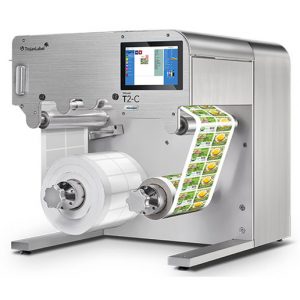
Short run label printers are already being used in many industries, but one of the highest growth segments is the cannabis industry. Dispensary label printers are being used to add testing data onsite to the packaging of many cannabis products.
These same black and white printers are being used in almost every supermarket to add price tags to various products.
What type of label printer is right for us?
This is a questions we receive a lot from people who are sick of dealing with lead times and MOQs for their labels. The answer is: It depends!
Some questions to ask when searching for a label printer are:
- What type of labels do you want to print?
- How many labels would you like to printer?
- Are you in the cannabis industry?
- Do you need high quality labels?
- Do you need a BS5609 compliant printer?
- Do you need durable labels?
- Is this label printer for small business?
- Label costs vs speed to get your labels?
- Do you want to use a continuous roll label printer? Or print using pre-cut roll labels?
- Do you need full color label printing, or will black and white work?
Asking these questions helps us determine the right choice for a color label press that fits your companies needs.
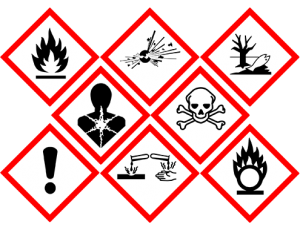
Some companies just want something basic to print shipping labels, other companies need bs5609 labels in order to ship their international maritime dangerous goods across the ocean.
Many cannabis companies are looking for something to print “prime labels” which is just a fancy way of saying they want the labels on their products to look awesome.
We cannot recommend the same label printer to companies that was BS5609 certification as companies looking for a marijuana label printer. Cannabis labeling and maritime dangerous goods imdg label makers are entirely different.
Another important factor is how many labels would you like to print per month. For instance, for a cannabis company that wants to produce 5,000 labels per month, we would likely recommend a small inkjet label printer.
On the other hand, a company who wants to print 500,000 labels per month would likely need a more industrial inkjet printer.
The company printing 5,000 labels per month would likely want to use pre-cut inkjet label rolls, whereas the company printing 500,000 would likely want to use a continous roll label printer and cut their labels out after.
Every customer is unique, and will each have their own requirements for the perfect printer. Our experts will help you find the right system for your needs, and because we have so many options from leading supplies around the world, we can recommend the right choice for your labeling applications.