UV vs. Aqueous Inkjet for Custom Cosmetic Labels: A Buyer’s Guide
Table of Contents UV vs. Aqueous Inkjet for Custom Cosmetic Labels: A Buyer’s Guide UV and aqueous inkjet serve different cosmetic label scenarios — UV

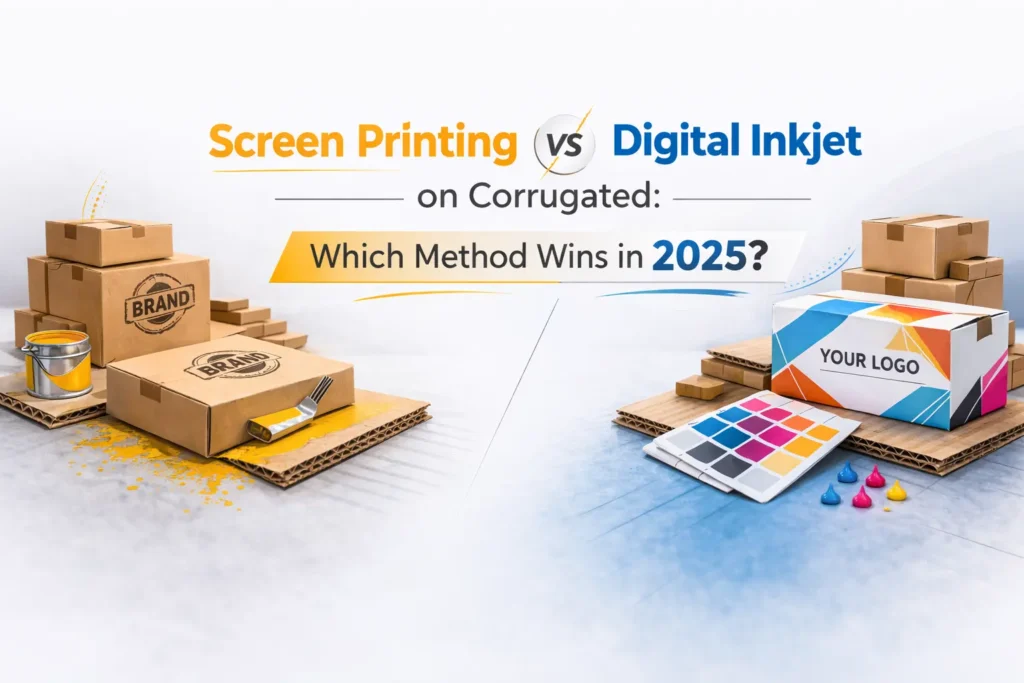
Screen printing has been the workhorse of corrugated decoration for decades. The process is straightforward: create a stencil (screen) for each color, push ink through the mesh onto the board, cure, and repeat. For high-volume, single-design production runs, it’s been the default choice—and for good reason.
When you’re printing 50,000 identical boxes, screen printing delivers consistent color and low per-unit costs. The screens are durable, the ink is thick and vibrant, and the economics are well-established. Converter facilities have built entire businesses around high-volume screen printing, and the supply chain is mature.
But the world has changed. Today’s packaging landscape demands shorter runs, faster turnaround, and constant versioning. The economics that made screen printing attractive are increasingly overshadowed by its limitations.
Every screen print job requires screen preparation, registration, and setup. For a four-color print, you’re looking at 2-4 hours of preparation before the first acceptable box comes off the line. That time is pure overhead—unbillable, unrecoverable, and repeated for every design change.
Each color requires its own screen. At $200-$500 per screen (depending on size and complexity), a four-color job incurs $800-$2,000 in setup costs before a single box is printed. Spread across 50,000 units, that’s manageable. Across 500 units, it’s prohibitive.
Screen printing economics demand volume. Most converters won’t touch runs under 1,000-2,500 units. This forces brands to over-order, commit to forecasts, and absorb the costs of obsolete inventory.
Once screens are made, changes are costly. A last-minute logo update, regulatory change, or promotional messaging shift requires new screens and new setup time. This inflexibility is increasingly out of step with fast-moving markets.
Screen printing uses spot colors—pre-mixed inks applied one at a time. Achieving full-color photography or complex gradients requires process color simulation (expensive) or simply isn’t possible. Brands looking for photorealistic graphics hit a hard technical ceiling.
Digital inkjet printing applies ink directly to corrugated board using precision printheads, much like a high-speed, high-resolution office printer adapted for industrial packaging. There’s no screen creation, no setup time between jobs, and no minimum order quantity.
Two technology platforms currently lead the market:

UV systems use inks that cure instantly under LED lamps. The result is a hardened, durable print surface ready for immediate handling, stacking, and shipping.
Key characteristics:

Water-based systems use pigment inks that penetrate the board surface slightly, creating durable prints with reduced environmental impact.
Key characteristics:
| Factor | Screen Printing | Digital Inkjet |
|---|---|---|
| Setup Time | 2-4 hours | <15 minutes |
| Setup Cost | $800-$2,500 | $0 |
| Minimum Order | 1,000-2,500 units | 1 unit |
| Per-Unit Cost (500 units) | $3.50-$6.00 | $0.85-$1.20 |
| Per-Unit Cost (50,000 units) | $0.35-$0.55 | $0.65-$0.90 |
| Color Capability | Spot colors (limited) | Full CMYK + white |
| Photographic Quality | Not possible | Standard |
| Variable Data | Not possible | Native capability |
| Design Changes | New screens required | File update only |
| Versioning | Prohibitively expensive | No additional cost |
| Lead Time | 2-4 weeks | Same day |
| Sustainability | Higher waste, VOCs | Options for water-based, lower waste |
Digital inkjet has transformed the packaging landscape, but screen printing retains advantages in specific scenarios:
Very High Volume, Single Design
When you’re running 100,000+ identical boxes monthly with no design changes, screen printing’s lower per-unit cost eventually overcomes its setup overhead. The break-even point varies but typically falls in the 25,000-50,000 unit range for simple two-color jobs.
Specialty Inks
Metallics, fluorescents, and specialty textures are still screen printing domains. While digital is rapidly advancing, some effects remain screen-exclusive.
Extreme Thickness Requirements
For applications requiring the heaviest ink deposit (some outdoor applications, extreme durability), screen printing applies more ink per pass than digital alternatives.
The economics are clear: digital wins at any volume under roughly 5,000 units for full-color jobs. Below 1,000 units, there’s no contest.
Digital’s native variable data capability enables:
Each of these is either impossible or cost-prohibitive with screen printing.
When your customer demands boxes tomorrow, digital answers. Screen printing’s 2-4 week lead times through converter networks can’t compete with same-day digital production.
Photorealistic images, complex gradients, and brand-accurate color reproduction are digital’s home turf. Screen printing’s spot-color limitation is increasingly a deal-breaker for brands expecting retail-ready shelf appeal.
Before committing to 10,000 boxes, print 50. Test the market. Validate the design. Digital makes iterative development economically viable.
Choose Screen Printing When:
Choose Digital Inkjet When:
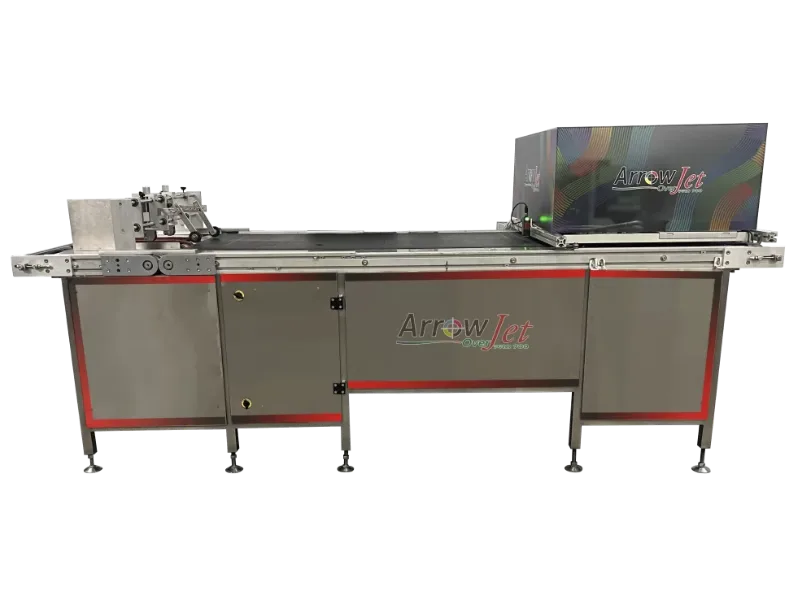
Once you’ve decided on digital, the next decision is UV (Limitronic V7) or water-based (Arrow OverJet Pro).
Both technologies deliver excellent print quality. The choice typically comes down to end-use requirements rather than output quality.
Smart operations don’t have to choose exclusively. Many facilities run both methods:
This hybrid model captures the best of both worlds: cost efficiency at scale plus flexibility for everything else.
Screen printing isn’t dead—it still serves high-volume, single-design applications where flexibility isn’t required. But for an increasing share of the market, digital inkjet has become the default choice.
The combination of no setup costs, instant turnaround, full-color capability, and versioning freedom makes digital the dominant choice for:
UV systems (like the Limitronic V7) address durability and speed requirements. Water-based systems (like the Arrow OverJet Pro) address sustainability and food safety needs. Between them, they cover the vast majority of modern corrugated printing applications.
The question in 2025 isn’t whether digital can replace screen printing. It’s whether your operation can afford to stay locked into the constraints of an analog process in a digital market.
Ready to evaluate digital inkjet for your operation? Arrow Systems provides sample printing, ROI analysis, and implementation guidance for both UV and water-based systems.

Table of Contents UV vs. Aqueous Inkjet for Custom Cosmetic Labels: A Buyer’s Guide UV and aqueous inkjet serve different cosmetic label scenarios — UV

Table of Contents Vintage Label Design Styles: A Reference Guide for Producers and Brand Owners Vintage label design draws from a specific visual history. The

Table of Contents Label Adhesive Types, Properties & Selection Guide The right label adhesive depends on the surface, temperature, shape, and conditions of the application

Table of Contents Label Trends: Minimalist Label Design Minimalist label design removes clutter — nude palettes, gradients, transparent labels, and smart-labels let the product speak

Table of Contents Tamper-Evident Label Printing: How to Choose the Right System Match tamper-evident label type — void, breakaway, or destructible — to product risk,

Table of Contents Skincare Label Printing: Materials, Inks & FDA Rules Skincare labels must withstand moisture, oils, friction, and aggressive formulation actives while meeting FDA