Blade vs. Laser Label Die Cutting: Accuracy, Speed, and Cost per Label
Table of Contents Blade vs. Laser Label Die Cutting: Accuracy, Speed, and Cost per Label Blade die-cutting suits simple shapes and long runs; CO2 laser
Walk into any gym, office break room, or outdoor gear shop and you will see them everywhere: little packets of powdered drink mixes promising energy, hydration, focus, or wellness. The single-serve sachet has become the dominant packaging format for functional beverages.
But as this market explodes, brands face a familiar challenge: how to package dozens (or hundreds) of SKUs profitably. The answer is digital printing, and it is transforming how powdered drink brands approach packaging.
Global market size: 5+ billion (2025)
CAGR: 6–8% annually through 2030
Single-serve segment: Growing 2x faster than bulk
E-commerce share: 35% and climbing
Electrolyte Mixes (Liquid I.V., LMNT, Drip Drop)
Functional Coffees (mushroom coffee, adaptogenic blends)
Protein Powders (single-serve trial sizes)
Wellness/Supplement Drinks (greens powders, collagen, nootropics)
Specialty Teas (matcha, chai, herbal blends)
Portability: Gym bag, desk drawer, carry-on luggage
Freshness: Individual portion packaging, oxygen and moisture barrier
Portion Control: Pre-measured servings, calorie tracking made easy
Trial and Discovery: Low commitment for new customers
Higher Perceived Value: -4 per serving vs. sh.50–1.00 for bulk
Subscription Friendly: Perfect for monthly boxes, auto-replenishment
Retail Optimization: Counter display friendly, impulse purchase size
Reduced Shipping Costs: Lightweight, compact, lower freight costs
Successful powdered drink brands quickly accumulate SKUs:
10 flavors × 3 formulations × 3 sizes = 90 base SKUs
Add seasonal = 120+ SKUs
Traditional printing: Impossible
Rotogravure Reality:
,000–15,000 per cylinder per SKU
100,000+ unit minimums
90 SKUs × ,000 = 20,000 in setup costs alone
The Inventory Burden
90 SKUs × 25,000 units = 2,250,000 sachets
At sh.30/unit = 75,000 in packaging inventory
Storage: 10,000+ square feet
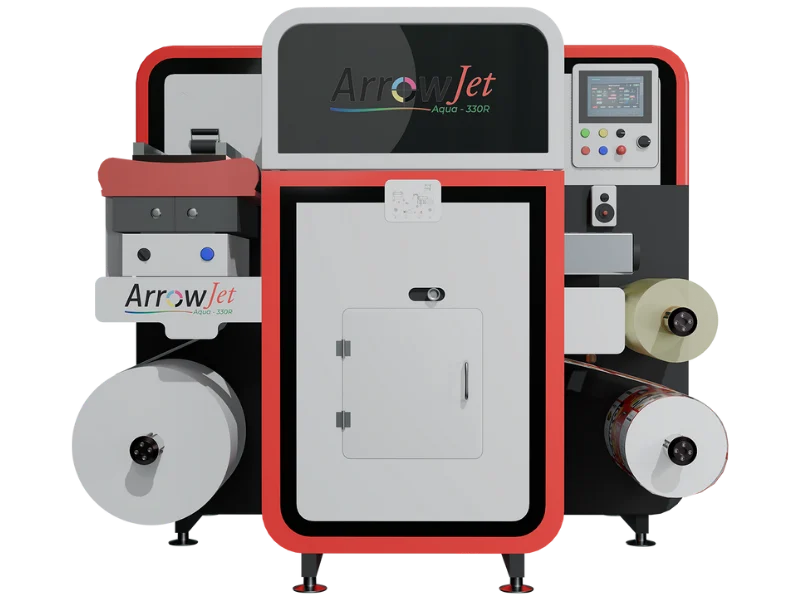
The ArrowJet Aqua 330R Lite changes the game:
Setup Costs: sh
Minimum Order: 100 sachets
Color Changes: Instant, no extra cost
SKU Flexibility: Unlimited
| Metric | Traditional | Digital (ArrowJet) |
|---|---|---|
| Setup costs | 00,000+ | sh |
| Initial inventory | 75,000 | 7,500 |
| Storage (annual) | 8,000 | ,800 |
| Obsolescence risk | High | Minimal |
| Year 1 Total | 93,000+ | 9,300 |
ArrowJet Aqua 330R Lite
Oxygen Barrier: Prevents oxidation of vitamins and flavors
Moisture Barrier: Critical for powder flowability
Light Protection: UV barriers for light-sensitive ingredients
Heat Seal Integrity: Must form hermetic seal
Nutrition Facts Panels: Small text requires high resolution
Allergen Declarations: Must be prominent and accurate
Supplement Facts: Complex formatting requirements
Lot Codes and Traceability: Variable data printing
6 core flavors
500 units each (3,000 total)
Digital printing exclusively
Total packaging cost: ,500
Analyzed sales data
Identified top 3 flavors
Discovered caffeine-free demand
Added 4 new flavors based on requests
Launched caffeine-free line
Introduced 30-pack size
Total SKUs: 20
Revenue: .4M
Packaging inventory: Never exceeded 5,000
Zero obsolete inventory
Gross margin: 68% (vs. industry 45–55%)
Acquired by major CPG for 2M in Year 2
The powdered drink mix market is exploding, and sachets are the format of choice. But success requires SKU flexibility that traditional printing cannot provide.
Digital printing with the ArrowJet Aqua 330R Lite enables:
SKU proliferation without inventory nightmares
Rapid innovation without massive bets
Premium positioning without premium setup costs
Sustainable practices through on-demand production

Table of Contents Blade vs. Laser Label Die Cutting: Accuracy, Speed, and Cost per Label Blade die-cutting suits simple shapes and long runs; CO2 laser

Table of Contents Custom Food Packaging: Key Questions Answered for Food Brands Custom food packaging shapes how shoppers recognize, evaluate, and choose a product —

Table of Contents GHS Label Durability Failure: 4 Causes and Practical Fixes GHS label durability failures trace to four causes: aqueous ink chemistry, paper face

Table of Contents White Ink Clear Label Printing: When You Need It and Why White ink under clear film keeps brand color, mandatory copy, and

Table of Contents GHS Label Compliance: A Practical Guide for Chemical Label Printing GHS label compliance is a safety-critical requirement for any business that manufactures,

Table of Contents Cannabis MSO Label Printing: In-House or Outsource? Cannabis MSO label printing moves in-house when label versions outgrow converter minimums or batch data