Table of Contents

Chocolate Packaging Printer: How Digital Printing Enables Short Runs and Custom SKUs

Digital chocolate packaging printing removes flexo minimums — enabling 50–500 wrappers or labels per SKU, same-day artwork changes, and no obsolete inventory.

Key Takeaways

  • Craft chocolate operations frequently manage 20–40 active wrapper SKUs across core bars, seasonal releases, collaborations, and private-label runs — each requiring its own packaging.
  • Digital printing is cost-competitive with flexographic printing at run sizes below approximately 500–3,000 units per SKU, with no plate costs or minimum order quantities.
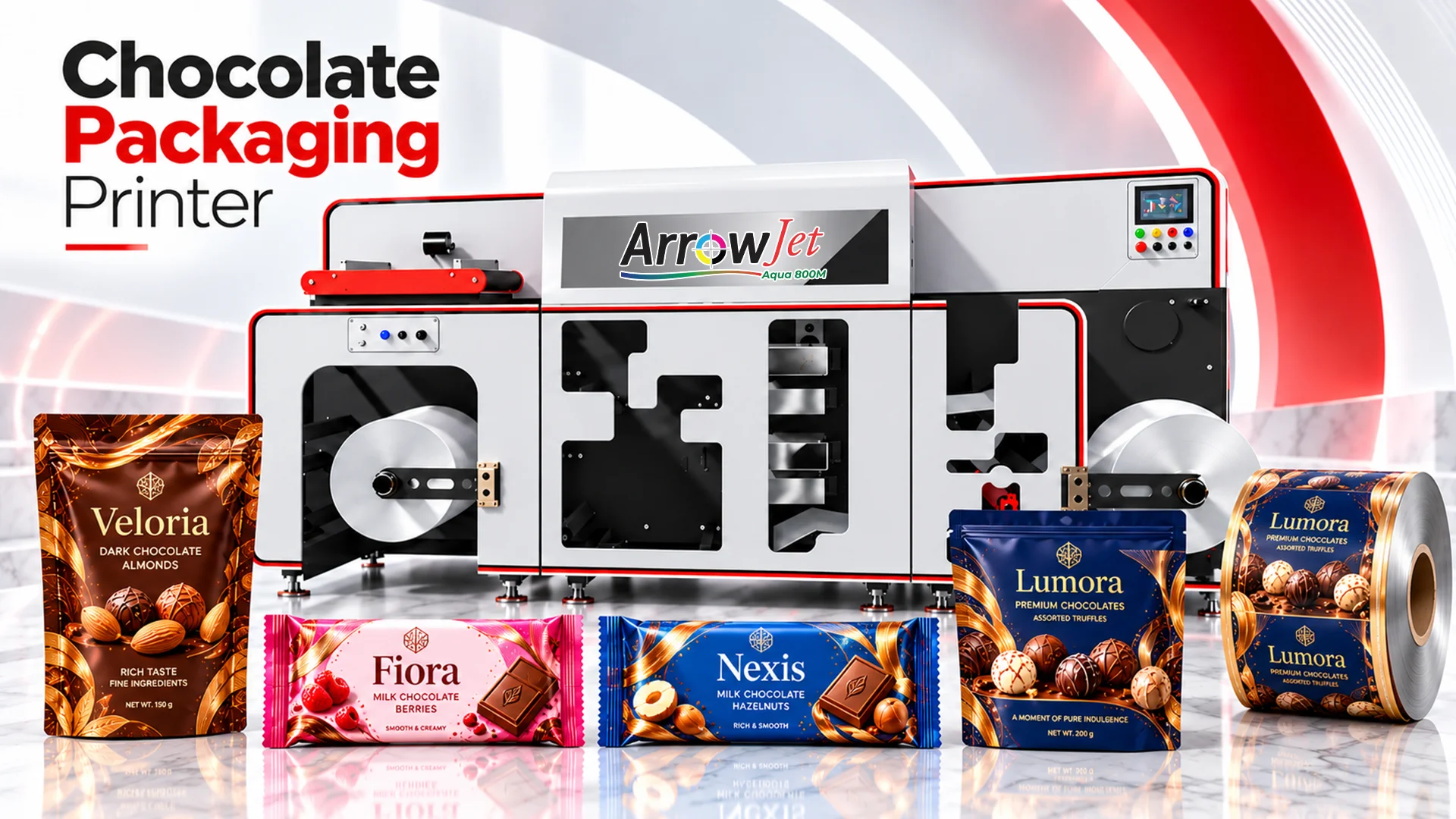
  • The ArrowJet Aqua 800M handles flexible chocolate pouches, flow-wrap film, and foil-laminated wrappers for wide-web and roll-fed flexible formats.
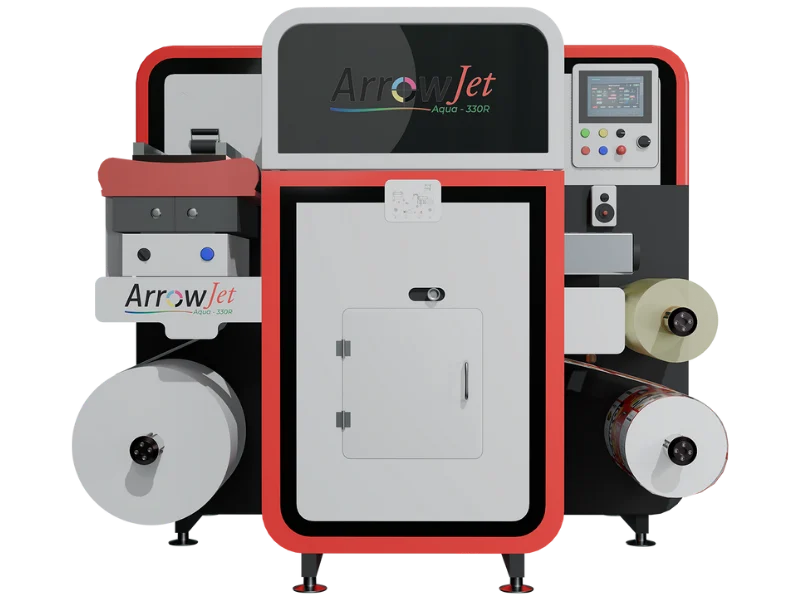
  • The ArrowJet Aqua 330R is designed for pressure-sensitive roll labels applied to bonbon boxes, gift assortments, and rigid chocolate packaging formats.
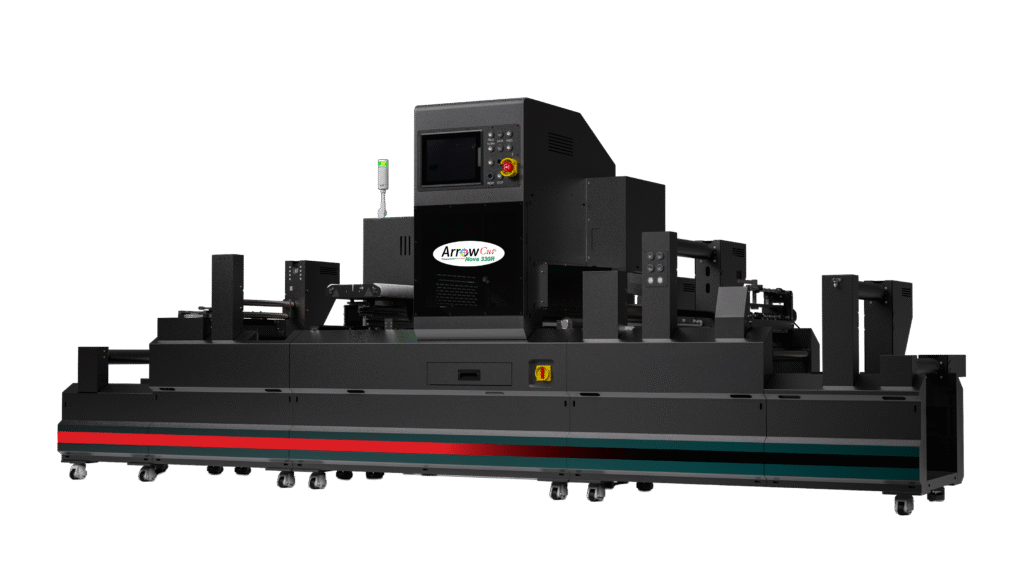
  • The ArrowCut Nova 330R laser die-cutter produces custom wrapper silhouettes and shaped labels without cutting dies — no per-SKU tooling cost or lead time.

Why Chocolate Brands Need Short-Run Packaging Flexibility

Chocolate is one of the most SKU-heavy categories in specialty food — a mid-sized craft maker can easily run 20–40 active wrapper SKUs across origins, seasons, collaborations, and private-label customers.

Each SKU needs its own wrapper or label. And each wrapper change — a new allergen callout, a reformulated recipe, a rebrand, an updated nutrition panel — triggers the same problem: pre-printed inventory becomes scrap. Teams regularly find hundreds or thousands of obsolete wrappers in storage after a recipe revision or a logo refresh.

A mid-sized craft maker can easily carry the following active packaging needs simultaneously:

  • 8–15 core bar SKUs across cacao origins and percentages
  • 4–6 seasonal or limited-edition releases per year
  • Collaboration bars with cafes, roasters, or other makers
  • Private-label runs for retailers, hotels, and corporate gift customers
  • Bonbon and truffle collections with frequent flavour rotation

Speed adds further pressure. When a holiday sales window closes in six weeks and a converter quotes a four-week lead time, the production window is already compromised. Short-run digital production collapses that cycle from weeks to days — or hours.

Digital vs. Flexo for Chocolate Packaging

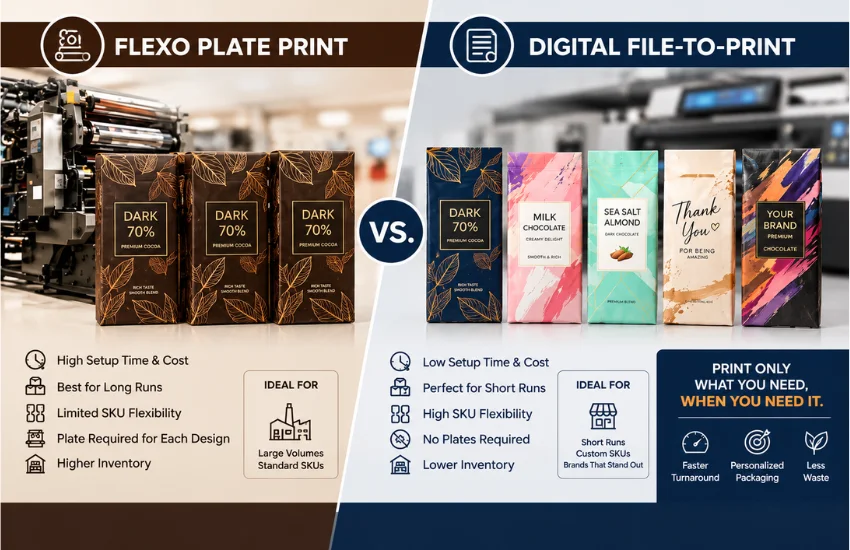
Digital printing eliminates plate costs and minimum order quantities; flexographic printing delivers lower per-unit cost only at stable, high-volume runs — typically above 5,000–25,000 units per SKU.

FactorFlexographic (Converter)Digital Inkjet (In-House)
Plate / setup cost$200–$800+ per colour per SKUNone
Minimum order quantity5,000–25,000+ units per run50 units or fewer
Lead time — new artwork3–5 weeksHours to same day
Revision turnaroundNew plates required; 2–4 additional weeksFile update; print immediately
Cost advantageLower per-unit cost above ~5,000–25,000 unitsCost-competitive at runs below ~500–3,000 units per SKU
Seasonal / limited-edition SKUsHigh minimum makes short seasonal runs uneconomicalViable at any run size; no tooling overhead
Obsolete inventory riskHigh — any formula or branding change strands stockNone — print against actual orders only
Variable data (batch codes, allergen updates)Requires plate revision or separate label applicationSupported natively; changes per run at no added cost

For chocolate operations managing high SKU counts, frequent artwork revisions, or private-label work across multiple customers, the effective breakeven shifts significantly in digital’s favour — because plate costs and obsolete wrapper stock are eliminated across the entire portfolio, not just any single SKU.

Foil, Matte, and Gloss — Material Options for Chocolate

Chocolate packaging substrates span foil laminates, matte papers, and gloss films — each with specific print requirements that digital systems designed for flexible packaging are engineered to handle.

Unlike a standard paper label, chocolate wrappers often need to perform on foil laminates, barrier films, or premium papers that carry brand weight on the shelf. The material choice also affects ink adhesion, finish durability, and food-contact compliance depending on whether the printed surface is in direct or indirect contact with the product.

Foil-laminated wrappers

Foil is the traditional bar wrapper material and the benchmark for premium shelf presence. Print considerations include ink adhesion on metallized surfaces, white-ink underprinting to preserve colour accuracy over the foil base, and controlled cure times to prevent scuffing during flow-wrap or hand-folding. Digital presses designed for flexible packaging handle foil-laminated substrates, but ink set and any required surface pre-treatment must be validated against the specific wrapper stock.

Matte papers and films

Matte uncoated stocks have become a signature of premium craft positioning and print well on digital presses. These substrates can be sensitive to rub-off, so protective varnish or lamination is typically part of the finishing path. Confirm varnish compatibility with the ink system before specifying matte uncoated for high-handling wrappers.

Gloss and spot-varnish effects

Gloss wrappers and spot-varnish highlights drive shelf impact, particularly for gift and seasonal SKUs. Digital presses paired with inline or near-line finishing can deliver these effects without tooling changes between SKUs — a significant advantage when running multiple seasonal designs on the same production day.

Barrier and flexible films

Stand-up pouches, flow-wrap film for tablet lines, and laminated flexible overwrap require substrates with defined barrier properties for freshness and shelf-life. These film-based materials — including PET/PE laminates and foil-based flexible structures — are the native substrate range of wide-web flexible packaging presses rather than label presses optimised for rigid containers.

Food-contact compliance depends on the specific ink, substrate, and whether the printed surface contacts the chocolate directly. Most chocolate wrappers use an inner barrier layer. Validate ink sets and substrate combinations with your equipment partner and regulatory lead before committing to production formats.

ArrowJet Aqua 800M for Flexible Chocolate Pouches and Wide-Web Wrapper Formats

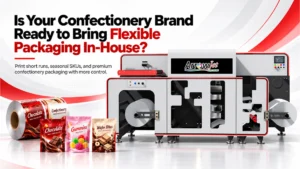
The ArrowJet Aqua 800M is designed for roll-fed flexible substrates — the primary format for chocolate bar wrappers, flow-wrap film, and stand-up pouches — enabling on-demand short-run production without plate costs or converter minimums.

For flexible wrappers, pouches, and flow-wrap film — the core of most bar and tablet packaging — the ArrowJet Aqua 800M handles the wide-web flexible substrate formats that confectionery operations actually use. In a chocolate production environment, this is where you would print:

  • Flow-wrap film for single-origin tablet lines
  • Foil-laminated bar wrappers for seasonal and limited-edition runs
  • Stand-up pouches for chocolate-covered nuts, bark, or bonbon assortments
  • Flexible overwrap for variety packs and holiday collections

On-demand run sizing against actual orders

The practical workflow: artwork is approved, the file enters the production queue, and a wrapper roll is printed for that specific batch. For a 250-unit Valentine’s run or a 400-unit collaboration bar, you print 250 or 400 wrappers — not 5,000. When the recipe changes next quarter, there are no obsolete wrappers to dispose of.

Wide-web flexible substrate compatibility

The Aqua 800M is engineered for the film-based materials — foil laminates, PET/PE laminates, and barrier flexible structures — that flow-wrap and pouch formats require. This is the substrate range that rigid-container label presses are not designed to process reliably.

Artwork changeovers without mechanical setup

Seasonal and limited-edition SKUs — which represent a significant share of craft chocolate production — can be switched between jobs without plate changes, tooling, or setup waste. Multiple wrapper designs can be produced in a single production shift.

Private-label and contract packaging capability

Co-packers managing flexible wrapper production for multiple chocolate brand customers can switch between brand-specific artwork on the same production day. This reduces scheduling complexity and per-run cost for multi-customer flexible packaging operations significantly.

ArrowJet Aqua 330R for Pressure-Sensitive Roll Labels on Chocolate Boxes and Rigid Formats

The ArrowJet Aqua 330R is a roll-to-roll digital press for pressure-sensitive label production — the standard format for bonbon boxes, gift assortments, and rigid chocolate packaging that uses applied labels rather than direct-print wrappers.

Not every chocolate product is a flexible wrapper. Bonbon boxes, gift assortments, rigid tablet boxes, and premium presentation packaging typically use pressure-sensitive labels applied to folded cartons, rigid setup boxes, or kraft packaging. In a chocolate operation, the Aqua 330R handles:

  • Pressure-sensitive labels for bonbon and truffle boxes
  • Flavour and origin callout labels for assortment packs
  • Batch codes, best-by dates, and allergen stickers
  • Private-label branding applied to a neutral box format

Variable data across assortment SKUs

A single print run can produce labels with rotating flavour names, batch identifiers, or personalised text for corporate gift orders — without stopping the press between versions. This is where variable data directly eliminates the need for multiple pre-printed label inventories across an assortment range.

Fast revision turnaround for allergen and compliance updates

When an allergen declaration changes or a recipe is reformulated, updated label artwork is in production the same day the change is approved. The equivalent update through a flexographic converter requires new plates and a 2–4 week lead time.

Integration with production scheduling

Connecting the Aqua 330R to production planning means labels are produced against the actual production schedule, not ordered in bulk and held in inventory. This directly eliminates the version-control risk of managing multiple pre-printed label revisions across a bonbon or assortment portfolio.

ArrowCut Nova 330R (Laser Die-Cutter) for Custom Chocolate Wrapper Shapes and Finishing

The ArrowCut Nova 330R is a digital laser die-cutting system that produces custom wrapper silhouettes and shaped labels without cutting dies — eliminating per-SKU tooling costs and the lead time that traditional die-making requires.

The finishing step is where many chocolate brands encounter a hard constraint. Custom wrapper silhouettes, shaped labels, and seasonal die-cuts traditionally require dedicated cutting tooling — a new die for every shape, with its own cost and lead time. The ArrowCut Nova 330R removes that constraint entirely using laser cutting technology:

Die-free custom wrapper silhouettes

Any wrapper shape — including complex contours, custom brand silhouettes, and non-standard formats — is produced directly from the digital cut file with no tooling required. Adding a new shape costs a file update, not a new cutting die.

Shaped labels for bonbon boxes and premium formats

Rounds, ovals, crests, and seasonal motifs for bonbon boxes and rigid packaging can be cut to specification on the same system, in the same production run — without switching to a different finishing tool or ordering shape-specific tooling in advance.

Holiday and seasonal shapes on demand

Hearts, trees, ornaments, and other seasonal silhouettes are produced on demand for the relevant window without minimum quantities or tooling lead times. When the season ends, the same system immediately switches to the next shape.

Short-run prototyping and design iteration

New wrapper formats and shaped label designs can be prototyped in the actual intended material before committing to a production run — eliminating the tooling cost that previously made short-run shape testing uneconomical.

Inline and near-line configurations

Inline finishing keeps the process compact for straightforward shapes and higher-volume runs. Near-line operation provides more flexibility when running multiple different die shapes across a busy week of small batches. Most chocolate operations use both configurations depending on the SKU mix and production schedule.

What Operators Typically Gain

Bringing chocolate packaging production in-house shifts several operational realities at once — from inventory levels and launch speed to SKU flexibility and compliance control.

Inventory reduction

Obsolete wrapper stock drops sharply because production runs against actual orders, not forecasted bulk quantities. The working inventory of pre-printed wrappers is replaced by a working inventory of digital files.

Faster seasonal and limited-edition launches

Seasonal and limited-edition SKUs move from artwork approval to finished packaging in days rather than weeks. This directly increases the number of viable seasonal windows a craft maker can respond to in any given year.

SKU flexibility without minimum commitment

Adding a private-label customer or a collaboration bar does not require justifying a 10,000-unit minimum or absorbing the tooling cost for a custom shape. New SKUs enter production at the actual order quantity.

Iteration without penalty

Recipe revisions, allergen updates, and branding refreshes cost a file update — not a scrapped pallet of pre-printed wrappers. This makes continuous product development and labelling compliance substantially less operationally costly.

Tighter production and compliance control

Coding, compliance text, and variable data are tied to the production schedule rather than managed through a separate procurement cycle. The correct label version is always in use because there is no competing pre-printed stock in circulation.

These gains are directional — the specific magnitude depends on your SKU count, run sizes, and how much packaging you currently scrap or hold as pre-printed inventory. A structured review of your production mix is the most direct way to see where the numbers land for your operation.

Frequently Asked Questions — Chocolate Packaging Printing

Common questions from chocolate producers and co-packers evaluating digital printing for short-run wrappers, custom labels, and flexible packaging formats.

For most chocolate operations, digital on-demand printing becomes compelling at run sizes between 50 and 500 units per SKU, with the breakeven against flexographic printing typically falling in the 500–3,000 unit range — depending on wrapper size and how frequently artwork changes. Brands managing high SKU counts, frequent recipe revisions, or active private-label work often find digital economics favourable well above that range because plate costs and obsolete inventory are eliminated across the entire portfolio.
Yes, with the right configuration. Digital presses designed for flexible packaging can print on foil-laminated substrates, and white-ink capability allows accurate colour reproduction over metallized surfaces. Metallic visual effects can also be achieved through substrate selection — printing on a foil base — combined with selective opaque whites and spot varnish. Validate specific ink and substrate combinations with your equipment partner against your actual wrapper stock before committing to a production format.

Version control is a process discipline, not only a technology question. Establish a single source of truth for approved artwork, enforce file-naming and version-lock conventions, and gate print release through a short approval checklist. When the printer is integrated with production planning, the correct current artwork version is pulled for each run automatically — which is precisely when manual tracking tends to break down. Digital on-demand production also eliminates the version-control risk of holding bulk pre-printed wrapper stock across multiple SKU revisions.

Request a Production Fit Review for Your Chocolate Packaging Operation

If you’re evaluating whether in-house digital packaging printing fits your operation, the most useful next step is a structured review of your actual SKU mix, substrate requirements, and run-size profile.

Arrow Systems can map those variables against the right combination of ArrowJet Aqua 800M (flexible wrappers and pouches), ArrowJet Aqua 330R (pressure-sensitive roll labels for rigid formats), and ArrowCut Nova 330R (laser die-cutting and custom finishing) — so you see where digital makes sense for your operation and where it doesn’t.

Request a Production Fit Review →