In-House Label Printers for Cosmetics and Personal Care Product Labels
For short-to-medium roll-label production, the ArrowJet Aqua 330R II is an aqueous-pigment starting point to evaluate with approved coated stock, color controls, and any required laminate or topcoat. Compare the ArrowJet UV 330H when white ink, varnish, clear or specialty substrates, or hybrid roll/flatbed work is required. Neither printing process by itself proves oil, moisture, abrasion, scratch, or regulatory performance; qualify the complete label construction on the actual container with the actual formulation and use conditions.
This page is for beauty brands, contract manufacturers, skincare companies, and personal care teams that need fast label revisions without carrying obsolete printed inventory.
What Cosmetic Label Work Requires
Cosmetic labels are both brand packaging and compliance documents.
The right printer needs to handle color, tiny ingredient text, substrates, durability, and version control.
Compliance scope
This page is equipment-selection guidance, not legal advice and not FDA approval of a printer, label, claim, or cosmetic. U.S. cosmetic labeling requirements depend on the product, claims, ingredients, package, distribution, and effective law. FDA says cosmetic claims must be truthful and not misleading, and disease-treatment/prevention or structure/function claims can make a product a drug. Have qualified regulatory personnel approve current copy for each SKU and market before printing.
Premium Shelf Appeal
Cosmetic labels often rely on accurate color, subtle gradients, smooth skin tones, matte finishes, gloss accents, and premium stocks.
Compliance Revisions
Formula or artwork changes can make preprinted inventory obsolete. For each product and market, use current approved regulatory copy and verify the applicable identity, net quantity, business/responsible-person information, ingredient declaration, warnings, contact information, and any effective MoCRA requirements; do not treat this equipment page as a complete legal checklist.
Moisture and Oil Exposure
Skincare, haircare, sunscreens, body oils, and bathroom products need materials and finishes tested against the real formulation environment.
SKU and Shade Count
Beauty brands often manage many colors, scents, sizes, limited editions, and retailer-specific versions.
Best Arrow Fits For Cosmetic Labels
Evaluate aqueous pigment inkjet for qualified coated roll-label stocks;
compare UV when white ink, varnish, specialty media, or hybrid roll/flatbed capability is needed. Select durability only after testing the complete label construction against its real container, formulation, handling, and storage conditions.
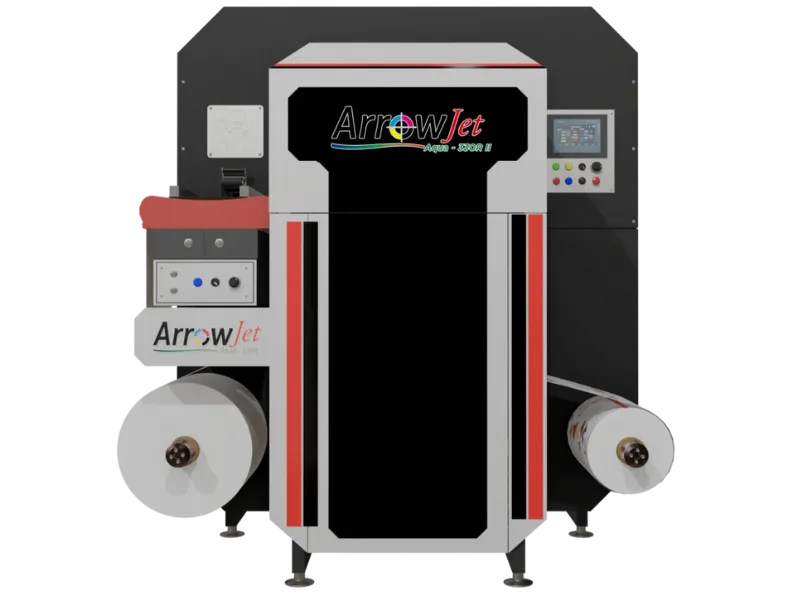
ArrowJet Aqua 330R II
A production roll label printer for standard cosmetic and personal care labels, short-to-medium runs, and frequent artwork revisions.
- Small text and gradients
- SKU versioning
- Water-based pigment CMYK
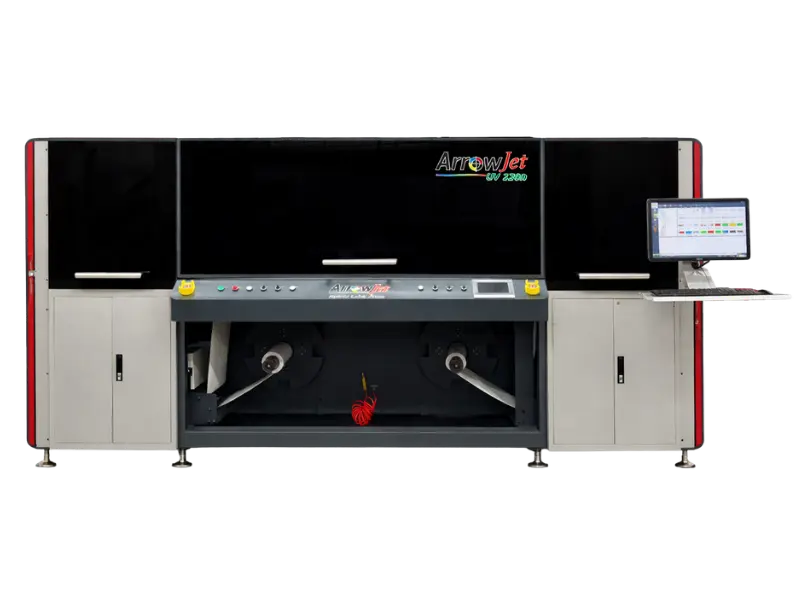
ArrowJet UV 330H
A true hybrid UV press to evaluate when the job requires roll-to-roll and flatbed capability, white ink, varnish, or clear and specialty substrates. Durability remains construction- and test-dependent.
- White ink and varnish
- Roll-to-roll plus flatbed capability Validate substrate, adhesive, cure, finish, container, and
- formulation
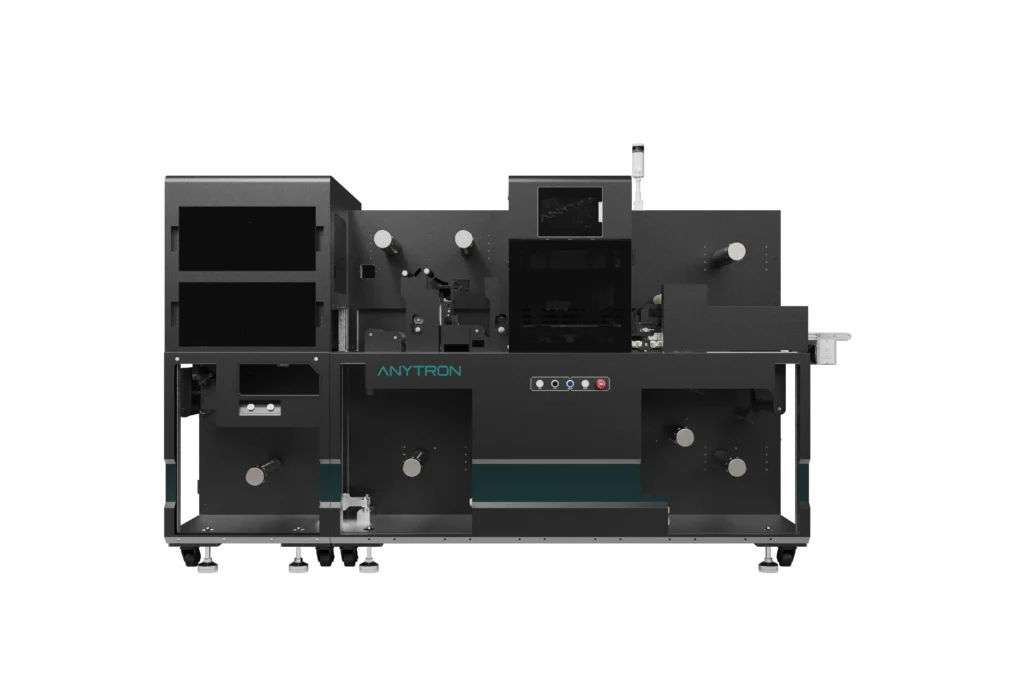
ANY-JET II
An inline label-production option combining CMYK printing, laminating, CO2 laser cutting, matrix removal, slitting, and rewinding in one workflow.
- Maximum media width: 250
- mm Tooling-free digital cutting Produces
- finished label rolls, not applied or filled containers
Choose By Cosmetic Label Stress
The product formula and usage environment should drive the press and finishing recommendation.
| Cosmetic Need | Recommended Direction | Why |
|---|---|---|
| Qualified coated roll-label stocks | ArrowJet Aqua 330R II | Evaluate for short-to-medium aqueous-pigment production when media, color control, finishing, and exposure testing meet the approved specification. |
| Labels exposed to sunscreen, oils, moisture, or abrasion Qualified construction | test Compare UV 330H | only when its process capabilities fit, then test ink, cure, stock, adhesive, laminate or varnish, container, formulation, and handling as a complete system. |
| Many shades or formulas | Digital on-demand workflow | Digital reduces obsolete inventory when SKUs and ingredient panels change. |
| Custom label shapes | ANY-JET II or digital finishing | Laser cutting avoids tooling delays for short-run cosmetic shapes. |
| Clear or metallic premium labels | ArrowJet UV 330H | White ink and varnish support specialty cosmetic packaging effects. |
Cosmetic Label Workflow
Beauty labels should be treated as controlled production assets,
not just design files.
Route each SKU through regulatory/artwork approval for the destination market. For U.S. cosmetics, verify the applicable identity, net quantity, name and place of business/responsible-person information, ingredient declaration, warnings and required contact information; separately determine whether claims or ingredients make the product a drug or subject it to additional rules.
Choose material and finish based on bottle, jar, tube, moisture, oil, and handling exposure.
Construction qualification protocol
Define pass/fail criteria before claiming durability. Test the exact facestock, print-receptive coating, ink and cure, adhesive, laminate or varnish, container material and geometry, application conditions, and actual product formulation. Include intended moisture, oil or chemical exposure, squeeze/flex behavior, refrigeration or heat where relevant, abrasion/rub, scratch, edge lift, adhesion, barcode scan, and small-text legibility over the required life. Record the approved construction and first article; do not transfer results to a different stock, adhesive, finish, container, or formula without review.
Decide if premium effects such as clear film, metallic stock, white ink, or varnish are needed.
Print first-article samples and verify the current approved artwork revision before each run.
Buyer Questions
There is no universal best press. Evaluate Aqua 330R II for short-to-medium aqueous-pigment roll-label production on qualified coated stock. Compare UV 330H when white ink, varnish, clear or specialty media, or hybrid roll/flatbed work is needed. Confirm measured color and legibility requirements and test the complete label construction for its real exposure conditions.
They often need faster formula updates, fewer obsolete labels, shorter launch timelines, retailer-specific versions, limited editions, and more control over approved artwork revisions.
Yes. Cosmetic labels can require identity, net contents, name and place of business, ingredient declarations, warnings, country-of-origin details, and other regulated information depending on the product.
Consider UV 330H when the design or workflow needs white ink, varnish, clear, metallic, dark, specialty media, or hybrid roll/flatbed capability. Do not call the result waterproof, oil-resistant, or scratch-resistant until the complete cured and finished label construction passes defined tests on the actual container with the actual formulation and intended handling conditions.
Test the actual substrate, adhesive, laminate or varnish, bottle or tube surface, formulation exposure, moisture, abrasion, and small-text legibility before scaling production.
Build A Cosmetic Label Workflow That Keeps Brand Quality And Compliance Revisions Under Control.
Share the application, substrate, run length, finishing needs, and growth goal. Arrow can help narrow the right equipment fit.