Pet Food Brand Label Supplier Problems: 5 Signs to Print In-House
Table of Contents Pet Food Brand Label Supplier Problems: 5 Signs to Print In-House Most pet food label supplier problems are a model mismatch: flexo’s

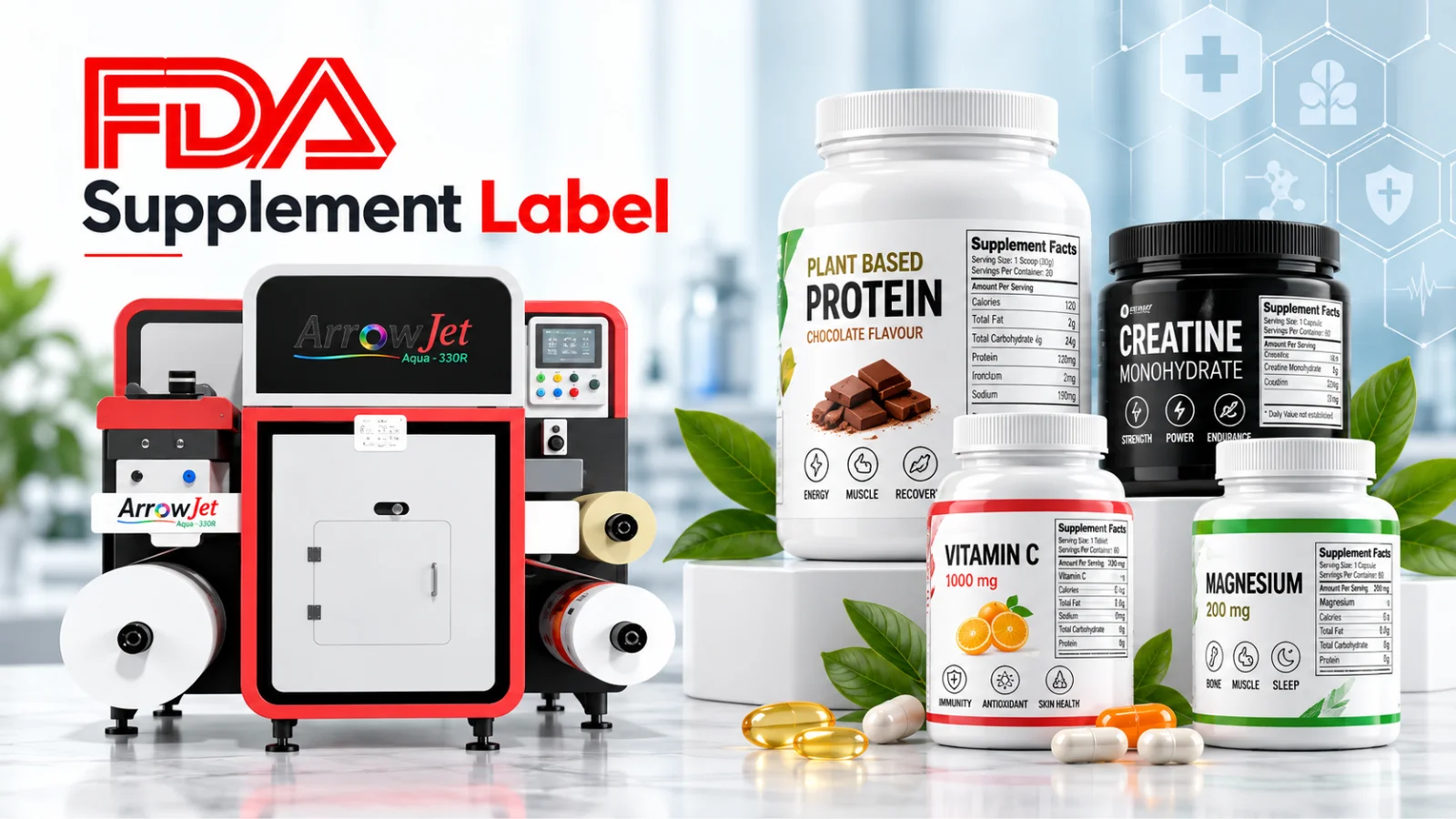
Every dietary supplement sold in the U.S. must satisfy nine mandatory elements under 21 CFR Part 101 — including a Supplement Facts panel, allergen disclosures, and a structure-function claim disclaimer.
This guide is a practical reference for operations, QA, and regulatory teams — not legal advice. Always verify current requirements against the published CFR and have final label copy reviewed by qualified regulatory counsel before print release.
Several regulatory, retail, and operational pressures are converging on supplement labeling in 2026 — from FASTER Act allergen requirements to retailer chargeback policies for nonconforming labels.
The FASTER Act added sesame to the list of major food allergens, with the requirement effective January 1, 2023. Labels that predate this addition and remain in circulation without sesame disclosure are noncompliant. Any label inventory pre-printed before this update that has not been replaced represents active compliance risk.
California’s Proposition 65 and other state-level disclosure rules add requirements beyond federal 21 CFR Part 101 for brands selling nationwide. Labels must satisfy both federal and applicable state requirements, and the relevant state list can change on a rolling basis.
Major retailers are tightening chargeback and shelf-pull policies for nonconforming supplement labels. A label that clears FDA scrutiny may still generate a retailer chargeback if it does not conform to that retailer’s specific format or claim requirements. This makes label accuracy an operations cost issue, not only a regulatory one.
More formulas, flavors, private-label variants, and international SKUs mean more label files to manage — and more pre-printed inventory to potentially scrap when a rule, formula, or supplier changes. Brands managing expanding SKU counts without a governed artwork workflow carry proportionally higher revision risk.
Under 21 CFR Part 101, nine elements are required on every dietary supplement label — use this table as the first pass in any pre-print compliance review.
| Required Element | What It Must Include | Label Location |
|---|---|---|
| Statement of identity | Common or usual name of the product plus the term “dietary supplement” (or a more specific descriptor such as “herbal supplement” or “calcium supplement”). | Principal display panel (PDP) |
| Net quantity of contents | Count, weight, or volume declared in both U.S. customary and metric units where applicable. Must appear in the lower 30% of the PDP. | Principal display panel (PDP) |
| Supplement Facts panel | Serving size, servings per container, each dietary ingredient, amount per serving, and % Daily Value where established. See Supplement Facts sub-checklist below. | Information panel |
| Ingredient list | All ingredients not already declared in the Supplement Facts panel, listed in descending order of predominance by weight — including excipients, flow agents, capsule materials, and colorings. | Information panel |
| Name and place of business | Name and address of the manufacturer, packer, or distributor. If the firm is not the manufacturer, must qualify the relationship (e.g., “Manufactured for” or “Distributed by”). | Information panel |
| Domestic adverse-event contact | A U.S. address or phone number for reporting serious adverse events, as required under the Dietary Supplement and Nonprescription Drug Consumer Protection Act. | Information panel |
| Allergen declarations | All nine major food allergens declared under FALCPA and the FASTER Act — using either a “Contains” statement or parenthetical identification in the ingredient list. Sesame is now the ninth major allergen. | Information panel |
| Country of origin | Required by CBP rules for imported finished goods or components. Confirm applicability with regulatory counsel for your specific supply chain. | As required |
| Lot or batch code | Sufficient to support traceability and recall response per 21 CFR Part 111 GMP expectations. Typically applied inline at time of production rather than pre-printed. | As produced (inline) |
The Supplement Facts panel is the most format-sensitive element of a supplement label — incorrect math, missing % DV footnotes, or improper proprietary blend formatting are frequent sources of FDA citations.
Serving size must be expressed in a household measure (e.g., “1 capsule,” “2 gummies,” “1 scoop (5 g)”). “Servings per container” must be accurate to the declared net quantity. Confirm both figures match the current formula master record — not a prior revision — before release to print.
For each dietary ingredient, list the quantitative amount per serving in appropriate units (mg, mcg, g, IU where still permitted for specific nutrients). Amounts must match the current validated formula — not an older version of the Supplement Facts artwork file.
Required for all ingredients with an established Daily Value. A dagger footnote (“†Daily Value not established”) is required for ingredients — including most botanical extracts and proprietary amino acid blends — without an established DV.
For each botanical ingredient, the label must identify the specific plant part used (root, leaf, aerial parts, seed, etc.). Omitting part-of-plant identification for botanical inputs is a compliance gap that reviewers frequently flag.
Permitted under 21 CFR Part 101, but the total blend weight must be declared, and individual components within the blend must be listed in descending order of predominance by weight. Individual component amounts are not required but, if declared, must be accurate.
Below the Supplement Facts box, list all non-dietary ingredients — capsule shells, flow agents, natural flavors, colorings, binders — in descending order by weight. This line is separate from the Supplement Facts panel and is not boxed.
FDA prescribes minimum type sizes, bar thicknesses, and box placement. Panels must be legible with sufficient contrast and generally located adjacent to the ingredient statement and manufacturer information. Reduce-size and linear formats are permitted only when space constraints satisfy specific regulatory thresholds.
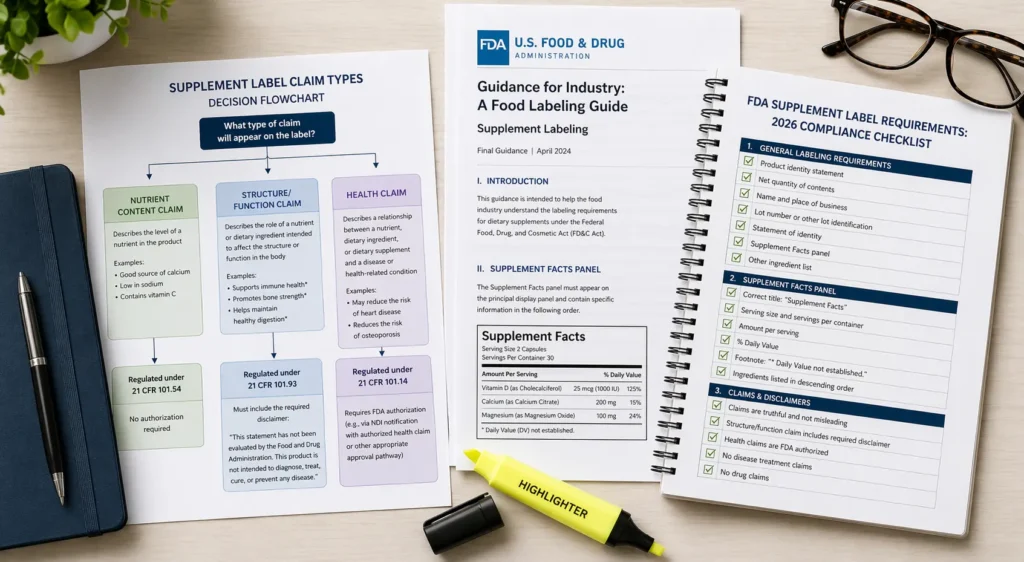
FDA recognizes four distinct claim categories for supplement labels — each with different authorization requirements, wording constraints, and regulatory risk profiles.
| Claim Type | What It Covers | Authorization Required | FDA Disclaimer Required? |
|---|---|---|---|
| Nutrient content claim | Describes the level of a nutrient in the product (e.g., “high in vitamin C,” “excellent source of calcium”). | Must meet defined thresholds in 21 CFR 101.54 and related sections. | No |
| Authorized health claim | Describes a relationship between a substance and a disease or health-related condition (e.g., calcium and osteoporosis). | Must be specifically authorized by FDA regulation. Exact wording or a close permitted equivalent must be used. | No (but exact claim wording is tightly controlled) |
| Qualified health claim | Supported by emerging but not conclusive scientific evidence — requires FDA-reviewed qualifying language acknowledging limited evidence. | Requires a specific FDA letter of enforcement discretion and carefully controlled wording. | Qualified language is required in lieu of disclaimer |
| Structure-function claim | Describes the role of a nutrient or dietary ingredient in maintaining normal body structure or function (e.g., “supports immune function,” “calcium builds strong bones”). | Must be truthful, not misleading, with substantiation on file before use. Requires 30-day notification to FDA after first marketing. | Yes — full disclaimer required on label |
| Disease claim | Any express or implied reference to diagnosing, treating, curing, or preventing a specific disease. | Not permitted on dietary supplements. Converts the product to a drug under FDA regulation. | N/A — not permitted |
Any supplement label carrying a structure-function claim must include the following disclaimer, verbatim, in legible type with a box or other prominence indicator that visually connects it to the claim:
“This statement has not been evaluated by the Food and Drug Administration. This product is not intended to diagnose, treat, cure, or prevent any disease.”
The disclaimer must appear on both the label and any labeling (including inserts, booklets, and outer cartons) that bears the claim. Printing the disclaimer below minimum type size relative to the claim is a documented trigger for FDA warning letters.
FDA evaluates implied disease claims the same way as explicit claim text. Language referencing specific disease symptoms, product names evoking disease states, testimonials describing disease treatment, or third-party research references implying disease treatment can constitute a disease claim even when no explicit disease name appears on the label. Every claim element — front panel, back panel, side panels, attached booklets — must be mapped to a category and reviewed by qualified regulatory counsel before print release.
FDA warning letter patterns and retailer rejection data cluster around the same issue categories year after year — most are preventable with a governed artwork workflow and a documented pre-print checklist.
Language about “reducing joint inflammation,” “lowering cholesterol,” or “fighting infection” crosses the line from structure-function into disease claim territory, regardless of how it is framed. These are among the highest-frequency triggers in FDA warning letters issued to supplement brands.
Structure-function claims without the full disclaimer text, or with a disclaimer printed below minimum type size, are a recurring warning-letter issue. The disclaimer must appear, must be legible, and must be visually connected to the claim it accompanies.
When a formula is revised, serving-size math, servings-per-container math, and % DV calculations must all be recalculated and cascaded into a new artwork file before print release. Artwork files that retain figures from a prior formula version are a frequent source of Supplement Facts panel errors.
The two most common proprietary blend errors are components not listed in descending order of predominance by weight, and total blend weight omitted from the panel. Both are specifically addressed in 21 CFR Part 101 and are identifiable in a standard pre-print checklist review.
Gaps are especially common around sesame (added January 2023 under the FASTER Act), tree nut specificity (FDA expects individual nut identification, not a generic “tree nuts” declaration), and cross-contact statements that are inconsistent with the facility’s actual allergen controls. Allergen declarations must reflect both formulation and manufacturing environment.
A fill-weight adjustment or container swap that changes the actual net content must trigger a label revision. Pre-printed labels reflecting the prior net quantity are noncompliant the moment the change is made at fill-and-finish.
Labels that predate a facility relocation or that omit the domestic serious-adverse-event contact required under the Dietary Supplement and Nonprescription Drug Consumer Protection Act are a preventable compliance gap that bulk pre-printed inventory often perpetuates.
Ingredient names that do not match accepted common or usual names, or that reference unapproved dietary ingredients, are a recurring FDA issue. Ingredient nomenclature should be validated against the FDA’s reference databases before artwork is locked for print.
A governed artwork workflow with version control, locked approval gates, and a documented pre-print checklist addresses most of these categories before they reach finished goods.
On-demand digital label printing removes the operational delay between label approval and compliant finished goods — reducing revision turnaround from 2–4 weeks at a flexographic converter to hours on the production floor.
The operational challenge behind label compliance is not only regulatory — it is logistical. Traditional flexographic label procurement requires large minimum order quantities to maintain competitive unit costs, which directly increases obsolescence risk whenever a regulation, formula, or supplier changes. Pre-printed inventory becomes noncompliant the moment the change takes effect, and the cost of scrapping and reprinting can run into thousands of labels per revision cycle.
Print the exact quantity needed for each production run — from 300 labels for a limited-release SKU or clinical trial packaging to 10,000 for a core product line. No overproduction, no pre-printed obsolescence, no minimum order constraint from a converter.
When the current approved label file is the only version from which labels can be produced, the risk of an outdated revision reaching the filling line is structurally eliminated. Digital on-demand presses produce every run from the same approved digital file, with a direct audit trail linking artwork version to production output.
When a rule, formula, or supplier change triggers a label revision, the delay between artwork approval and compliant finished goods is measured in hours rather than weeks. For operations teams absorbing frequent allergen updates, formula revisions, or state-level disclosure changes, this compression in cycle time is a direct reduction in compliance risk exposure.
Labels are produced against confirmed production demand rather than long-range forecasts. When regulations change — as with the FASTER Act sesame addition or ongoing FDA guidance updates — the next production run simply prints from the revised approved file, with no pre-printed inventory to scrap.
| Factor | Flexographic (Pre-Printed, Converter) | ArrowJet Aqua 330R (In-House Digital) |
|---|---|---|
| Plate / setup cost | $200–$800+ per color per SKU | None |
| Minimum order quantity | Typically 5,000–25,000+ labels per run | 1 label minimum |
| Revision turnaround | New plates required; 2–4 additional weeks | File change; print within hours |
| Obsolete inventory risk | High — any formula or regulatory change strands stock | None — print only what is needed per run |
| GMP version control | Difficult — multiple label revisions may coexist in warehouse | Direct — each run prints from the current approved file |
| Ink system | Solvent or UV-based inks (converter dependent) | Water-based inkjet — no solvents |
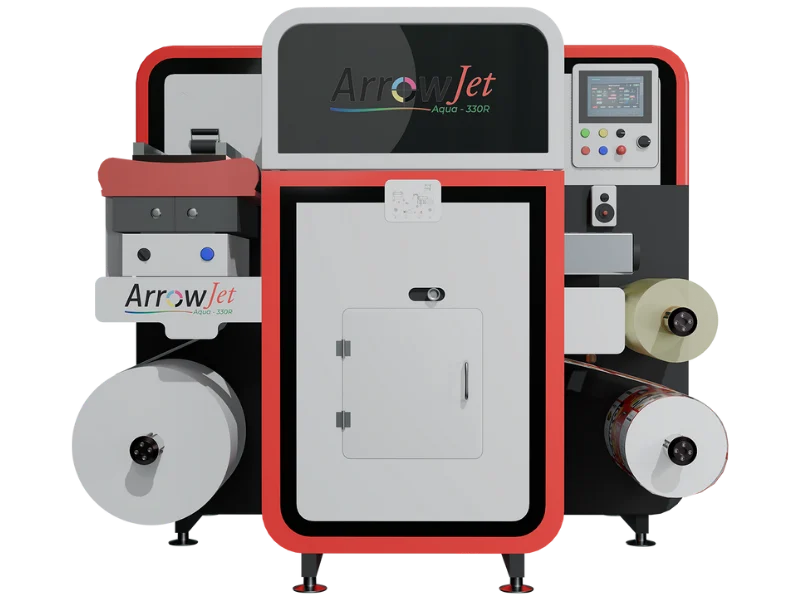
Arrow Systems and the ArrowJet Aqua 330R do not guarantee regulatory compliance — that responsibility remains with the brand and its regulatory team. What on-demand digital printing provides is the operational capability to implement label changes quickly once compliance decisions are made.
Common questions from regulatory affairs managers, QA leads, and operations directors on supplement label compliance, claim language, and digital printing options for 2026.
Yes, whenever the label bears a structure-function, general well-being, or nutrient-deficiency claim. The full disclaimer must appear, be legible at the required type size, and be positioned in a way that clearly connects it to the claim. Omitting the disclaimer, printing it below minimum type size, or separating it visually from the claim it accompanies are all documented triggers for FDA warning letters.
If your team is rebuilding its supplement label checklist for 2026 — or absorbing the cost of scrapped pre-printed inventory every time a regulation or formula changes — a structured operational assessment can clarify whether in-house digital label printing fits your workflow.
Arrow Systems offers assessments that look at SKU mix, revision frequency, compliance risk exposure, and current label procurement economics to determine whether the ArrowJet Aqua 330R and a governed in-house printing workflow would strengthen your compliance response and reduce operational overhead.
Final label copy and claim decisions should always be confirmed with qualified regulatory counsel. What Arrow Systems can help with is the operational side: making sure that once your regulatory team approves a label, it reaches finished goods quickly, accurately, and without obsolete inventory risk.
Request Your Label Printing Assessment →
Table of Contents Pet Food Brand Label Supplier Problems: 5 Signs to Print In-House Most pet food label supplier problems are a model mismatch: flexo’s
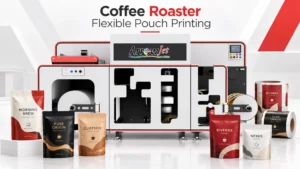
Table of Contents Coffee Roaster Flexible Pouch Printing Workflow: Roll to Bag In-house coffee pouch printing runs five stages — substrate loading, queue setup, the
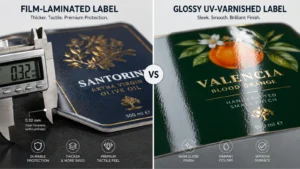
Table of Contents Overlaminate vs. Varnish Labels: How to Choose Protection Film overlaminate protects against immersion, wash-down, and solvents; UV and aqueous varnish suit retail
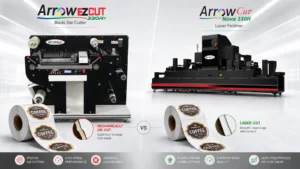
Table of Contents Blade vs. Laser Label Die Cutting: Accuracy, Speed, and Cost per Label Blade die-cutting suits simple shapes and long runs; CO2 laser
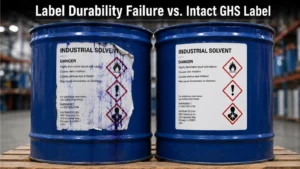
Table of Contents GHS Label Durability Failure: 4 Causes and Practical Fixes GHS label durability failures trace to four causes: aqueous ink chemistry, paper face

Table of Contents White Ink Clear Label Printing: When You Need It and Why White ink under clear film keeps brand color, mandatory copy, and