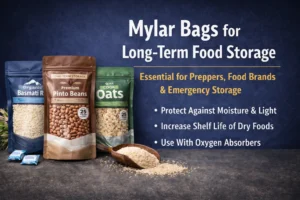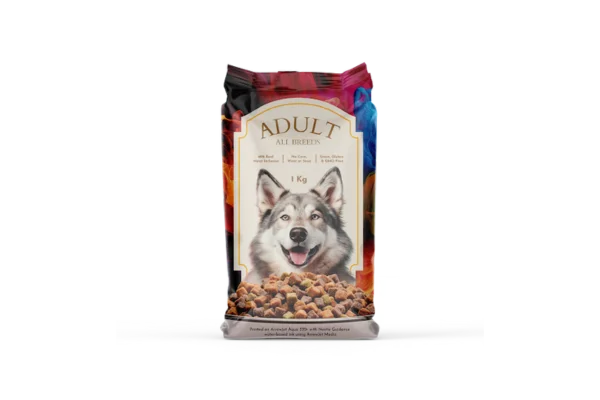

Mylar Bags for Long-Term Food Storage

Table of Contents

Mylar Bags for Long-Term Food Storage: The Complete 2026 Guide for Survivalists, Food Brands & Home Preppers

When it comes to protecting food for 10, 20, or even 30 years, no packaging format is searched, trusted, and recommended as widely as Mylar bags. Whether you’re a homesteader building emergency reserves, a food brand needing shelf-stable packaging, or a survival prepper planning for long-term storage  Mylar remains the gold standard.
In 2026, demand for “Mylar bags long-term food storage” has surged thanks to rising global interest in preparedness, supply-chain uncertainties, and consumer preference for safer, more durable packaging solutions.

This guide explains what Mylar bags are, why they work so well, how to use them correctly, what sizes/thicknesses to choose, and how oxygen absorbers extend shelf life — plus expert tips many blogs miss.

What Are Mylar Bags? (And Why They’re Used for Food Storage)

Mylar is a polyester film (PET) that has been metalized with aluminum to create a barrier material that is:

  • Heat-sealable

  • Lightproof

  • Moisture resistant

  • Oxygen resistant

  • Flexible yet durable

  • Shelf-stable for decades

The combination of PET + Aluminum creates one of the strongest barrier laminates used in food and pharmaceutical packaging.

Why Mylar Is Ideal for 10–30 Year Food Storage

  • Blocks 99.99% of light

  • Prevents oxygen penetration

  • Protects from humidity

  • Limits nutrient loss

  • Prevents mold & spoilage

  • Stops insects and pests (when sealed correctly)

  • Suitable for dry, low-oil foods

This makes Mylar bags the preferred choice for emergency food stockpiling, survival kits, and long-term pantry storage.

Best Foods to Store in Mylar Bags Long-Term

Mylar works best for dry foods with low moisture and low oil content, including:

Foods That Can Last 20–30 Years

  • White rice

  • Wheat berries

  • Rolled oats

  • Dry beans

  • Lentils

  • Pasta

  • Quinoa

  • Barley

  • Freeze-dried fruits & vegetables

Foods That Last 5–10 Years

  • Brown rice (higher oil content)

  • Nuts & seeds

  • Powdered milk

  • Whole wheat flour

  • Dehydrated foods

Foods NOT Recommended

Wet foods
High oil foods
Brown sugar (clumps)
Soft dehydrated fruits (retain moisture)

Choosing the Right Mylar Bag Thickness: 3.5 Mil vs 5 Mil vs 7 Mil

The thicker the bag, the stronger the barrier and long-term durability.

Thickness

Best For

Lifespan

Pros

3.5 Mil

Short-term pantry storage

3–5 years

Cheaper, flexible

5 Mil

Standard long-term storage

10–20 years

Strong, puncture-resistant

7 Mil

Survival food & rough transport

20–30 years

Maximum protection

5 Mil is the most common, while 7 Mil is the premium choice for preppers and emergency food manufacturers.

How Oxygen Absorbers Work (The Secret to 30-Year Shelf Life)

Mylar alone isn’t enough.

To achieve real long-term food storage, combine Mylar bags with oxygen absorbers (OAs) — small packets filled with iron powder that suck oxygen from the sealed environment.

Correct Oxygen Absorber Sizes

Use the following chart for accurate absorption:

Bag Size

Oxygen Absorber Needed

1 Quart

100cc

1 Gallon

300cc–500cc

2 Gallon

1000cc

5 Gallon

2000cc

Always seal immediately after opening the OA packet — exposure reduces effectiveness in minutes.

How to Use Mylar Bags for Long-Term Food Storage (Step-by-Step)

Step 1: Choose the Right Bag

Pick the size and thickness based on the food type and how often you plan to open it.

Step 2: Add Dry Food

Fill the bag with foods that are fully dehydrated and low in oil.

Step 3: Insert Oxygen Absorber

Push the OA into the center of the food for faster activation.

Step 4: Seal the Bag

You can seal with:

  • Heat sealer (best)

  • Clothing iron

  • Hair straightener

  • Impulse sealer

Seal 95% of the top → push out remaining air → seal the last 5%.

Step 5: Store in a Cool, Dark Location

Ideal conditions:

  • 50–70°F (10–21°C)

  • Low humidity

  • Away from sunlight

How Long Can Food Really Last in Mylar Bags?

Here are real-world, expert-backed shelf-life estimates:

Food

Shelf Life in Mylar + O2 Absorber

White rice

30 years

Beans

25+ years

Wheat berries

30+ years

Rolled oats

20–25 years

Pasta

20 years

Lentils

20 years

Powdered milk

10–15 years

Freeze-dried food

30+ years

With proper sealing, many foods last twice as long as in vacuum-sealed bags or rigid containers.

Mylar Bags vs Vacuum Sealing (Which Is Better?)

Feature

Mylar Bags

Vacuum Seal Bags

Oxygen removal

✔ Excellent (with OAs)

✔ Good

Light protection

✔ 100%

❌ Poor

Puncture resistance

✔ High

❌ Low

Shelf life

10–30 years

1–5 years

Cost

Moderate

Low

Ideal for bulk food

✔ Yes

❌ No

Mylar is the only real long-term storage solution.
Vacuum bags are better for short-term pantry storage or meats in the freezer.

Mistakes to Avoid When Storing Food in Mylar Bags

Using Mylar without oxygen absorbers
Storing high-moisture or oily foods
Not sealing bags fully
Leaving air pockets inside
Reusing oxygen absorbers
Storing bags near rodents or sharp edges

Avoiding these mistakes ensures your food stays safe and maintains nutrition for decades.

What Makes a High-Quality Mylar Bag?

When purchasing Mylar bags in 2026, focus on:

  • Food-safe certification

  • BPA-free materials

  • True aluminum metallization (not cheap plastic)

  • Consistent thickness (5–7 mil)

  • Strong bottom seals

  • Durable gusset options for bulk storage

Premium Mylar bags also provide better odor protection, higher tear strength, and more reliable oxygen barriers.

FAQs

Do Mylar bags need to be stored inside buckets?

Not required—but highly recommended for rodent protection.

Can you reuse Mylar bags?

If cut carefully and re-sealed, yes. But barrier quality weakens over time.

Are Mylar bags safe for food?

Yes — when made from food-grade PET and aluminum.

Do oxygen absorbers make the bags shrink?

A slight tightening is normal and proves the seal is working.

Final Thoughts: The Most Reliable Method for Long-Term Food Storage

If you’re serious about prepping, survival food storage, or emergency readiness, Mylar bags paired with oxygen absorbers remain the #1 industry recommendation.

They offer:

  • 30-year shelf life

  • Superior barrier protection

  • Lightweight, flexible storage

  • Safe, long-lasting preservation

Whether you’re storing 10 lbs of rice or creating long-term emergency kits, Mylar is the most dependable and affordable solution available today.

Contact With Our Team Now