How to Ensure Food-Safe Printing for Pouches & Bags

Table of Contents

How to Ensure Food-Safe Printing for Pouches & Bags (2026 Guide for Brands & Converters)

Food brands today face more pressure than ever. Consumers want clean labels, safe packaging, and complete transparency. Regulators are tightening standards. Retailers expect longer shelf life and higher durability. And through all this, one factor often gets overlooked until it becomes a problem: the safety of your printed packaging.
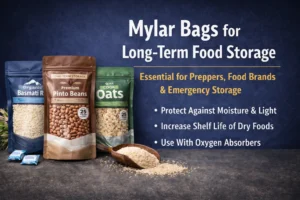
Whether you’re producing snack pouches, coffee bags, nutraceutical sachets, pet food packaging, or stand-up pouches, ensuring food-safe printing is non-negotiable. The inks, substrates, and finishing steps you choose directly impact compliance, migration levels, shelf stability, and brand reputation.

This guide breaks down everything you need to know about safe printing for food packaging explained in a simple, brand-friendly way.

Why Food-Safe Printing Matters

Imagine spending thousands launching a new product only to face a recall because the ink failed migration testing. Unfortunately, this scenario is more common than you think.

Food packaging printing must meet both regulatory standards and real-world durability demands. If inks migrate through the packaging layer or transfer during heat sealing, they can contaminate the food leading to safety hazards and legal implications.

Food-safe printing ensures:

  • Compliance with global regulations (Swiss Ordinance, FDA, EU 1935/2004, Nestlé guidance, etc.)

  • Shelf-life protection from fading, rub-off, and abrasion

  • Consumer trust through cleaner, safer packaging

  • Stronger retail appeal with high-quality print

  • Sustainability alignment with low-migration, low-VOC inks

Key Regulations You Must Understand

Food safety rules differ by region, but most countries align to three core frameworks:

1. Swiss Ordinance (SR 817.023.21)

The most recognized global benchmark for low-migration inks.
Brands often ask suppliers, “Are your inks Swiss Ordinance compliant?” because it’s considered a gold standard for food-safe printing.

2. FDA Regulations (Indirect Food Contact)

For the U.S., inks and coatings must comply with FDA guidelines for indirect food contact, meaning they may touch the packaging but not the food itself.

3. EU Framework Regulation (EC) No 1935/2004

In Europe, materials must not transfer substances that:

  • Endanger human health

  • Change food composition

  • Alter the food’s taste or odor

What Makes Printing Truly Food-Safe?

To print safe packaging for pouches and bags, you must control three areas:

1. Use Low-Migration, Food-Safe Inks

Not all inks are created equal. Many conventional inks contain photoinitiators, solvents, or additives that can migrate into food.

Look for inks that are:

  • Pigment-based (better stability during lamination)

  • Low-migration / low-VOC

  • Swiss Ordinance compliant

  • Designed for flexible packaging substrates

  • Compatible with laminations, heat sealing, and retort processes

Example:
ArrowJet Inks engineered specifically for food-grade flexible packaging offer exceptional rub resistance, chemical stability, and zero-migration performance. These pigment inks are Swiss compliant, making them ideal for Mylar, PET, PE, and multilayer pouch structures.

2. Select the Right Printing Technology

The printing method you choose affects ink adhesion, migration levels, and durability.

Below is a simple breakdown:

Digital Inkjet Printing

Best for: short runs, customization, and fast turnaround.
Benefits:

  • No plates


  • Lower waste


  • Ideal for Mylar and multi-layer films


  • Perfect for variable data and SKU changes


  • Works well with pigment inks

Digital is rapidly becoming the go-to option for 2026 and beyond, especially with advanced presses like the ArrowJet Aqua 800M or ArrowJet Aqua 330R.

Flexographic Printing

Best for: large volumes and consistent long runs.
Benefits:

  • Cost-effective for high-volume jobs


  • Compatible with many food-safe ink sets


  • Can run solvent, UV, or water-based inks

Gravure

High-quality but expensive; used mainly for global FMCG brands.

Hybrid (Digital + Flexo)

The fastest-growing trend.
Converters use:

  • Flexo for white ink, solids, backgrounds


  • Digital for versioning, personalization, or quick-change SKUs

This ensures cost savings without sacrificing flexibility.

3. Choose Food-Safe Substrates & Lamination

Even if your ink is food-safe, the substrate must also be compatible.
Most pouches use combinations like:

  • PET

  • MET-PET

  • PE

  • BOPP

Ensure your print system supports:

  • High ink adhesion

  • Superb lamination bond strength

  • Heat sealing without ink transfer

  • Barrier performance consistency

Modern inkjet systems are designed to print directly on these films with precision drop placement and minimal heat impact critical for thin films.

4. Control Migration Through Proper Lamination

For most food pouches, ink never touches the food it is buried under a laminate layer.
This requires choosing the right laminates and adhesives.

Ensure that your lamination:

  • Locks in pigment

  • Prevents ink transfer

  • Withstands retort or high-heat sealing

  • Maintains adhesion during shipping and storage

Pigment inks typically perform better than dye inks because they resist heat, water, and abrasion.

5. Test, Test, Test: Quality Control Is Everything

To guarantee food safety, perform these tests regularly:

  • Migration tests (overall + specific)

  • Ink adhesion tests

  • Seal-strength test

  • Rub resistance

  • Drop test / pouch integrity test

  • Heat-resistance test

  • Shelf-life simulation

Modern digital presses like the ArrowJet Aqua 800M are built to pass these tests with consistent results thanks to precision ink laydown and advanced pigment chemistry.

6. Maintain a Clean, Controlled Production Environment

Food-safe printing doesn’t stop at ink selection.

Keep in mind:

  • Use dedicated storage for inks and coatings

  • Avoid contamination during substrate handling

  • Clean printheads, rollers, and laminators regularly

  • Ensure operators follow GMP (Good Manufacturing Practices)

  • Keep clear batch records for traceability

These steps increase compliance and prevent costly recalls.

7. Work With Trusted, Compliant Technology Partners

One of the easiest ways to ensure food-safe printing is to work with manufacturers who already meet strict safety standards.

For example:
The ArrowJet line of aqueous pigment presses is engineered specifically for food packaging with:

  • Swiss Ordinance compliant inks

  • High adhesion on films

  • Strong lamination compatibility

  • Low migration formulation

  • Superb print speed and quality

Systems like the ArrowJet Aqua 800M and 330R are built for converters who want to scale food-grade flexible packaging in 2026 and beyond.

8. Document Everything (For Audits & Retail Compliance)

Brands and retailers increasingly ask for certification proofs.
Keep documentation for:

  • Ink compliance statements

  • MSDS sheets

  • Migration test results

  • Lot numbers

  • GMP practices

  • Production logs

A well-maintained compliance folder protects your brand and streamlines retailer onboarding.

Final Thoughts: Safe Printing Is Smart Printing

Food-safe printing for pouches and bags isn’t optional; it’s the foundation of responsible packaging. By choosing the right inks, substrates, technology, lamination, and quality controls, brands can deliver packaging that is beautiful, durable, and compliant.

Whether you’re a startup launching your first pouch line or a large converter scaling digital production, investing in food-grade, low-migration printing safeguards your product and your reputation.

Contact With Our Team Now