Best Color Label Printers 2026
Table of Contents Best Color Label Printers 2026 – Buyer’s Guide & Top Picks Choosing the best color label printer in 2026 has become more
The flexible packaging industry is undergoing a profound transformation, shaped by technological innovations, sustainability mandates, and shifting consumer behavior. As we step into the second half of the decade, businesses in this space are asking one pivotal question: Where is flexible packaging heading between now and 2030?
In this blog post, we take a deep dive into the global market outlook for flexible packaging, exploring growth statistics, emerging geographies, investment trends, and both opportunities and risks for players in the sector.
According to multiple market research forecasts, the global flexible packaging market is set to grow from USD 250 billion in 2024 to over USD 325 billion by 2030, registering a CAGR of around 4.5% to 5.5% during the period. This sustained growth reflects a robust demand across food, beverage, pharmaceuticals, personal care, and industrial goods.
Several factors contribute to this momentum:
Asia-Pacific (APAC) remains the largest and fastest-growing region in the flexible packaging landscape. Countries like India, China, Vietnam, and Indonesia are seeing an explosion in demand due to rapid industrialization, retail sector expansion, and a tech-savvy consumer base.
North America, particularly the U.S., remains a mature yet innovation-rich market. Consumers demand high-performance and sustainable packaging, prompting companies to invest in smart labels, resealable closures, and mono-material films.
European countries are spearheading the eco-conscious packaging movement, fueled by strict EU regulations, corporate sustainability pledges, and rising consumer awareness.
These regions are emerging as new frontiers for flexible packaging. Rising urbanization, e-commerce penetration, and foreign direct investments are opening up opportunities.
Investors are putting their money behind companies developing eco-friendly packaging. From plant-based bioplastics to compostable film manufacturers, sustainable innovation is a magnet for both venture capital and private equity.
Larger packaging firms are acquiring smaller, niche players with strong R&D capabilities in areas like smart packaging or sustainable inks. These M&A moves are aimed at boosting innovation and expanding global reach.
The adoption of Industry 4.0 technologies, including AI-driven quality control, digital printing, and robotic packaging lines, is attracting capital investment. These solutions promise improved efficiency, less waste, and faster turnaround times.
With global supply chains under scrutiny post-COVID and geopolitical tensions affecting trade, manufacturers are investing in regional production hubs to reduce lead times and environmental impact.

As consumers associate packaging with brand value and product quality, there’s an opportunity to tap into high-end finishes, customized print runs, and limited-edition packaging.
The continued boom in online retail is creating demand for tamper-evident, lightweight, and durable flexible packaging formats suitable for last-mile delivery.
Brands are leveraging packaging as a marketing channel. QR codes, AR experiences, and NFC chips provide interactivity that enhances brand storytelling and consumer engagement.
Packaging companies can position themselves as partners helping brands meet evolving regulatory requirements, from plastic bans to labeling norms.
Packaging firms remain vulnerable to the volatility in resin and polymer prices, particularly those reliant on fossil fuels. Companies will need to hedge costs or shift to bio-based alternatives.
With increasing scrutiny, companies making unverified sustainability claims may face legal or reputational risks. Transparency and third-party certification will be critical.
Geopolitical tensions, pandemics, or natural disasters can disrupt raw material supplies and logistics. Diversifying supplier bases and investing in supply chain resilience is essential.
As environmental and labeling regulations become more stringent and localized, multinational firms face a patchwork of requirements, increasing compliance complexity and costs.
The Flexible packaging industry is at a pivotal juncture. Between 2025 and 2030, companies that embrace innovation, prioritize sustainability, and stay ahead of regulatory trends will thrive in this evolving marketplace.
Whether you’re a manufacturer, brand owner, or investor, now is the time to recalibrate strategies, invest in future-ready technologies, and create packaging solutions that balance functionality, aesthetics, and eco-consciousness.
The journey ahead is both challenging and filled with opportunity—flexibility, quite literally, will be the key to success.

Table of Contents Best Color Label Printers 2026 – Buyer’s Guide & Top Picks Choosing the best color label printer in 2026 has become more
Table of Contents How to Print Custom Mylar Bags in 2026 | Full Guide for Brands & Converters Custom Mylar Bags Market Will Hit $33.2
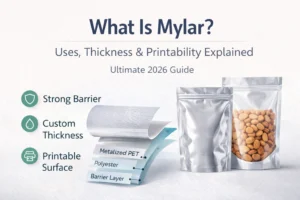
Table of Contents What Is Mylar? Uses, Thickness & Printability Explained (Ultimate 2026 Guide) Mylar bags are everywhere today from coffee packaging to pet treats,
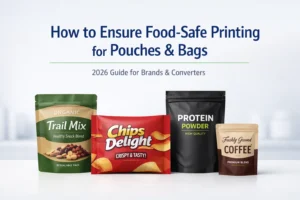
Table of Contents How to Ensure Food-Safe Printing for Pouches & Bags (2026 Guide for Brands & Converters) Food brands today face more pressure than
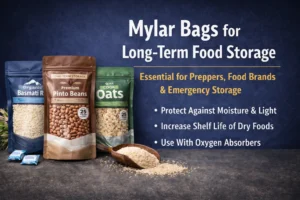
Table of Contents Mylar Bags for Long-Term Food Storage: The Complete 2026 Guide for Survivalists, Food Brands & Home Preppers When it comes to protecting
Table of Contents Arrow Systems, Inc. Announces the Launch of the ArrowJet MTS-48 A Breakthrough in Membrane Switch & Industrial Overlay Printing Arrow Systems, Inc.