Digital Label Printers for Pharmaceutical and Supplement Labels
Arrow's public product pages support a limited equipment comparison, not a compliance conclusion. Aqua 330R II is documented for short-to-medium roll production, Eco 330R is positioned as a compact single-pass press, and ANY-JET II documents inline printing and finishing. None of those pages establishes pharmaceutical validation, GMP compliance, serialized coding, vision inspection, label approval, or FDA approval. The manufacturer, packer, labeler, or other responsible party must define and approve the applicable drug or dietary-supplement workflow before equipment selection.
This page is for drug, dietary-supplement, nutraceutical, vitamin, and private-label teams evaluating roll printing or inline finishing after their responsible quality and regulatory functions define the approved label, material, coding, inspection, and record requirements.
Regulatory Responsibility and Equipment Boundaries
Drug labels and dietary-supplement labels are governed by different requirements. A printer does not approve artwork, establish FDA approval, create GMP compliance, validate a process, serialize product, inspect codes, reconcile labels, or maintain required records by itself. The manufacturer, packer, labeler, or other responsible organization must determine the applicable requirements and approve the label, material, coding, inspection, issuance, reconciliation, obsolete-label, and recordkeeping procedures. Evaluate Arrow equipment only against those documented requirements and verified product-page specifications.
BUYING CRITERIA
What Pharma and Supplement Labels Need
Before comparing print speed, the responsible team should define whether the product is a drug or dietary supplement and document the approved artwork, required content and format, material, legibility, coding, inspection, reconciliation, and records. Serialization applies only where the specific product and law require it; no serialization capability is established by the linked Arrow product pages.
REGULATORY CONTENT
Drug Facts, Supplement Facts, warnings, directions, lot data, ingredients, and claims need controlled artwork and review gates.
VARIABLE DATA
If the approved label requires lot, expiration, barcode, QR, batch, language, or serial data, confirm the exact software, data source, field rules, verification, sequence reconciliation, reject and reprint controls, and records separately. The linked product pages do not establish those functions.
REVISION SPEED
Shorter approved print quantities may reduce exposure to obsolete pre-printed inventory, but only when forecasting, artwork approval, issuance, reconciliation, destruction, and change-control procedures are effective.
MATERIAL AND FINISH
Bottle surface, adhesive, moisture, handling, and tamper or security needs should be qualified before production.
RECOMMENDED FITS
Best Arrow Fits for Pharma and Supplement Labels
Use the production stage to choose between standard production roll labels, entry in-house output, and inline finishing.
BEST PRODUCTION FIT
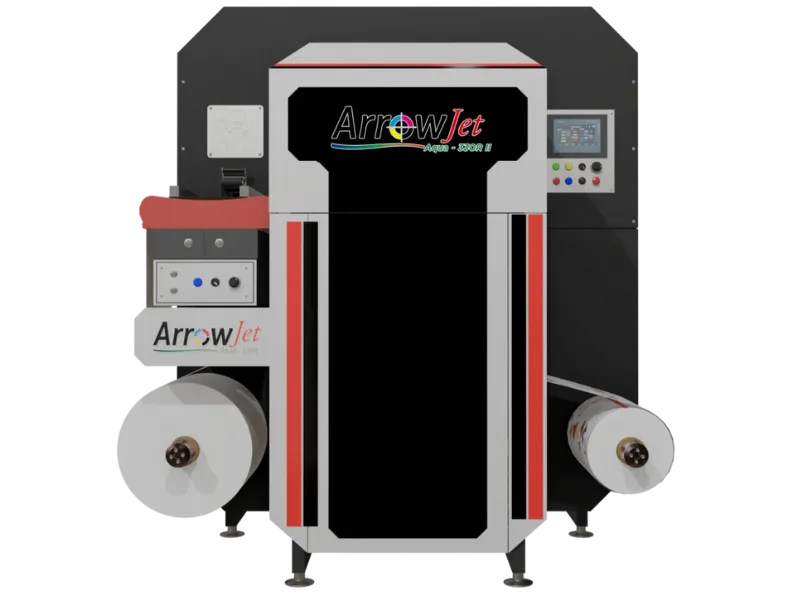
ArrowJet Aqua 330R II
Arrow documents the Aqua 330R II for short-to-medium roll production with water-based pigment ink and 1600 × 1600 dpi output. Suitability for a specific drug or dietary-supplement label requires owner-approved artwork, material testing, legibility criteria, coding, inspection, and process controls.
- 1600 × 1600 dpi listed
- Short-to-medium runs
- Regulated fit and data functions: not established
ENTRY IN-HOUSE FIT
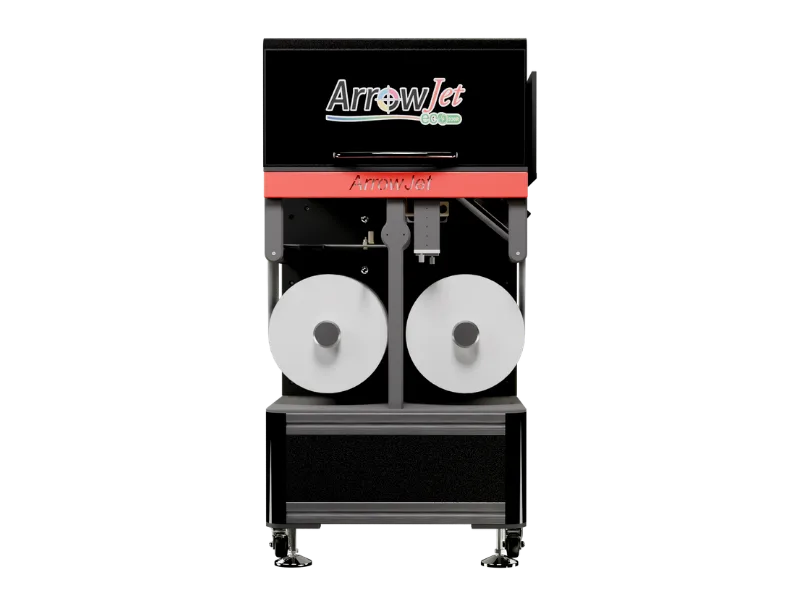
ArrowJet Eco 330R
Arrow positions Eco 330R as a compact industrial single-pass press for converters and in-house teams moving beyond desktop equipment. Its public page does not establish regulated-process control, validation, serialization, inspection, or compliance. Compact industrial single-pass press In-house production option
- Regulated fit
- and controls:
- confirm separately
PRINT-AND-FINISH FIT
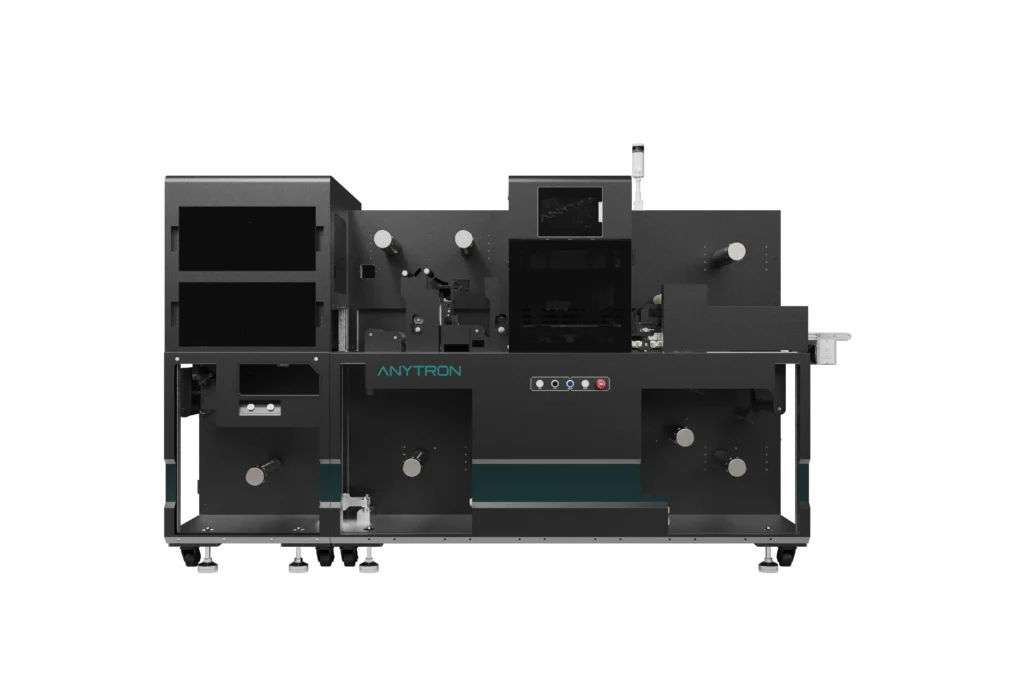
ANY-JET II
An inline print-and-finish option when labels need printing, laminating, laser die-cutting, matrix removal, and slitting together.
- Finished rolls
- Digital cutting
- No dies
DECISION TABLE
Choose by Production Stage and Owner Requirements
For regulated labels, compare equipment only after the responsible team defines the applicable label, quality-system, material, coding, inspection, reconciliation, and record requirements.
| LABEL NEED | RECOMMENDED DIRECTION | WHY |
|---|---|---|
| Drug or dietary-supplement bottle labels | Owner requirements first; then evaluate Aqua 330R II | Aqua provides documented roll-production specifications, but resolution alone does not prove required text legibility, barcode grade, validation, inspection, or regulatory suitability. |
| Teams moving beyond desktop output Evaluate | ArrowJet Eco 330R | Eco 330R is publicly positioned as a compact industrial single-pass press; regulated suitability and required controls must be assessed separately. |
| Frequent approved revisions | Shorter digital print quantities may be evaluated Inventory exposure may decrease only when forecasting, approval, | issuance, reconciliation, destruction, and change-control procedures prevent obsolete labels from being used. |
| Finished rolls in one process | ANY-JET II | Inline finishing reduces handoffs after print. |
| Required variable codes or data | Separately qualified data, print, | verification, and reconciliation workflow Confirm the applicable code standard and the software, data source, field rules, inspection, rejects, reprints, sequence controls, and records. No linked product page establishes serialization or vision inspection. |
WORKFLOW NOTES
Pharma and Supplement Label Workflow
Bringing label production in-house does not by itself create a controlled or compliant process. The responsible quality and regulatory functions must define, approve, document, and monitor the applicable workflow.
Use an artwork approval gate for facts panels, warnings, ingredients, claims, lot fields, and barcode requirements.
Maintain a single approved revision for every SKU, size, language, and private-label customer.
Test small-text legibility, scan reliability, adhesive, bottle surface, and handling exposure.
Tie print-on-demand production to approved orders or batches so old revisions are not accidentally used.
FAQ
Buyer Questions
No Arrow printer can be named from the public product pages as the best fit for all pharmaceutical and dietary-supplement labels. Aqua 330R II documents short-to-medium roll production, Eco 330R is a compact single-pass option, and ANY-JET II documents inline finishing. Select only after the responsible team defines the label, material, legibility, coding, inspection, validation, reconciliation, and record requirements.
Digital printing may suit an approved supplement-label program that uses shorter quantities or frequent revisions, but it does not approve claims, establish Supplement Facts compliance, prevent obsolete labels, or replace issuance, reconciliation, destruction, and change-control procedures.
The required content depends on the product and applicable law and may include identifiers, lot or expiration information, barcodes, language versions, or other approved data. Serialization is not universal, and the linked Arrow product pages do not establish serialization, vision inspection, or record-level data capability.
Eco 330R may be evaluated when a compact industrial single-pass press matches the required width, speed, ink, media, and production volume. Brand size alone does not establish fit, and regulated-label controls must be qualified separately.
The responsible team should define acceptance criteria for approved artwork, required content and format, legibility, substrate, adhesive, container surface, finish and handling. Where codes are required, specify the applicable standard and verification grade; also define inspection, issuance, reconciliation, rejects, reprints, obsolete-label controls, records, and any validation required by the owner's quality system. Arrow's public product pages do not establish these controls.
NEXT STEP
Evaluate Pharmaceutical or Supplement Label Equipment Against Owner-Approved Requirements.
Share the product category, approved label, substrate, run length, finishing needs, required codes, inspection criteria, and production goals. Arrow can help compare documented equipment specifications; regulatory approval, validation, and compliance remain with the responsible organization.