Digital Printers for Flexible Packaging and Custom Mylar Bags
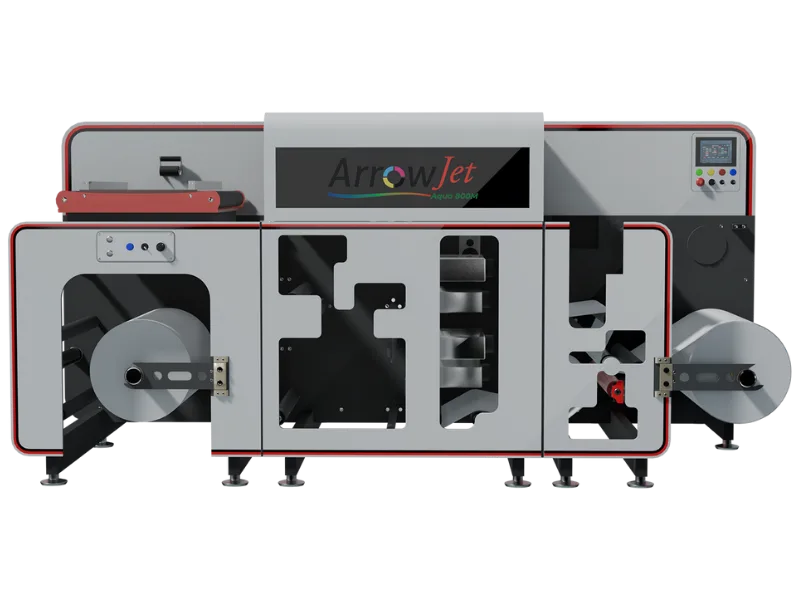
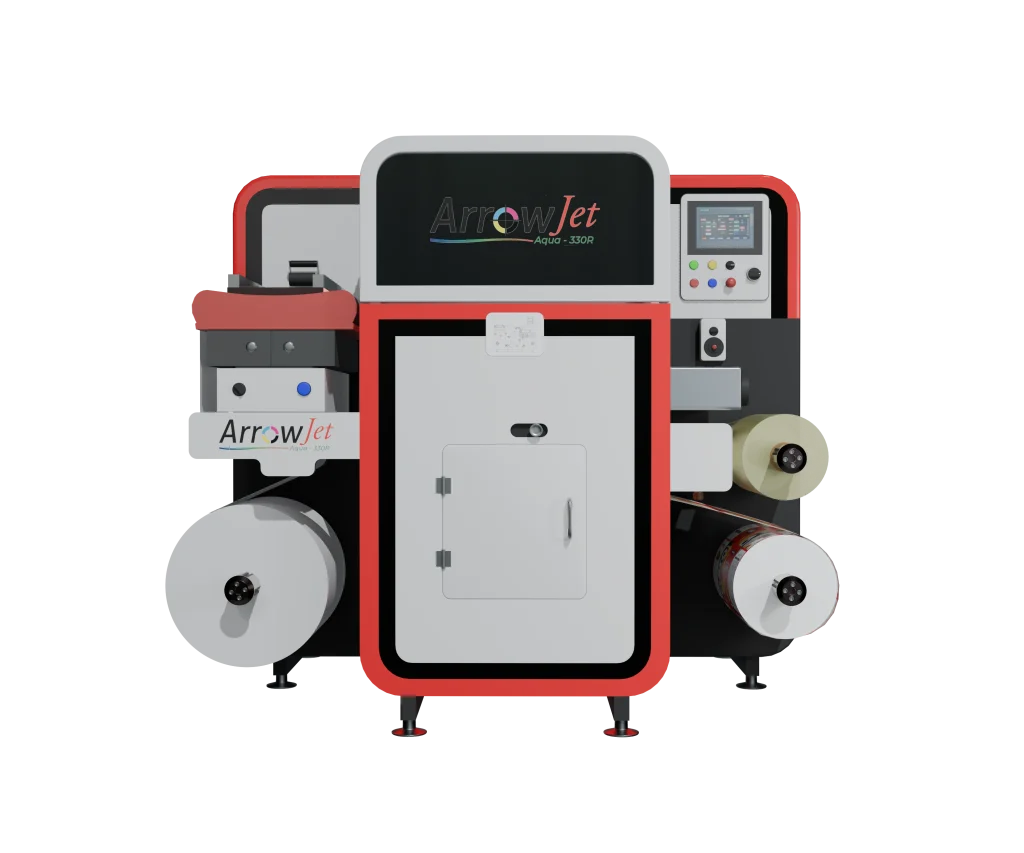
For printing flexible rollstock used in custom pouch programs, compare the ArrowJet Aqua 800M for wide-web aqueous pigment production with the ArrowJet Aqua 330R Lite for narrower roll-to-roll work. These printers produce printed web material; they do not form, fill, or heat-seal finished Mylar bags. Finished pouches require a separately qualified downstream conversion workflow.
This page is for brands and converters evaluating how to print flexible rollstock that will be converted into stand-up pouches, side-gusseted bags, center-seal pouches, snack packs, coffee bags, refill packs, and other flexible formats.
BUYING CRITERIA
WHAT MYLAR AND POUCH PRINTING
REQUIRES
Flexible packaging is not just a label problem. The printer has to match web width, coating, drying, film handling, and how the pouch is converted after print.
Printer output vs. finished pouch output
The equipment compared here prints flexible rollstock. A saleable pouch normally requires a qualified sequence that may include surface treatment or inkjet priming, printing, drying or curing, lamination, slitting, pouch forming, heat sealing, and inspection. Those conversion steps require compatible inline options or separate equipment; none of the printer recommendations alone forms, fills, or seals a finished bag.
FILM COMPATIBILITY
Mylar, PET, BOPP, PP, PVC, Tyvek, and coated papers need the right print surface, coating, drying, and tension control.
WEB WIDTH AND SPEED
Wider pouch work points toward wider flexible packaging equipment instead of a narrow label-only press.
VERSIONED PACKAGING
Custom pouches often change by flavor, serving size, state, customer, language, or promotional campaign.
CONVERSION PATH
Printing should be planned with lamination, heat sealing, slitting, pouch forming, and final bag style in mind.
RECOMMENDED FITS
BEST ARROW FITS FOR FLEXIBLE
PACKAGING
Use the packaging format and web width to decide whether the buyer belongs in wide-web pouch printing, narrow-web label printing, or a hybrid workflow.
ARROWJET AQUA 800M
A 25-inch-class aqueous pigment inkjet press for printing qualified flexible rollstock, with inline priming, varnishing, and slitting options documented on the official product page. Maximum printing width: 25.39 inches Water-based pigment inks Prints rollstock; pouch forming
- and sealing
- are downstream
ARROWJET AQUA 330R
LITE A narrower roll-to-roll aqueous pigment inkjet direction for printing qualified label stock or flexible rollstock that does not require the Aqua 800M's wide web.
- Short-to-medium printed-web runs Water-based
- pigment CMYK Separate finishing or
- pouch conversion required
ARROWJET UV
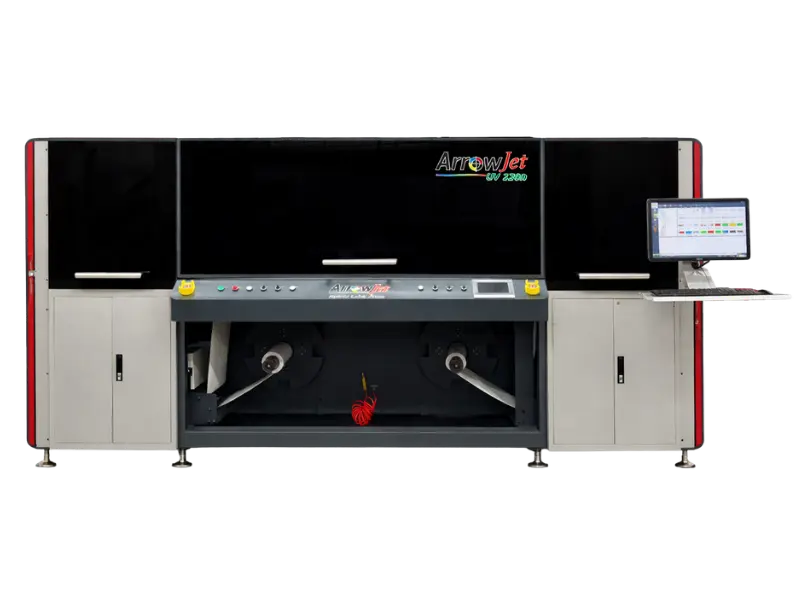
A roll-production UV LED inkjet option to compare for qualified films, foils, transparent or dark substrates, and designs requiring white ink.
- White ink configurations Films, foils,
- and synthetic media Up to 17-inch
- print width; downstream pouch conversion still required
DECISION TABLE
MATCH THE PRINTER TO THE POUCH PROGRAM
The right machine depends on the bag style, print width, material, and whether the job is true packaging or label decoration.
| POUCH REQUIREMENT | LIKELY FIT | WHY |
|---|---|---|
| Stand-up or side-gusseted pouches | ArrowJet Aqua 800M | Wider packaging formats benefit from wide-web flexible packaging capability. |
| Printed rollstock for short-run Mylar pouch programs | Aqua 800M or Aqua 330R Lite Print width, | qualified media, run length, and the separate lamination/slitting/pouch-conversion path determine fit. |
| Clear, dark, or premium effects | ArrowJet UV | White ink and UV effects may be needed for specialty materials. |
| Many SKU or flavor versions | Digital flexible packaging | Digital print helps avoid plates and minimums for versioned packaging. |
| Food, supplement, or cannabis pouches | Material and compliance review | The package construction and regulatory label content must be reviewed before scale-up. |
WORKFLOW NOTES
FLEXIBLE PACKAGING PLANNING STEPS
Pouch buyers should plan around the full package, not just the print engine.
Choose bag format: stand-up, 3-side seal, center seal, side gusset, or 5-panel pouch.
Define substrate: Mylar, PET, BOPP, PP, coated paper, Tyvek, or laminate construction.
Confirm print width, run length, variable data, and version count.
Map and qualify priming or treatment, printing, drying or curing, lamination, slitting, pouch forming, heat sealing, and inspection; identify which steps are inline and which require separate equipment.
Food-contact qualification boundary
Do not treat a printer, ink family, or generic 'Mylar compatible' statement as approval of a finished food package. Confirm the lawful food-contact status and conditions of use for every relevant ink, coating, film, adhesive, and laminate; evaluate migration or set-off where applicable; keep print out of seal and food-contact areas unless the validated construction permits it; and approve the complete package for the intended food, time, temperature, and use conditions. FDA states that a food-contact substance that is a food additive must be authorized for that use, and 21 CFR 174.5 limits food-contact components to applicable authorizations, prescribed limits, suitable purity, and good manufacturing practice.
FAQ
BUYER QUESTIONS
What digital printer is best for flexible packaging and custom Mylar bags?
For wide-web printed rollstock, compare the ArrowJet Aqua 800M; for narrower roll-to-roll work, compare the ArrowJet Aqua 330R Lite. Neither press converts printed web into a finished pouch, so the recommendation must also cover the qualified lamination, slitting, pouch-forming, and heat-sealing workflow.
Can digital printing support short-run pouch packaging?
Yes. Digital flexible packaging is useful when brands need shorter runs, many SKUs, seasonal artwork, private-label versions, or variable print without plate costs.
What materials matter for custom Mylar bags?
Buyers should review Mylar, PET, BOPP, PP, coated paper, Tyvek, laminate construction, inkjet coating, heat sealing, and pouch conversion requirements.
When should ArrowJet UV be considered?
Compare the roll-production ArrowJet UV when qualified flexible media require white ink or printing on clear films, foils, or dark substrates. Reserve the ArrowJet UV 330H comparison for applications that also need its documented flatbed or rigid-substrate capability.
What should be confirmed before buying a pouch printer?
Confirm web width, package style, material stack, coating, drying, lamination, heat sealing, slit pattern, run length, and version count.
NEXT STEP
BUILD A FLEXIBLE PACKAGING WORKFLOW AROUND YOUR POUCH
FORMAT, MATERIAL, AND RUN LENGTH.
Share the application, substrate, run length, finishing needs, and growth goal. Arrow can help narrow the right equipment fit.