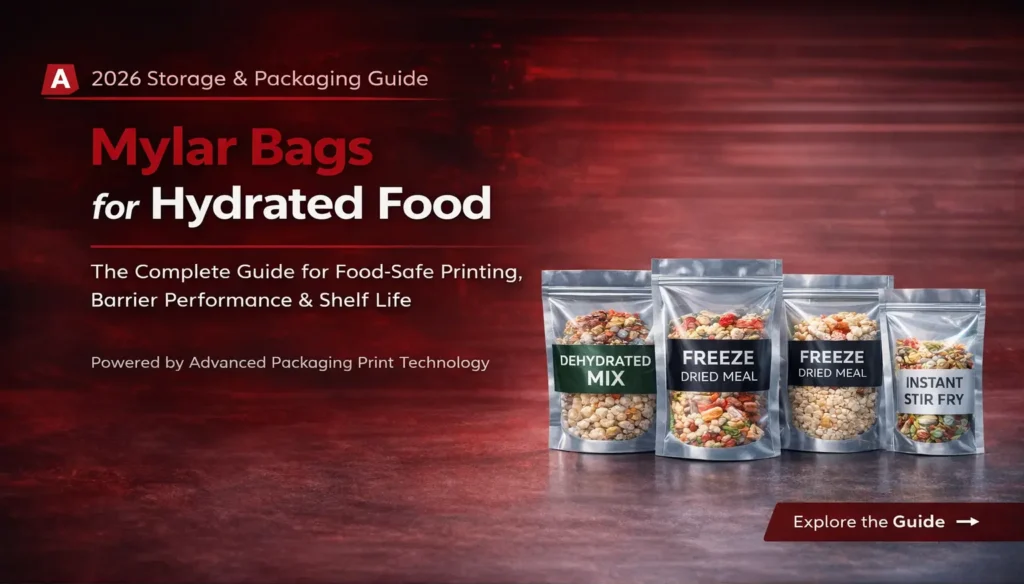
Mylar Bags for Hydrated Food

Table of Contents

Mylar Bags for Hydrated Food: The Complete Guide for 2026 Storage & Packaging

If you’re storing hydrated meals, ready-to-eat foods, emergency rations, camping meals, or gourmet wet ingredients, you’ve probably noticed one challenge:

How do you keep moisture-rich food fresh, safe, and shelf-stable without sacrificing flavor or texture?

Enter Mylar bags, the gold standard in modern food packaging.

Traditionally known for long-term dry food storage, Mylar is now becoming the #1 choice for packaging hydrated and semi-moist foods thanks to advancements in barrier films, heat sealing technology, and food-safe digital printing.

This guide breaks down everything you need to know about benefits, shelf life, safety, sealing tips, and the best Mylar materials for moisture-rich foods.

What Are Mylar Bags?

Mylar is a brand name for BoPET (Biaxially Oriented Polyethylene Terephthalate) a strong, flexible, heat-resistant film.

When converted into pouches, it offers:

  • Extreme oxygen barrier

  • Excellent moisture resistance

  • Light protection

  • Chemical stability

  • High heat-seal strength

This combination makes it ideal not only for dry beans and rice
but also for hydrated, partially hydrated, and semi-moist foods.

Can You Store Hydrated Food in Mylar Bags?

Yes—if you use the right grade and follow proper sealing practices.

Modern food companies and meal-prep brands widely use Mylar bags for:

Hydrated & Ready-to-Eat Foods

  • Soups

  • Curries

  • Chili

  • Rice bowls

  • Pasta dishes

Semi-Moist & High-Aw Moisture Items

  • Beef jerky (moist varieties)

  • Cooked vegetables

  • Hydrated fruit slices

  • Prepared grains

  • Meal kits

Hydration-Preserved Foods

  • Rehydrated freeze-dried meals

  • Protein-rich hydrated foods

  • Gourmet meal blends

  • Infant food refills (non-shelf-stable, refrigerated)

Important Note on Hydrated Food Safety

Hydrated food has high water activity (Aw), which supports microbial growth.
This means:

Mylar alone does NOT make hydrated food shelf-stable.

You must pair the pouch with one of the following:

  • Retort processing

  • Pasteurization or sterilization

  • Refrigerated distribution

  • Frozen storage

For shelf-stable hydrated meals (like army MREs), manufacturers use:

Retort Mylar Bags (PET/Aluminum/CPP multilayer films)

These can withstand 121°C (250°F) sterilization and create a commercial vacuum seal.

Why Mylar Bags Are Ideal for Hydrated & Semi-Moist Foods

1. Superior Oxygen Barrier

Oxygen exposure is one of the fastest ways hydrated foods spoil or change flavor.

Premium Mylar films offer:

  • OTR as low as 0.0003 cc/m²/day

  • Odor and aroma retention

  • Oxidation protection for fats, oils, and meats

This keeps hydrated meals tasting fresher, longer.

2. Moisture Retention (No Drying Out)

Unlike basic plastic pouches, Mylar:

  • Prevents water from evaporating

  • Maintains food texture and tenderness

  • Preserves sauces, juiciness & moisture balance

Perfect for meals like biryani, pasta, curries, and cooked vegetables.

3. Light Protection for Nutrient Stability

UV exposure breaks down:

  • Vitamins

  • Proteins

  • Natural colors

  • Healthy fats

Aluminum-layered Mylar offers full light-blocking, ideal for sensitive hydrated meals.

4. Heat-Seal Strength for Liquid Foods

Hydrated food packaging must withstand:

  • Pressure

  • Temperature changes

  • Handling during shipping

Mylar’s high tensile strength + strong heat seals prevent leaks and tears.

5. Custom Printing for Premium Food Brands

Digital printing on Mylar bags allows:

  • Waterproof pigment ink graphics

  • Food-safe printing (FDA-friendly & Swiss compliant inks like ArrowJet Inks)

  • Matte, glossy, or metalized finishes

  • Short-run or large-scale production

Brands selling prepared meals, ready-to-eat pouches, keto meals, protein meals, etc. can now print:

  • Nutrition labels

  • High-quality product images

  • QR codes

  • Batch & expiry data

  • Brand storytelling

Types of Mylar Bags for Hydrated Foods

1. Standard PET/PE Mylar Pouches

For semi-moist foods requiring refrigeration or freezing.

Best for:
Prepped meals
Hydrated fruits & vegetables
Gourmet food kits

2. Retort Mylar Bags (for Shelf-Stable Hydrated Meals)

Multi-layer films such as:

PET / ALU / Nylon / CPP

These are built for thermal sterilization and are used in:

  • MREs


  • RTE curries


  • Saucy pasta meals


  • Rice bowls


  • Ready-to-eat Asian meals

Benefits:

  • Survives 121°C retort sterilization


  • Creates hermetic, shelf-stable packaging


  • Multi-year storage life

3. High-Barrier Mylar Stand-Up Pouches

For premium presentation on shelves.

Ideal for:

  • Gourmet wet foods

  • Marinated vegetables

  • Refrigerated ready meals

  • Meal-prep businesses

How Long Can Hydrated Food Last in Mylar Bags?

Food Type

Mylar Type

Storage Condition

Shelf Life

Hydrated vegetables

PET/PE

Refrigerated

3–7 days

Hydrated fruits

PET/PE

Refrigerated

5–10 days

Saucy meals

Retort

Ambient

12–36 months

Meat-based meals

Retort

Ambient

12–24 months

Prepared grains

Retort

Ambient

8–18 months

Hydrated freeze-dried meals

Standard Mylar

Ambient

12–24 months

Shelf life varies by formulation, pH, Aw, sterilization, and packaging seal quality.

How to Seal Hydrated Food in Mylar Bags (Correct Process)

Step 1: Choose the right Mylar grade


  • Retort grade for shelf-stable meals


  • Standard grade for refrigerated / frozen foods

Step 2: Fill the pouch carefully


Leave 1–1.5 inches of headspace.

Step 3: Remove air


  • Vacuum sealing is ideal


  • Nitrogen flushing for large food batches

Step 4: Heat-seal properly


Seal temperature range: 350°F–400°F (177–204°C)
Use:

  • Impulse sealers


  • Band sealers


  • Hot-bar sealers

Step 5: Test the pouch


Check for:

  • Seal strength


  • Leakage


  • Delamination


  • Pressure resistance

Best Practices for Branding Hydrated Food Mylar Bags

Use food-safe digital inks

Pigment-based, compliant inks (e.g., ArrowJet Inks) prevent:

  • Smudging

  • Leaching

  • Color fading during heat processes

Add reclosable zippers if portioned

For meal-prep or baby food products.

Opt for clear windows only if product is light-stable

Add QR or NFC for premium experience

Brands use it for:

  • Recipes

  • Heating instructions

  • Nutrition analysis

Why Mylar Is the Future of Hydrated Food Packaging

With the rise of:

  • Meal-prep businesses

  • RTE (ready-to-eat) convenience foods

  • Camping and survival meals

  • Gourmet globally-inspired meal kits

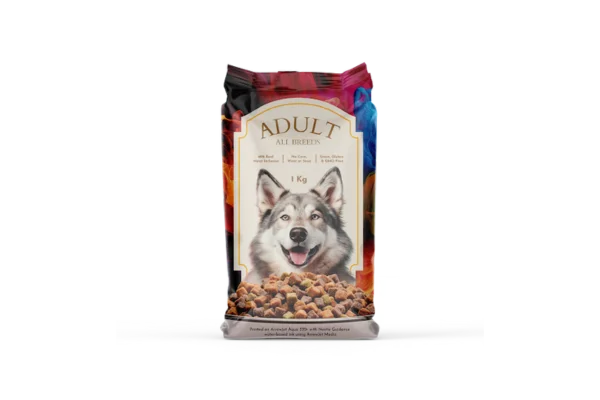
  • Pet food hydration packs

…the industry needs packaging that is:

  • Safe

  • Hygienic

  • Durable

  • Printable

  • High-barrier

Mylar checks all the boxes and continues to evolve with digital printing and advanced film structures.

Conclusion

Mylar bags are one of the most reliable, versatile, and safe packaging options for hydrated, semi-moist, and RTE foods. Whether you’re a food brand, manufacturer, meal-prep company, or survival meal producer, Mylar offers unmatched:

  • Barrier protection

  • Shelf stability

  • Custom branding

  • Safety

  • Convenience

Pair the right Mylar grade with proper thermal processing, and you can achieve commercial shelf stability and premium product presentation that customers trust.

Contact With Our Team Now