No Plate Workflow
Digital removes plate ordering and plate mounting for jobs that change often or do not justify analog setup.
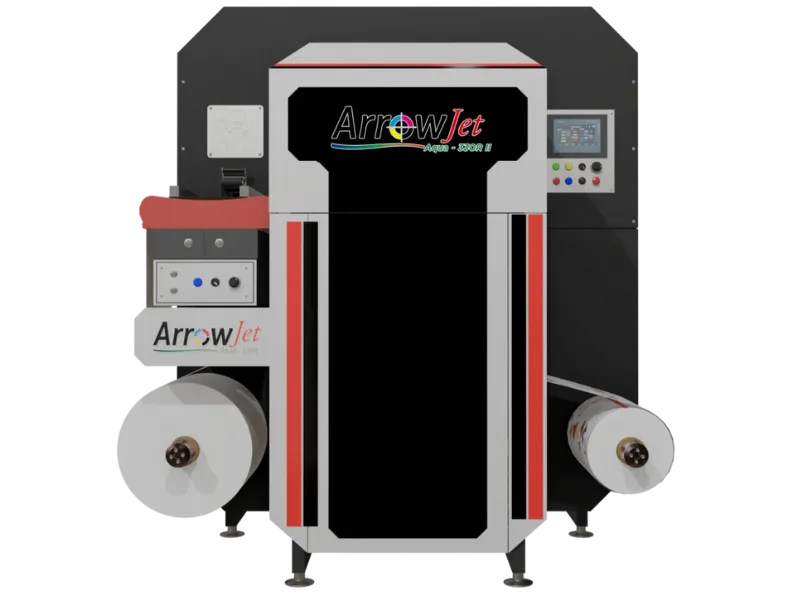
The best digital label printer upgrade from flexo is usually the ArrowJet Aqua 330R II when a shop needs short-to-medium runs, SKU changes, lower setup waste, and production digital output. Higher-volume operations should also compare the ArrowJet Aqua 330R family and hybrid configurations, while entry or lower-volume teams may compare the ArrowJet Eco 330R .
This page is for flexo shops and packaging printers that are not replacing flexo entirely, but need a digital path for the jobs flexo handles inefficiently.
Best Practical Upgrade Fit
Buying Criteria
Digital is strongest when plates, setup, waste, and changeovers limit profitability on short-run, versioned, or fast-turn label work.
Digital removes plate ordering and plate mounting for jobs that change often or do not justify analog setup.
Digital can protect flexo capacity by moving shorter work away from long analog setup cycles.
Private-label, seasonal, regional, language, barcode, and QR-code versions favor a digital workflow.
The best upgrade often complements flexo, leaving long static runs on flexo and routing high-mix work to digital.
Recommended Fits
Choose the upgrade based on the jobs that are painful on flexo, not just the highest quoted speed.
A production digital roll label printer for short-to-medium runs, fast changeovers, SKU versions, and lower setup waste.
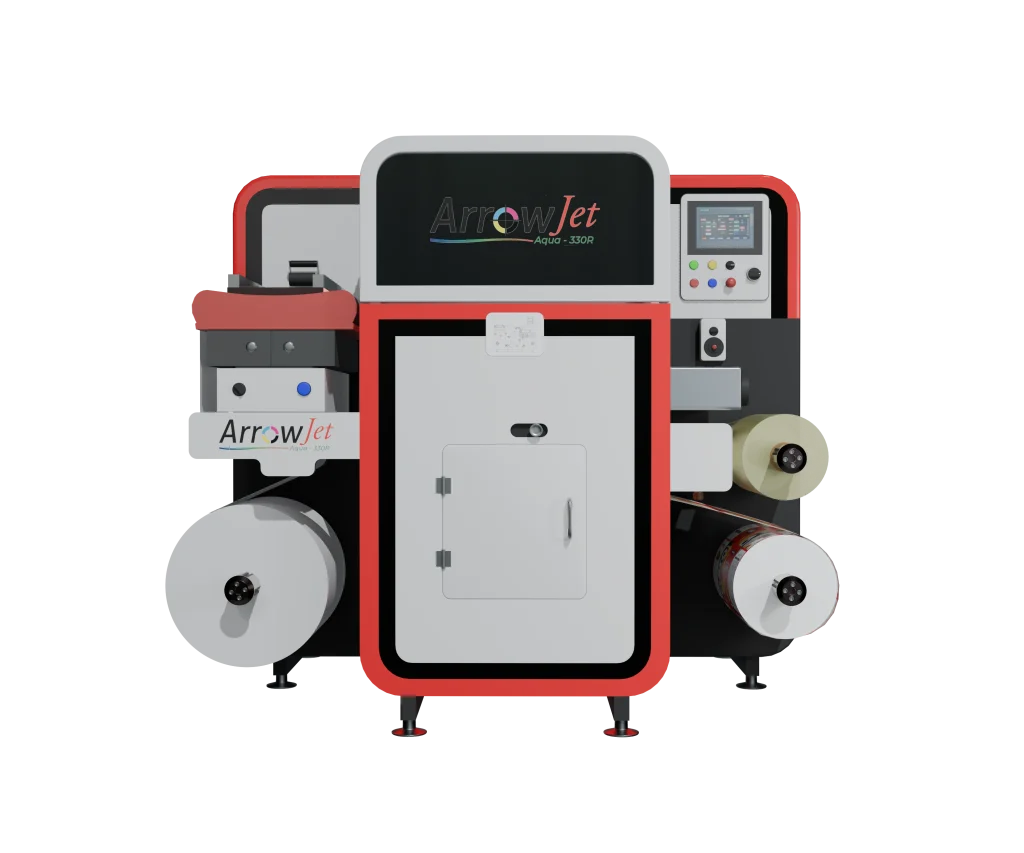
A broader Aqua production direction for shops comparing cost, speed, pigment inkjet, setup time, and low-waste digital production.
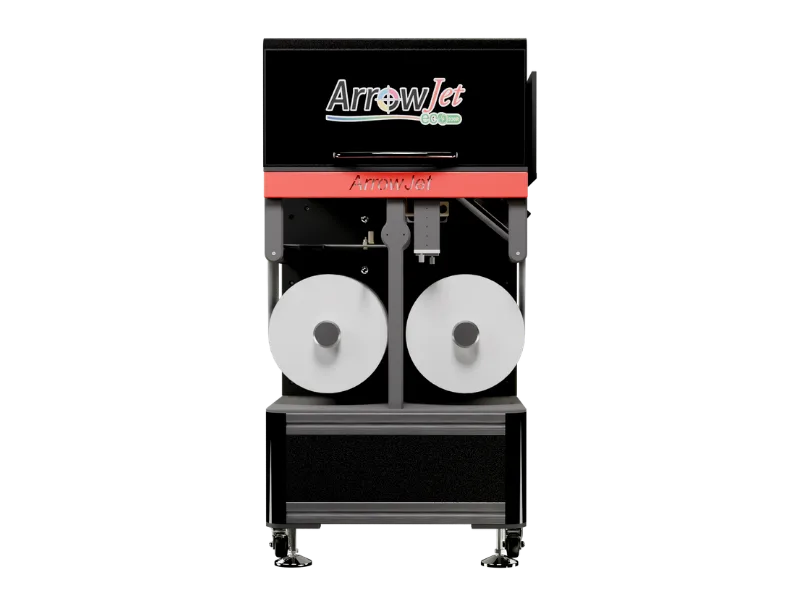
A compact industrial step into digital label production for smaller shops or teams proving out a digital book of work.
Decision Table
The strongest shops use flexo and digital together instead of forcing every job through one process.
| Job Type | Best Direction | Why |
|---|---|---|
| Long static runs | Keep on flexo | Flexo remains strong when the setup cost is spread over long production volume. |
| Short runs and reorders | ArrowJet Aqua 330R II | Digital avoids plates and reduces changeover friction. |
| Many SKUs or versions | Digital workflow | Versioned artwork is much easier to manage without plate changes. |
| Entry digital program | ArrowJet Eco 330R | A smaller press can validate demand before a larger digital investment. |
| Higher-volume digital work | Aqua family or hybrid configuration | Shops with sustained digital demand can compare speed, finishing, and throughput needs. |
Workflow Notes
Start by identifying which jobs are unprofitable, slow, or disruptive on the current flexo line.
Pull job history by run length, setup time, plate cost, waste, changeover time, and margin.
Identify high-mix SKUs, private-label work, promo labels, and rush jobs that flexo struggles to handle.
Define digital finishing needs: offline, inline, laser cutting, slitting, or rewind-only.
Create rules for routing jobs between flexo and digital so operators know where each job belongs.
FAQ
For many flexo shops, the ArrowJet Aqua 330R II is the best Arrow starting fit because it handles short-to-medium runs, SKU changes, fast changeovers, and lower setup waste. Higher-volume teams should compare the broader ArrowJet Aqua 330R family and hybrid configurations, while entry teams may compare ArrowJet Eco 330R.
Not usually. Digital often complements flexo by taking shorter, more variable, faster-turn jobs while flexo continues to handle long static runs.
Start with short runs, repeat reorders, seasonal labels, private-label versions, language variants, QR-code jobs, and work with high plate or setup waste.
Measure plate cost, setup time, makeready waste, changeovers, run length, job margin, operator time, finishing needs, and how often artwork changes.
Eco 330R can be enough when the shop is validating digital demand, has lower volume, or wants a compact entry into industrial digital label production.
Next Step
Share the application, substrate, run length, finishing needs, and growth goal. Arrow can help narrow the right equipment fit.