Printing Systems for Aircraft Interior Placards and Instrument Panel Decals
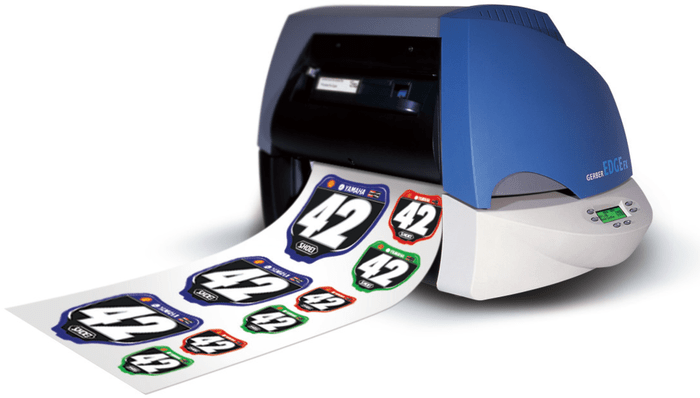
For aircraft interior placards and instrument panel decals, Arrow points buyers toward a durable printing and separate cutting workflow rather than a standard paper label printer. For small sprocketed-media work, compare the Gerber EDGE Production System: the EDGE FX thermal-transfer printer, OMEGA software, compatible EDGE READY media and GerberColor foils, plus a compatible 15-inch Gerber sprocketed plotter for cutting. Compare Matan SprinG3 for wider roll-to-roll durable graphics, with cutting handled as a separately qualified finishing step unless a documented cutter is added.
This page is for aviation maintenance teams, aircraft interior suppliers, and operators that want to bring placard, safety signage, cockpit label, and panel decal production closer to their own workflow.
What Aviation Placard Printing Requires
Aircraft interior work is driven by material qualification, durability, legibility, compliance review, and accurate cutting as much as by print quality.
Material Compliance
Aircraft placards and decals should be reviewed against the required aviation material and process standards before production.
Placard Variety
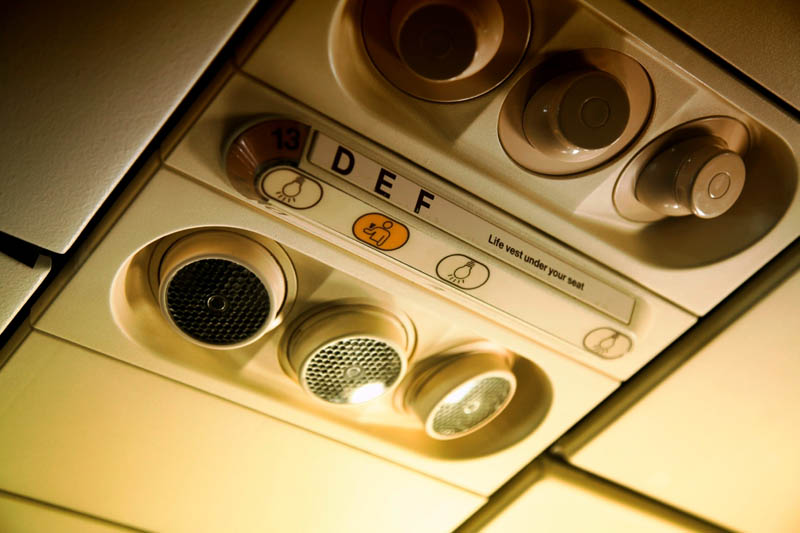
Interior labels can include warnings, instructions, exit signage, seating labels, cockpit placards, and emergency information.
Print-and-Cut Accuracy
Many placards need contour cutting, nesting, and repeatable shapes without long outside lead times.
In-House Control
Airlines and suppliers often care about reducing long lead times, grounded aircraft delays, and minimum order constraints.
Best Arrow Fits for Aircraft Interior Graphics
The right system depends on whether the work is small-format print-and-cut signage, durable industrial graphics, or finishing support.
Gerber EDGE Production System A matched small-format workflow consisting of the 15-inch EDGE FX
thermal-transfer printer, OMEGA software, compatible EDGE READY media and GerberColor foils, and a separate compatible 15-inch Gerber sprocketed plotter for contour cutting.
What the EDGE FX does—and does not do
EDGE FX is a 15-inch thermal-transfer printer. In the matched Gerber EDGE Production System, OMEGA prepares output, EDGE FX prints on compatible sprocketed media with GerberColor foils, and a separate compatible 15-inch Gerber sprocketed plotter performs contour cutting. Do not describe EDGE FX alone as a print-and-cut machine.
- EDGE FX prints; the plotter cuts
- Sprocketed matched media and foils
- Material/process approval still required
Matan SprinG3
A roll-to-roll thermal-transfer printer for short runs of durable graphics, including aircraft-interior applications, with up to 307 mm effective print width and up to six colors in one pass. Roll-to-roll printing, not documented inline cutting Opaque white, metallic, and spot-color capability Separate qualified
- cutting/finishing
- plan required
Aircraft Interior Placards
Arrow’s aircraft interior page is the best starting point for matching materials, processes, and equipment to aviation placard requirements.
- Interior placards
- Instrument panels
- Aircraft-specific material and process approval review
Choose by Aircraft Graphic Type
Aircraft interior graphics need a workflow that matches the decal type, cut requirement, and approval context.
| Aircraft Need | Recommended Direction | Why |
|---|---|---|
| Small sprocketed-media placards | Gerber EDGE Production System EDGE FX provides | thermal-transfer printing; a compatible 15-inch Gerber sprocketed plotter performs contour cutting. |
| Instrument panel decals | Material-qualified print-and-cut review | Panel decals need legibility, durability, and accurate cut shapes. |
| Durable instructional graphics | Matan SprinG3 | Short-run durable graphics are a core fit signal for the system. |
| Reducing lead times | In-house placard workflow | Digital print-and-cut can reduce dependence on outsourced batches. |
| Aircraft-, operator-, or authority-specific requirements Approved material/process data The applicable aircraft certification basis, approved data, installation instructions, operator/customer controls, and traceability determine acceptance; the printer itself is not FAA | approved by this recommendation. |
Aviation Placard Qualification
Aviation pages should be careful: the printer recommendation should always be tied to material and approval requirements.
Approval boundary
A printer is not approved for installation merely because it can produce a placard. Acceptance attaches to the applicable aircraft requirements and the controlled material, adhesive, ink or foil, coating, printing, cutting, installation, inspection, and documentation package. For transport-category aircraft, 14 CFR 25.1541 requires prescribed markings and placards to be conspicuous and not easily erased, disfigured, or obscured; 14 CFR 25.853 applies test criteria to cabin-interior materials and finishes. The applicable aircraft type design, approved alteration or repair data, operator/customer requirements, and authorized approval path must be confirmed before production or installation.
Identify each placard type: warning, instructional, seating, exit, cockpit, panel, or emergency information.
Confirm the substrate, adhesive, ink/foil, overlaminate or coating, thickness, legibility and cleaning exposure, and the exact approval basis. Evaluate applicable flammability and, where the aircraft certification basis or approved data requires them, heat-release, smoke-emission, or toxicity criteria; do not present every criterion as universal to every placard.
Choose print-and-cut or durable graphics equipment based on size, color, and cutting needs.
Retain approved artwork, material and lot identifiers, process settings, test or conformity evidence required by the applicable approval basis, first-article signoff, and installation traceability before production use.
Buyer Questions
The fit depends on size, media, color, cutting, and the aircraft approval basis. Compare the Gerber EDGE Production System for small sprocketed-media work that uses EDGE FX printing plus a separate compatible Gerber plotter, and compare Matan SprinG3 for wider roll-to-roll durable graphics with separate qualified cutting or finishing.
Aircraft placards often require specialized materials, durable output, accurate cutting, and compliance review that standard paper label workflows may not address.
Common applications include interior placards, warning labels, directional signage, exit signs, seating labels, instrument panels, emergency information, cockpit placards, and durable instructional labels.
The substrate, adhesive, print process, cut accuracy, durability, and any customer or aviation material requirements should be validated before production.
Matan SprinG3 is stronger when the aircraft supplier needs short-run durable graphics, decals, membranes, signs, or related industrial graphic output.
Bring Aircraft Placard and Panel Decal Production In-House with a Qualified Arrow Workflow.
Share the application, substrate, run length, finishing needs, and growth goal. Arrow can help narrow the right equipment fit.